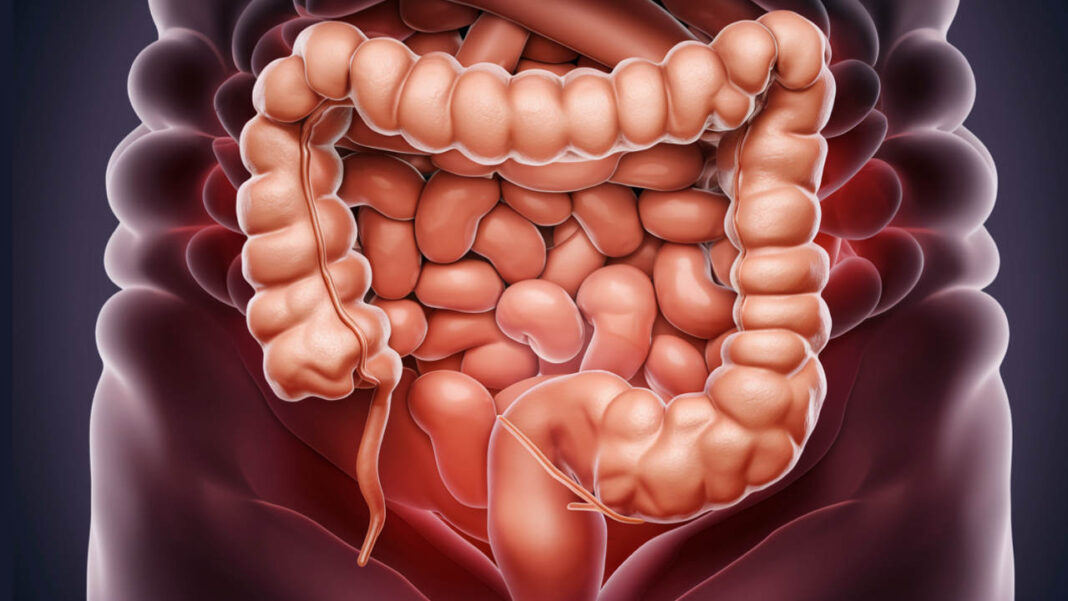

A new scientific study found an important step in how a gut bacterium may cause colon cancer. The research looks at a common bacterium called Bacteroides fragilis. It lives in the human gut. Earlier studies from 2009 showed this bacterium can help in colon tumour development. It makes a harmful toxin called BFT. This toxin can damage the lining of the colon.
However, one key question remained unanswered for many years. Scientists did not know exactly how this toxin attaches to human cells before causing damage. A large group of researchers from multiple institutions has now discovered that missing detail. The study was published on April 22 in the scientific journal Nature.
Scientists at Johns Hopkins University School of Medicine and the Johns Hopkins Kimmel Cancer Center Bloomberg–Kimmel Institute for Cancer Immunotherapy led the research. Senior author Dr Cynthia Sears explained that many attempts had been made over time to find the receptor for the toxin. She described the discovery as an exciting breakthrough.
She also said that learning how bacterial toxins interact with human cells may help scientists prevent or treat diseases like colorectal cancer and gut infections. The research team found that the BFT toxin does not directly attach to its main target inside the cell, as scientists once thought.
It first attached to a protein. This protein is found on the colon cells. This protein is called claudin-4. This protein acts as a docking point for the toxin. After binding to claudin-4, BFT damages another protein called E-cadherin. E-cadherin helps protect the lining of the colon. When this lining is damaged. Inflammation can develop quickly. Over time, this condition may lead to colon tumours. Scientists discovered the role of claudin-4 using a gene-editing method called CRISPR screening.
In this method, researchers systematically turned off different genes in colon cells to see which ones were necessary for the toxin to work. This work was led by Maxwell White, an M.D./Ph.D. student working in Dr Sears’ laboratory. He collaborated with scientists from Harvard Medical School.
The results showed that when the gene for claudin-4 was removed, the toxin could no longer attach to the cells. This clearly pointed to claudin-4 as the missing link in the process.
At first, the finding was unexpected. Scientists had believed that the toxin would bind to a signalling receptor, such as a G-protein-coupled receptor. Instead, it was binding to a structural protein that helps form tight connections between cells. This behaviour was unusual, as most toxins are known to directly attack their target molecules rather than first attaching to a separate receptor.
In order to confirm this theory. The team worked with structural biologists in Barcelona. They used advanced biophysical methods to show that the toxin and claudin-4 physically bind together in a one-to-one connection.
This provided strong proof that the interaction was real. The research then moved into animal studies. Scientists tested the toxin in mice to understand how it behaves in a living system. In these experiments, they created a “decoy” version of claudin-4. The decoy acted like a trap for the toxin. Instead of attaching to colon cells, the toxin attached to the decoy protein. This protected the mice from toxin-related damage. The findings suggest that blocking the connection between BFT and claudin-4 may help prevent gut damage. Researchers believe this discovery could lead to new treatments.
These treatments might use drugs or engineered molecules to block the toxin before it attaches to colon cells. This could help reduce inflammation. It may also lower the risk of colorectal cancer linked to the bacterium.
However, one part of the mystery still remains. Scientists have not yet seen the exact 3D structure of how the toxin binds to claudin-4. Computer models were used, including AI tools like AlphaFold. But they have not fully solved this interaction yet. More research is still needed to understand this final detail.