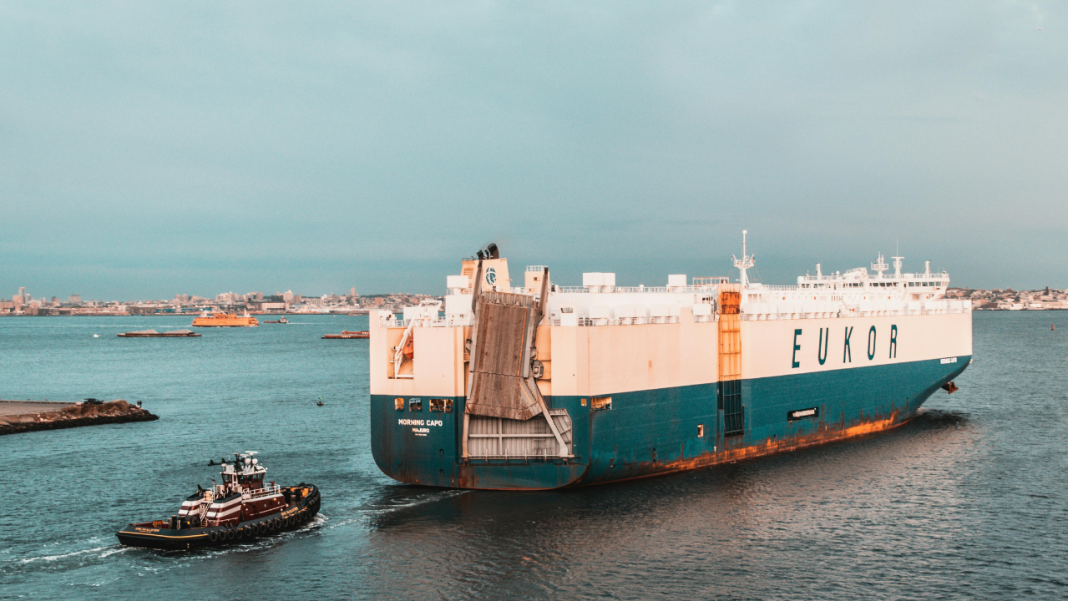


India is stepping into future logistics with an unmatched investment of 10000 crore (about USD 1.2 billion) to trigger a revolution in its ports infrastructure. Spearheaded by the Deendayal Port Authority (DPA) of Kandla, Gujarat, and the Jawaharlal Nehru Port Authority (JNPA) of Maharashtra, these initiatives will revolutionize the cargo transportation sector with state-of-the-art technology and eco-friendly methods.
Deendayal Port Authority: MagRail—The Magnetic Freight Revolution.
Technologically, DPA is working in partnership with DP World, an international logistics group, and European technology firm Nevomo to introduce India’s first autonomous magnetic rail freight system. Nevomo’s MagRail magnetic levitation technology enables the system to transport freight autonomously within the port infrastructure.
The pilot, 750 meters long at the Kandla terminal, will electrify and automate the movement of cargo for increased efficiency and lower turnaround time. MagRail works on the current track with linear motor technology to push electrically powered wagons at a cleaner and more compatible logistics platform.
The project is in line with India’s vision for upgrading its logistics network and facilitating nonstop commerce. With new technologies, DPA can enhance the processing of growing volumes of cargo more economically, improving India’s stake in international commerce.
Jawaharlal Nehru Port Authority: Hyperloop—The Future of High-Speed Cargo Transport
Despite this, JNPA intends to introduce Hyperloop technology into its cargo operations. In association with Vadhvan Port and TuTr Hyperloop, JNPA seeks to offer high-speed cargo transportation systems to transport commodities from essentials to export consignments globally.
The new 20-km Hyperloop line will connect the under-construction Vadhvan Port in the Palghar district to the Western Dedicated Freight Corridor (WDFC) to enable high-speed evacuation of cargo from the port to the hinterland. The partnership is India’s first serious attempt at using Hyperloop-based freight logistics, aligned with the country’s state agenda to curtail road congestion and improve logistics efficiency.
With the integration of Hyperloop technology, JNPA hopes to reduce substantially the time taken for cargo travel, enhance turnaround efficiency, and minimize emissions, providing a model for cargo transport in the future.
Strategic Investments and Future Outlook
These freight networks are part of India’s overall strategy of decongesting its maritime infrastructure. The 12 major ports of India handled 819.227 million tonnes of cargo during FY24, up 4.45% from the same period last year. JNPA alone handled over half of all container volumes, an indication of its gateway role in India’s trade network.
The Indian Maritime Amrit Kaal The administration envisions building a port infrastructure system with a capacity of 10 billion tonnes for handling cargo annually by 2047. The ambitious goal reflects the imperative need for strengthening the port infrastructure in terms of requirements to meet the growing demands of global trade.
A Commitment to Sustainability
Both JNPA and DPA are embracing a green approach to their operations. DPA has ordered India’s first-ever ‘Make in India’ 1 MW green hydrogen plant at Kandla, a first for the nation in terms of greening energy. The plant, conceptualized by Indian engineers only, would produce almost 140 metric tons of green hydrogen annually when it is commissioned to full capacity, facilitating port decarbonization.
Similarly, JNPA’s foray into Hyperloop technology is only one aspect of its dream of reducing carbon footprints and enabling more efficient cargo transportation.
India’s development of high-speed freight corridors at its strategic ports is a move in the direction of modernizing logistics infrastructure. In embracing new technologies like magnetic rail and Hyperloop, the nation is improving the efficiency of operations and preparing the country for an environmentally friendly and globally competitive shipping sector. Once these ventures come to fruition, they will transform India’s ports into hubs of innovation and efficiency that can handle future needs.