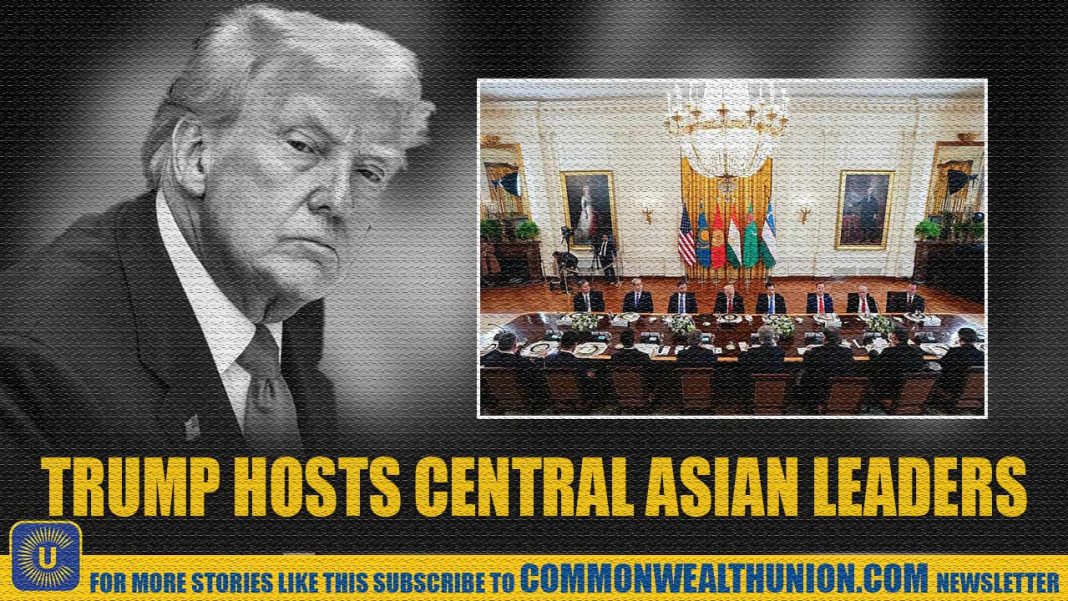
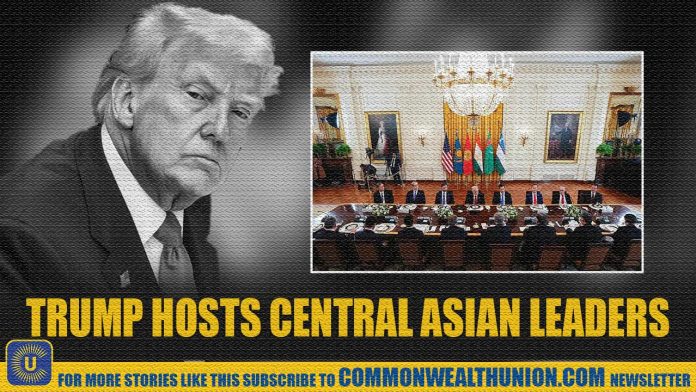

U.S. President Donald Trump’s latest diplomatic venture has brought Central Asia back into Washington’s orbit, with leaders of Kazakhstan, Kyrgyzstan, Tajikistan, Turkmenistan, and Uzbekistan gathering at the White House to discuss critical minerals, regional cooperation, and new economic pathways. The summit, held on the C5+1 platform, signaled an effort by the administration to widen U.S. access to rare earth elements, diversify uranium supply chains, and reinforce connections across a region historically shaped by Russian and Chinese influence.
Trump described Central Asia as a territory of deep economic potential and emphasized that his administration had strengthened American security through new mineral agreements. He included U.S.–Central Asia relations among his priorities, positioning the meeting as a step toward long-term supply chain resilience. Visiting presidents echoed the focus on stability, investment, and trade, with Uzbekistan’s leader referring to Trump as the “president of the world,” one of only two remarks directly quoted at the gathering.
A series of commercial announcements accompanied the summit. U.S. aircraft manufacturer Boeing confirmed a plan to supply up to 37 airplanes across Kazakhstan, Tajikistan, and Uzbekistan, while Cove Capital outlined a tungsten mining venture in Kazakhstan, backed by federal financing. Analysts noted that Washington was using a blend of government outreach and business activity to secure a presence in a region where China manages most global rare earth processing and Russia maintains long-standing economic ties.
Central Asia’s mineral wealth remains a central factor in this diplomatic reset. Kazakhstan and Uzbekistan together produce more than half of the world’s uranium—a resource considered vital to U.S. nuclear energy. Tajikistan’s president highlighted his country’s extensive reserves but also its geographic position between Russia and China, framing cooperation with the United States as a balancing influence.
Kazakhstan also agreed to join the Abraham Accords, a step Trump said could help revive the initiative amid broader Middle East negotiations. He expressed confidence in the current ceasefire in Gaza and suggested additional states may join the accords in the coming months. The White House described the meeting as part of a broader initiative to reinforce partnerships following shifts in global energy markets and increasing competition for minerals essential to modern technology.