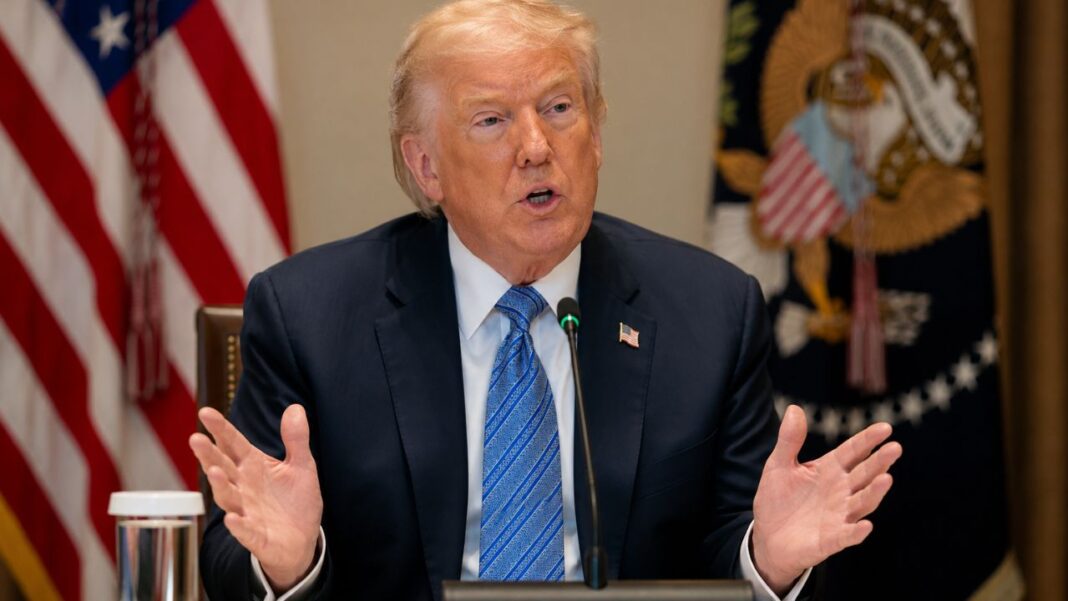

US President Donald Trump said he has paused a planned military strike on Iran that was expected on Tuesday. After receiving requests from several Gulf countries, he made the decision to pause the attack, as diplomatic talks are now underway.
In a post on Truth Social, Trump said leaders from Qatar, Saudi Arabia, and the United Arab Emirates asked him to delay the attack. He said he had been told a deal would be reached that is “very acceptable” to the United States and insisted that Iran would not be allowed to have nuclear weapons.
However, Trump also gave a strong warning. He said the US military is still ready to act quickly if negotiations fail. He described the possibility of a “large-scale assault” that could begin at short notice if Iran does not agree to terms.
An Iranian military official responded with a warning of his own. He urged the United States not to make what he called “strategic mistakes.” Tensions between the two sides remain high. The announcement comes at a politically sensitive time for Trump. His approval ratings have recently dropped. Polls suggest that many Americans are unhappy with the idea of war with Iran. A New York Times and Siena poll showed about 64% of voters believed going to war with Iran was the wrong decision. Only 37% approved of Trump’s overall performance as president. Analysts say the result reflects wider frustration with the war, the economy, and immigration policies.
Military conflict between Iran and joint US-Israeli forces began earlier this year, with heavy airstrikes reported in February. Iran responded with drone and missile attacks targeting US and Israeli interests in several Gulf region locations.
Gulf countries are especially concerned about escalation. They fear Iran could retaliate by targeting key infrastructure such as airports, energy facilities, and desalination plants that supply drinking water. These fears increase during the hot summer months when water demand is high. Trump later told reporters the situation could still change. He said talks were “a very positive development,” but not guaranteed to succeed. He also mentioned that previous negotiations with Iran had nearly succeeded but ultimately fell short.
Tensions have also impacted oil markets. Iran has increased pressure in the Strait of Hormuz, a key shipping route for global oil and gas. This has contributed to rising oil prices worldwide. At the same time, the United States has increased pressure on Iran through sanctions and restrictions on shipping routes. Iran has accused Washington of blocking its ports and escalating tensions.
Iranian officials say talks are still ongoing through mediators, including Pakistan. They also claim the US has not made real concessions. Iran has demanded an end to military actions and sanctions, along with compensation for war damage and control over strategic waterways. The US has reportedly demanded strict limits on Iran’s nuclear activities, including reducing enrichment and transferring uranium stockpiles abroad. Trump has suggested he may support a temporary freeze on Iran’s nuclear program rather than a permanent ban.
Both sides continue to disagree on core issues, especially Iran’s nuclear program. The US and its allies believe Iran is trying to develop nuclear weapons. Iran insists its program is only for peaceful energy use. Negotiations are ongoing, but the situation remains highly uncertain.