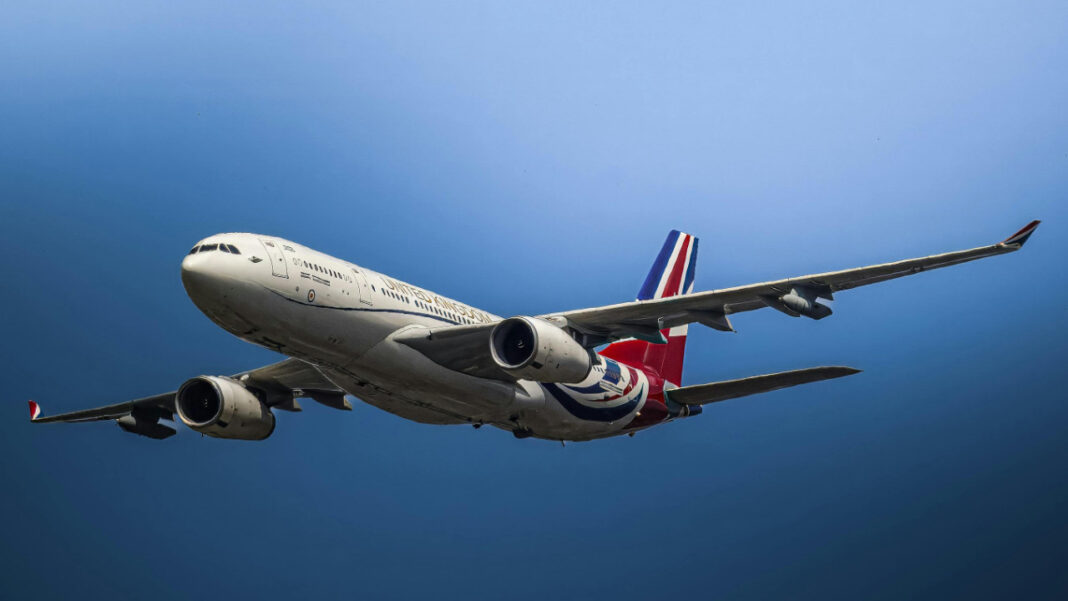

Instead of experiencing a typical evening departure from Stuttgart, the passengers on the A320 were treated to one of aviation’s most spectacular safety manoeuvres—a high-energy rejected takeoff—where the thrust was cut, the brakes were applied, and the aircraft went from high speed to a stationary position in a controlled manner, all on the runway!
On May 25, 2026, the Airbus A320 (operated by Avion Express Malta on behalf of Eurowings) was ready to depart from Stuttgart Airport. During the takeoff roll, an abnormal indication of the aircraft’s landing gear appeared in the cockpit, and the flight crew aborted the takeoff. The aircraft decelerated on the runway, then cleared the runway under its momentum, and returned to the apron to have the aircraft inspected. This caused a temporary disruption of service and a substantial delay for those who were on the aircraft at the time.
The Point of No Return
A rejected takeoff is not “panic braking.”. Rather, it is a procedure that is followed by the flight crew when an abnormal indication has caused concern that the aircraft may not be in a condition to safely continue flying. The FAA (U.S. Federal Aviation Administration) describes a rejected takeoff as one in which the aircraft does not continue to takeoff after takeoff power is applied and the aircraft has started its takeoff roll. This timeframe is similar to what passengers describe as being the loudest and fastest from the time they leave the runway.
The publicly released tracking and accounts from passengers providing the details of the Stuttgart incident indicate that the flight crew received a landing gear warning. The crew made a conservative decision to remain on the ground until they verified that the configuration of their aircraft was completely safe.
What the passengers experienced and why it is important
On social media and in forums, many travelers described experiencing an immediate drop in thrust, hard braking, and taxiing to a point of safety for the aircraft. Many passengers described waiting in the aircraft for some time before being able to exit it back to the terminal for information and the possibility of rebooking their flight. All reports indicate that nobody was injured and the incident required no evacuation, which indicates that the stewardess’s decision to land on the runway of Stuttgart was handled in a controlled manner rather than progressing into an emergency situation.
This is an important point to note about the dynamics of the take-off roll, since that is the point of greatest “noise” when discussing aviation and how variables create certainty and uncertainty; the aircraft is moving at an increasing speed, but the runway is decreasing in distance from the aircraft, while the desired outcome of the flight crew is to create 100% trust (certainty) in every critical system (landing gear) of the aircraft.
Why a gear “indication” can stop a flight (even with no problem)
The term “landing gear indication” can represent two separate issues: an actual mechanical malfunction and the fact that all sensors on the aircraft returned an incomplete, inconsistent or ambiguous response, regardless of whether or not they provided a valid output.
To validate the aircraft’s gear position and associated systems, modern A320-family aircraft utilise multiple levels of sensing and control. Proximity sensors are one of the many technical references in aviation designed to verify that the gear and associated components are in the expected state. If the cockpit detection logic detects a mismatched condition between the gear and associated component(s), pilot crews have been trained to treat that condition as potentially serious until mechanic(s) have ruled otherwise.
Follow-up work typically performed after the reported incident includes downloading diagnostic fault codes from the aircraft’s maintenance computer, as well as performing targeted inspections based on those codes. Depending on what was discovered, the results can vary significantly; for example, resetting a component would take much less time than replacing it.
Stuttgart has a single main runway. The runway is large enough for an airport, but an aeroplane leaving the runway early typically has no way to leave the runway without delaying departures for other planes by at least 45 minutes. The only way for the departure delays to be cancelled after the aeroplane has taken off is for the aeroplane to end up on the ground at the airport and the departure that was to take off to still be gone.
Another development in air travel in Stuttgart is that it is becoming more interconnected. For example, Eurowings uses wet leases (similar to how they do now with wet leases) to support other airlines on a shared basis during the peak. EUROWINGS uses wet lease partners as part of the continued support for seasonal demand. The wet renters work with their partners and provide support for passengers by flying the same aeroplane type as is standard for airlines today.
What it “means”: The “delay” represents a safety feature. Although rejected takeoffs result in lost time for travelers, they demonstrate that aviation’s multi-layered defences function satisfactorily: an alarm invokes caution, caution invokes an abort, and before departing, an engineer loves you (to seat check the aircraft operator unless stated otherwise). Despite the potential issues with rejected takeoffs, Airbus’ aviation safety guideline outlines conditions where rejected takeoffs are acceptable as part of standard operating procedures; therefore, maximising controllability and performance capability of the aircraft is accomplished whilst still on the ground.
Although rejected takeoffs may be alarming to passengers, from an aviation standpoint, they are simply examples of how well an integrated safety system is designed—turning potentially uncertain events into controlled, non-events. Thus, while creating temporary airborne “risk” with rejected takeoffs through time lost on the runway compared to the risk of an airborne incident.