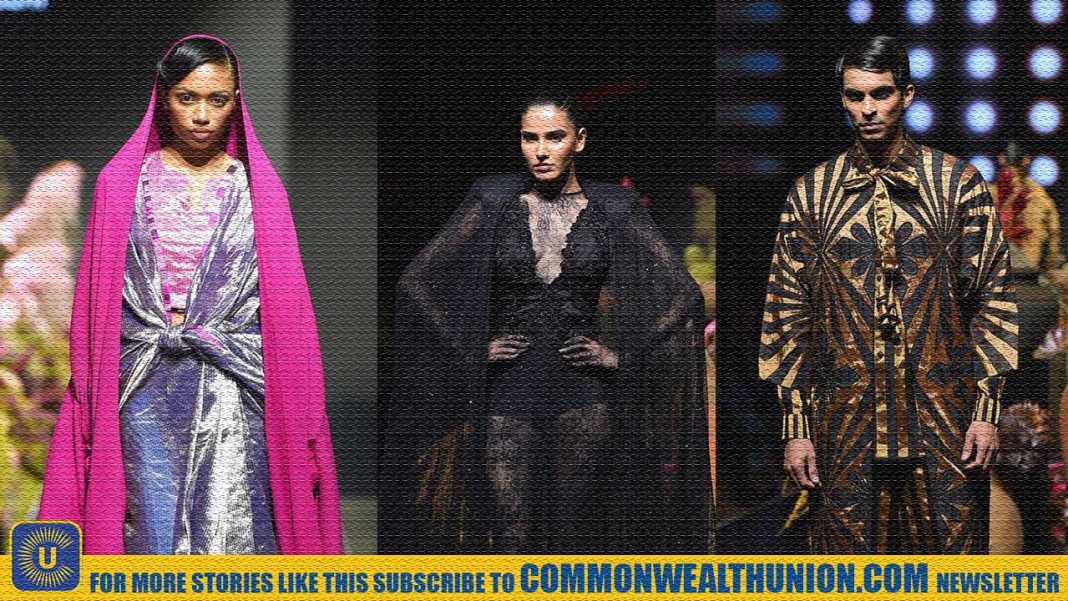

Into its ninth edition, Mercedes-Benz Fashion Week Sri Lanka 2025 goes beyond the blinding flash of glamour, instead articulating a deeper vision that melds creativity with purpose, economics with ethics, and culture with innovation. Hosted from 19 to 23 November at Cinnamon Life in Colombo, this year’s showcase is not just a runway event; it is a declaration about South Asia’s place in the global design conversation.
Fashion has, for too long, been only about appearances. MBFWSL 2025 challenges that notion: here, design is treated as a system. Instead of spectacle, it becomes infrastructure for livelihoods, identity, and the economic direction of a region. In its maturity, the partnership between the Academy of Design and DIMO, the authorized Mercedes-Benz distributor, has evolved into an ecosystem that links education to industry, mobility, and culture.
The scale of this year’s MBFWSL is truly ambitious. Over eighty upcoming Sri Lankan designers will take center stage alongside over fifteen creatives from India, Bhutan, Bangladesh, and beyond. This regional conversation feels deeply intentional: rather than treating heritage as static nostalgia, the designers reinterpret it, using craft as a springboard for innovation, ethics, and future-facing cultural confidence. Sustainable practices take the fore, especially on the “Future Craft” runway, where handloom weaving, natural dyes, batik, and artisanal embroidery are reimagined through regenerative practices.
Additionally, MBFWSL is establishing tangible infrastructure. It’s built on the pedagogical strength of AOD, whose globally recognized design education bridges the gap between raw talent and international opportunity. The week is seamlessly integrated into the Sri Lanka Design Festival, turning Cinnamon Life into a multidisciplinary creative space where design students, brands, and audiences converge in workshops, exhibitions, and networking dialogues.
Here, sustainability is not tokenism; it is central. The MBFWSL 2025 showcases Sri Lanka as a leader in environmental production, boasting some of the world’s first-ever green garment factories and socially conscious supply chains. And these values run far beyond the runway. In the Future Craft runway, designers prove to the world that luxury can be regenerative—traditional craftsmanship can live alongside modern technology.
Economically, it is also an event powerhouse, bringing together international buyers, media, influencers, and investors in a way that underlines fashion’s role as a driver of creative enterprise. Beyond the spectacle, MBFWSL is a marketplace, a think tank, and a bridge to global opportunities. Among its partners, Sampath Bank Private Banking has joined as the official banking partner, signaling that this week is as much about building a future creative economy as it is about designing garments.
The spirit is rooted in Sri Lanka, not despite tradition, but because of it. Colombo, with its layered history and evolving urbanity, becomes both muse and canvas. It places local voices center stage and invites international audiences to reconsider what Sri Lankan design really means.
What really hits home, despite the global polish, is the sense of authenticity threading through each collection and conversation. These designers aren’t in mimicry mode, aping the world’s fashion capitals; they’re burrowing deep to shape a distinctively Sri Lankan narrative born of craft villages, coastal color palettes, urban subcultures, and that unmistakable creative heartbeat that permeates the island. It’s a lesson, really, in how fashion’s future is not about imitation but about confidently owning one’s roots while daring to push them forward.
Fashion, then, is not shown for its own sake. It’s a conversation about identity, responsibility, and possibility. In that sense, Design Beyond Glamour is more than a tagline; it is a manifesto. MBFWSL 2025 stands as proof that when design is rooted in purpose, the impact is limitless.