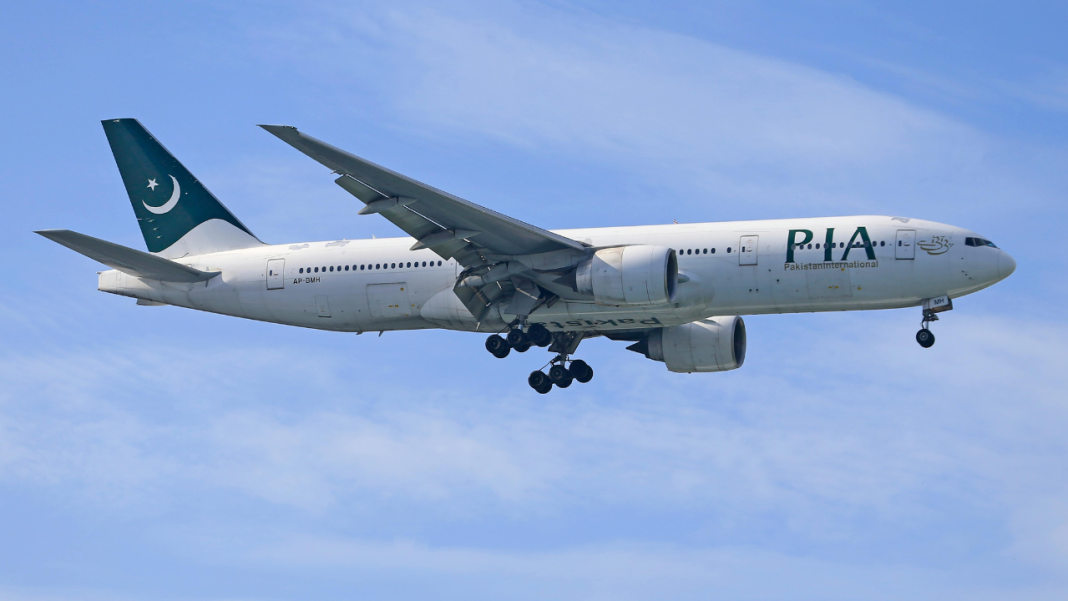

Trustworthy information regarding how much PIA costs has now been posted online, with the question being asked across the world. Upon investigating the terms in detail, it appears that many factors contributed to the sale price of PIA. Also, the government doesn’t want to share this data, so all the terms that created this value for PIA are being withheld.
It appears that bidders purchased 75% of PIA for an established market value of Rs. 135 billion, while the government has provided a figure of only Rs. 10.125 billion that they received in cash. This discrepancy allowed critics to assert that the bidders were exploiting the government.
However, after investigation, it has become obvious that bidders had committed themselves to conducting a full assessment of how much debt they would need to take over as well as what amount of capital they would need to provide to the PIA. When determining the amount bidders actually paid for PIA, it is important to take into account all of these conditions included in their offer.
Understanding the value of the “price” involves realising that book (accounting) equity, market value, and transaction value are all very different things. As highlighted previously in the profit analyses, PIA’s book equity as of the past few audits had been near negative territory, as illustrated in previous balance sheets showing a net asset position below zero prior to the initial partial recovery of PIA’s operational finances in 2024. Conversely, the market value of an enterprise reflects, to some extent, a buyer’s realisation that they will have to finance a turnaround, as shown by the value assigned to a 75% stake in PIA through the bidding process.
To understand the value of the “price”, the best way is to break up the deal into two halves: the cash the government receives today and the capital the purchaser will actually put into the airline to make it sustainable. As calculated in the earlier analyses, (1) the purchaser will pay an upfront cash amount of Rs 10.125 billion for 75%, and (2) the purchaser will incur a capital expenditure and restructuring of approximately Rs 124.875 billion to make PIA operational. If you account for the government’s portion of the capital injected, the total real transactional purchase price of the 75% stake is approximately Rs 41.375 billion. Extrapolating the above, Profit estimated the actual “purchase price” of the entire airline is approximately Rs 55.16 billion.
Here’s an alternate way of thinking about the situation: An expensive property with a desirable location but a lot of deferred maintenance (e.g., broken foundations, leaking roofs, wiring problems) may seem inexpensive when sold, since the cash received will likely be low. But the total cost and value to the buyer would include the initial purchase price and the additional money needed to repair all the damage (which will take a lot of time and resources).
We can apply all of this information to the PIA because there are also many optionality opportunities and timing opportunities in connection with the PIA. Regarding capital investment into the acquired PIA, it will be the buyer that spends the most capital after the acquisition of the PIA by the buyer, which would result in the enterprise value of the buyer after the acquisition being roughly Rs. 180 billion. A Deferred Buyback Price (or Right of First Refusal) attached to the purchase of the PIA will increase the difficulty of determining the present (or “time-zero”) value due to this added complexity. Solely comparing the value of the PIA at the time of purchase based on the cash paid to the government (or on book value) will not adequately capture the full potential of this PIA transaction relative to the political controversy surrounding the acquisition of the PIA.
Is it possible to close the book on this political controversy? The answer is no. As with all privatisation transactions, politics play an important role in determining how people view privatisation transactions, as they are concerned about what is taken (i.e., the protection of citizens’ rights that would be provided through the privatisation of the PIA). A detailed and rigorous accounting analysis is necessary to determine the “real cost” to the buyer of the PIA and the terms and conditions that will define this “real cost.” Through funding, the government has secured a commitment of financial support and has the opportunity to transfer the responsibility for any immediate financial assistance needed by the PIA to the private sector and the buyer, who will assume the risk of converting a historically taxpayer-funded entity into one that can operate without taxpayer support.
The PIA transaction, regardless of how people may look at it differently, is a good reminder that with very complicated privatisations, the real cost of the transaction is the contractual commitments made by either party, not just the cash that changed hands. If taxpayers in Pakistan want to understand the PIA deal clearly, they deserve a straightforward explanation of the agreements made and an unbiased assessment of their worth, as this will show the real value and risk of the asset being sold through privatisation.