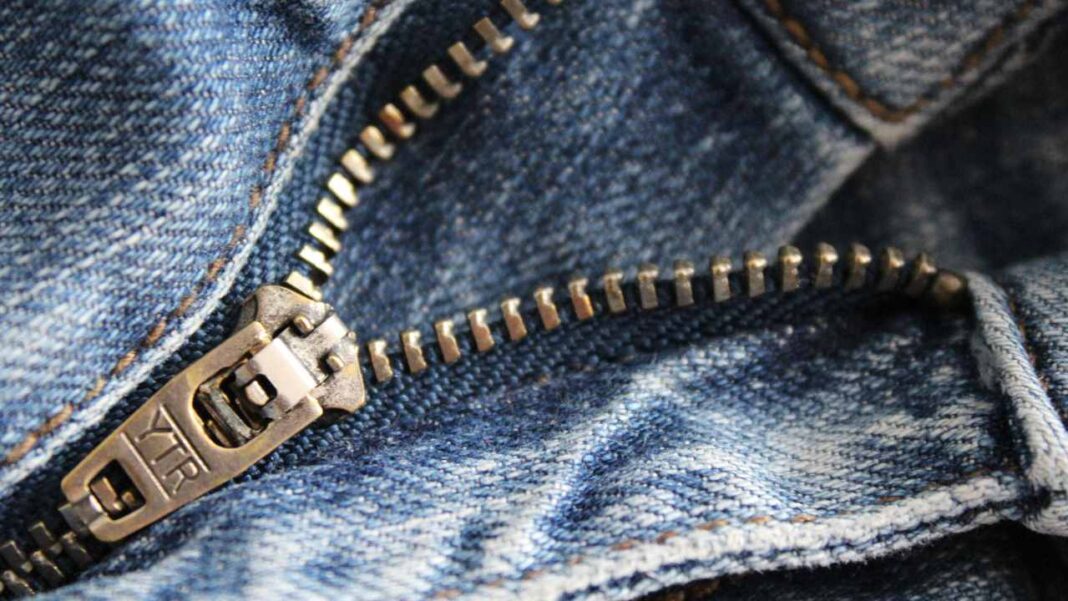


In the present day, jeans are known to be one of the most popular, most worn, and most versatile clothing items in the world. As it does not matter in age appropriateness, jeans fit anyone in any group, whether it be culture, age, or social group; they have always been and will continue to be a staple of modern fashion. The origin of this well-known item of clothing journeys back to the nineteenth century, where practicality and durability outweighed style.
Beginning the story with Levi Strauss, who was a businessman who immigrated to the United States from Germany in the mid-1800s, Strauss moved to San Francisco during the time of the California Gold Rush, when thousands of miners continued to flock to the region to find gold. Thousands of miners were engaged in hazardous and nearly chaotic tasks. These miners needed strong and durable clothing that could withstand the tough conditions when they performed mining work.
Strauss initially sold dry goods and fabrics to workers, but he soon realized there was a growing demand for sturdy work trousers. Around the same time, a tailor named Jacob Davis had an idea that would change clothing history. Davis began reinforcing the pockets and stress points of work pants using copper rivets to prevent them from tearing. Recognizing the potential of this innovation, Davis partnered with Strauss to patent the design in 1873. This invention marked the official birth of modern blue jeans.
Denim, which was a fabric known to make trousers, is a double cotton twill material. The French phrase “serge de Nîmes” is believed to be the origin of its name, which refers to a type of cloth that is produced in the city of Nîmes in France. In the meantime, the term “jeans” is thought to have originated from the Italian port city of Genoa, which had a similar fabric that was proven to be sturdy and was mainly used for sailors’ trousers.
While miners, farmers, railroad laborers, and cowboys were the initial wearers of jeans, their durability and comfort were seen to be ideal for physically demanding and tiring jobs. And as time went by, the trousers became even more closely associated with the rugged image of the American West.
However, jeans began to transform from simple workwear into a cultural symbol in the mid-twentieth century. During the 1950s, Hollywood played a major role in popularizing jeans among young people. Actors such as James Dean and Marlon Brando wore denim jeans in films that portrayed rebellious youth culture. As a result, jeans quickly became associated with independence, nonconformity, and youthful identity.
Jeans continued to move beyond rebellion during the 1960s and 1970s, as designers became more enticed with the fabric and piece of clothing. This prompted them to start experimenting with new cuts, washes, and styles. The general public now embraced what was once simple workwear. Students, musicians, and artists wore this fabric as a symbol of casual freedom and one’s individuality.
Global fashion brands continued to rise, permanently cementing denim’s popularity. Companies such as Levi Strauss & Co. ended up expanding the production of this versatile clothing and had heavy distribution take place, which made jeans more and more accessible around the world. As time passed by, designers’ creativity rose, and different types of styles emerged. Bell bottoms, skinny jeans, and high-waisted designs are ideas that proved to be a success even in the present.
In the current world, jeans are no longer viewed as casual wear, but many designers incorporate denim into high fashion collections, showing how the garment has continued to evolve and grow from practical clothing to a powerful fashion statement. At the same time, sustainability and ethical production are also topics that have been discussed and encouraged for brands to explore more environmentally friendly ways of producing this global phenomenon, such as using organic materials, reducing water usage, and implementing fair labor practices.
From the dusty mines of nineteenth-century America to runways and wardrobes worldwide, jeans have undergone a remarkable transformation. What began as a solution to workers’ practical needs has become one of the most enduring and influential garments in global fashion history.