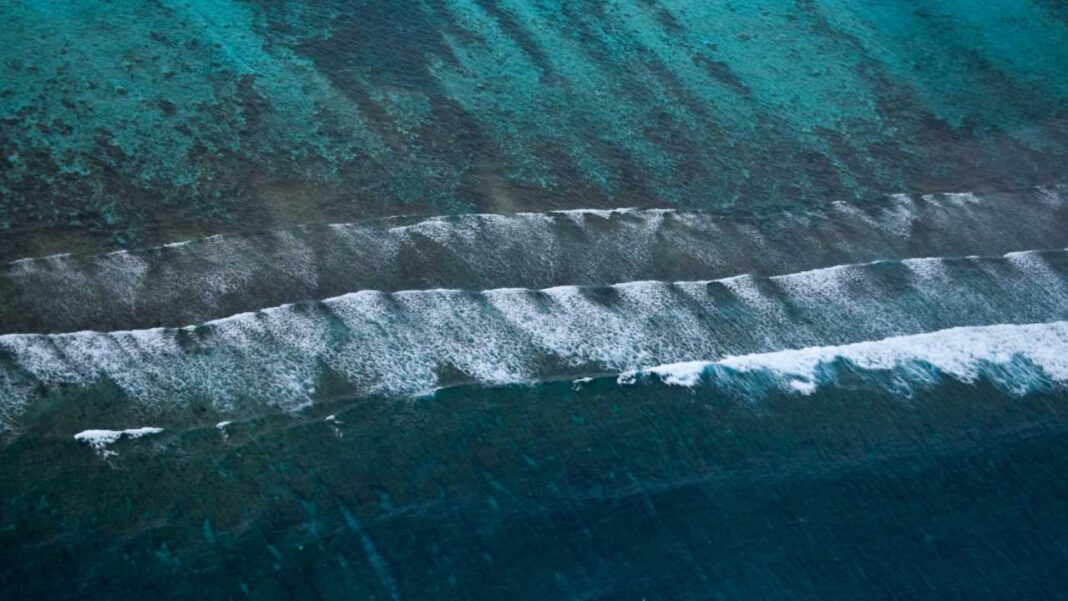

The Bismarck Sea’s turbulent waters give us a further reminder of how we can be threatened by things that originate below the surface of our planet, specifically this most recent underwater volcanic eruption off Papua New Guinea, which has caused immense concern for a tsunami and placed numerous scientists, emergency managers, and coastal jurisdictions on alert.
Though we have not yet seen any widespread devastation due to this volcanic eruption, we have also been reminded once again of an extremely unpredictable form of natural hazard (submarine volcanism) that can produce catastrophic waves with very little advanced warning.
Unlike a traditional volcanic eruption, which can generally be seen much higher than the horizon (above sea level), an underwater eruption will typically go undetected until water reacts to the eruption. Essentially, pressure builds up in darkness, and magma comes into contact with seawater, creating a violent reaction. This reaction produces shockwaves, ash clouds and possibly tsunamis.
The Pacific Ring of Fire is home to approximately three-quarters of all active volcanoes on the planet, including Papua New Guinea, which has a long and destructive history of deadly tsunami events resulting from eruptions. For example, the destruction of Ritter Island (in the Bismarck region) in 1888 generated a high-profile series of tsunamis that claimed the lives of 1,500-3,000 individuals—a clear demonstration of the incredible potential for destructive volcano-generated wave events.
While scientists consider these types of volcanic tsunami events to be less common than earthquake-generated tsunamis, they are as well less predictable. The 2022 eruption of Hunga Tonga-Hunga Ha’apai caused significant global concern as an example of an unexpected event that produced a violent explosion and resulted in tsunami waves travelling globally—resulting in large gaps in the current global warning systems.
That is why this most recent eruption is so important for the Pacific island nations; every underwater tremor has significant implications for their ongoing survival, as they often only have a few minutes to respond.
The deeper lesson is that we, as humans, are still humbled by a planet that makes its own rules. Satellite imagery can track ash clouds, and algorithms can predict wave heights; however, there are still things the oceans have yet to reveal to us.
Papua New Guinea is currently proving that it is looking at the ocean. We should all be looking at the ocean with them.
The loudest warning sign is often the silence before the first wave, not the eruption.