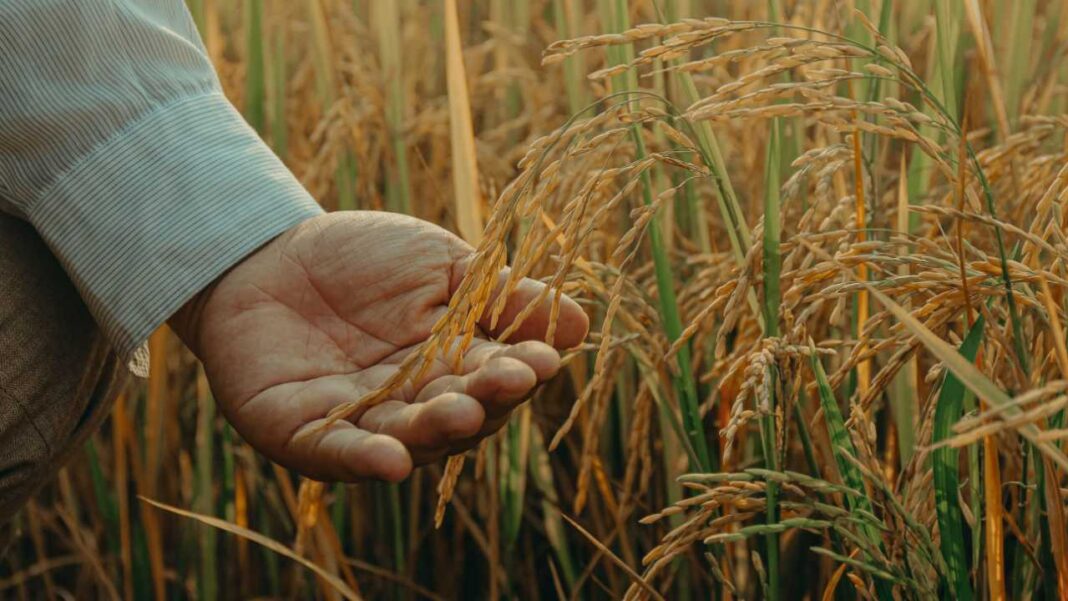

Field tests in India have shown that natural soil fungi can help rice plants grow better while reducing the need for chemical fertilisers. Researchers believe this could help farmers lower farming costs and reduce harmful greenhouse gas emissions linked to rice production.
The study was carried out by scientists from the University of Cambridge together with UK rice company Tilda and basmati rice farmers in northern India. The team tested special bio-fertilisers made with naturally occurring fungi under real farming conditions.
These bio-fertilisers contain arbuscular mycorrhizal fungi. These fungi naturally live in soil and connect with plant roots. They help plants absorb more nutrients and water from the soil by extending the reach of the roots underground.
According to the report released by Tilda, the trial results show that rice fields treated with both chemical fertilisers and fungi-based biofertilizers produced higher yields than fields using only chemical fertilisers. Farmers recorded harvest increases between 5% and 15%.
Dr Emily Servante, who led the research, said every farmer in the project noticed better rice growth in the fields where the bio-fertiliser was used. She explained that the fungi improved root growth and helped make the crops stronger and healthier.
The trials took place on farms using a water-saving irrigation system called Alternate Wetting and Drying, also known as AWD. This farming method was developed by the International Rice Research Institute. Traditional rice farming usually keeps paddy fields flooded with water all the time. Under the AWD system, fields are allowed to dry for short periods before water is added again. Farmers use a small tube placed in the soil to check when watering is needed.
Researchers say the fungi grow especially well in these slightly drier soil conditions. This makes them suitable for newer and more sustainable rice farming methods. Dr Servante described the early findings as very promising. She said the next stage of the project will focus on learning whether farmers can safely reduce chemical fertiliser use while still maintaining strong rice harvests.
The project will now expand to include more farms from Tilda’s farming network in India. The company works with more than 4,000 farmers, giving researchers a chance to study the results on a much larger scale. Experts say reducing chemical fertiliser use is important because fertilisers release nitrous oxide, a powerful greenhouse gas that contributes to climate change. Agriculture is responsible for a large share of global greenhouse gas emissions, and fertiliser use plays a major role.
Scientists also say cutting back on chemical fertilisers can improve soil health. Healthier soil supports more microbial life, which helps keep farmland productive over time. Another environmental issue linked to rice farming is methane gas. Flooded rice fields release large amounts of methane into the atmosphere. Methane is considered one of the strongest greenhouse gases.
Previous studies by Tilda found that using the AWD irrigation method reduced methane emissions by around 45%. The system also lowered energy use linked to irrigation by about 25%. However, scientists warn that drier soil conditions can sometimes increase nitrous oxide emissions. Researchers believe the fungi-based fertilisers may help solve this problem by improving nutrient use naturally inside the soil.
Tilda says it wants to make rice farming more sustainable and environmentally friendly. The company is also the first UK rice brand to receive B Corp certification for meeting social and environmental standards. Tilda currently works with thousands of rice farmers through its sustainability programme. The programme focuses on reducing water use, lowering greenhouse gas emissions and improving farming methods.
Tilda’s managing director, Jean-Philippe Laborde, said improving fertiliser efficiency has become increasingly important because fertiliser production depends heavily on natural gas and global energy supplies. Recent global events and rising energy prices have caused fertiliser shortages and higher costs for many farmers around the world. Laborde said natural solutions, like biofertilizers, could help farmers become less dependent on expensive chemical products. Researchers hope the project will create a farming system that is more affordable, environmentally friendly and reliable for the future of basmati rice production.