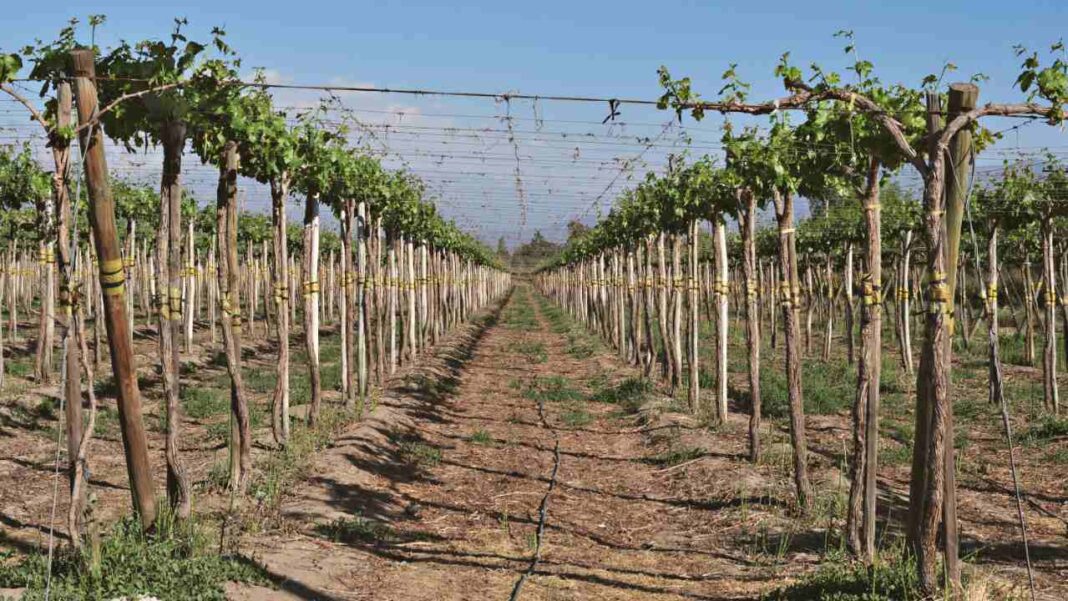
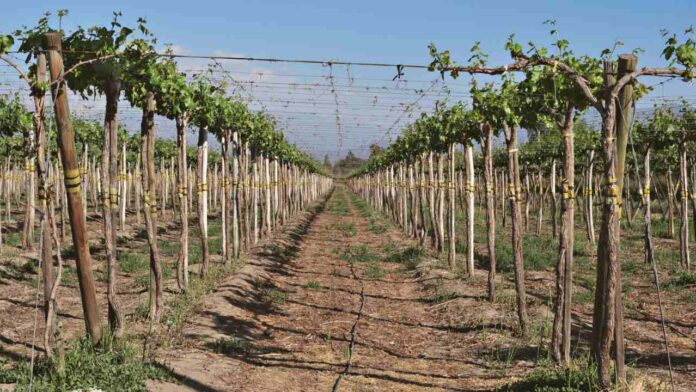

On a hot afternoon in California’s wine country, vineyards can suffer serious damage. The sun does more than warm the grapes. It can burn them. When the temperature rises above 100°F, grape clusters can become even hotter. In direct sunlight, they may reach around 140°F. At this level of heat, grapes start to dry out. They shrink. Their quality drops. The color inside red grapes can break down. This deterioration affects the taste and value of the wine. The study is published in the American Journal of Enology and Viticulture.
For vineyard owners, the deterioration is a big problem. They put a lot of money into land, vines, and equipment. These vines are supposed to grow grapes for many years. But one strong heat wave can damage the harvest and lower quality. Such damage can also reduce profits for many years afterwards. Climate change is making this risk worse in many wine regions. The question is simple but challenging. How can winemakers still make excellent wine when the climate keeps changing?
Researchers at Cornell University studied this issue. They did not only look at farming methods. They also studied money and consumer behavior. Their goal was to comprehend which strategies are sustainable for wine growers in the long term. The research team included experts from different fields. They came from agricultural science and business studies, including the SC Johnson College of Business and the Dyson School of Applied Economics and Management, along with the School of Integrative Plant Science.
They studied three main ways vineyards can respond to rising temperatures. The first method is protection. Growers can use shade cloth over vines. This blocks some sunlight and keeps grapes cooler. It can reduce heat damage during extreme weather. But it also costs money to install and maintain.
The second method is changing grape types. Instead of traditional grapes like cabernet sauvignon, farmers can switch to heat-tolerant varieties. These grapes survive better in hot weather. However, they may not sell for as much money in the market. The third method is relocation. This means moving vineyards to cooler areas nearby. For example, some growers in Napa Valley could move to regions like Lake County, where temperatures are lower.
Each option has advantages and disadvantages. Some protect quality but are expensive. Others are cheaper but may reduce the value of the wine. Moving locations can solve heat problems but changes the identity of the wine region. Grapes are very sensitive to temperature.
Small increases in heat can change how they grow. Around 86°F, photosynthesis starts to slow down. Around 95°F, the compounds that give red wine its color begin to weaken. Grape cells are susceptible to damage above 104°F. This is especially serious for high-value grapes like cabernet sauvignon. Famous wine regions like Napa Valley closely associate with these grapes. Both the grape type and its growing location often matter to consumers. Wine labels play a big role in sales.
Many buyers look for familiar names like “Napa” and “Cabernet Sauvignon.” These labels signal quality and tradition. Changing either the grape or the location can affect how customers feel about the wine. The researchers built a financial model to study long-term vineyard profits. They also surveyed more than 300 wine drinkers in the United States. Participants were shown different wine label scenarios. They were asked how much they would pay for each type. The results showed some intriguing patterns. When consumers were told that shade cloth was used to protect grapes, they were willing to pay about 17% more. When grapes were changed to heat-resistant varieties, they still showed a willingness to pay around 12% more. Even wines from new regions received a small positive response.
This suggests that many consumers are aware of climate change and accept some adaptation in wine production. However, this positive response may not last forever. Over time, the novelty may fade, and price premiums could drop. The researchers then tested different climate futures. If temperatures rise only slightly, keeping traditional grapes in places like Napa remains the most profitable strategy. If heat increases moderately, using shade protection becomes more effective. If heat becomes extreme, switching to heat-resistant grape varieties provides the best financial outcome.
This means there is no single best solution. The right choice depends on how severe climate change becomes in the future. It also depends on how consumers respond to changes in wine style and origin. The study indicates that winemakers must be flexible. They may need to adjust farming methods over time. Climate change is not a one-time problem. It is an ongoing challenge that affects both nature and business decisions.