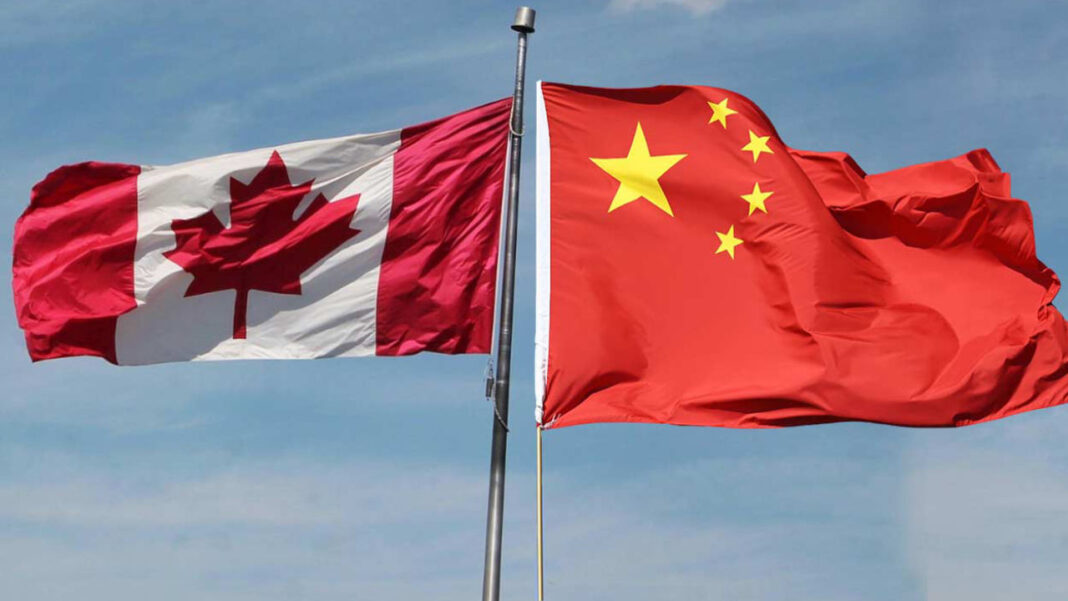

Canadian Industry Minister Melanie Joly said that she had clearly expressed to four Chinese electric vehicle (EV) makers that getting more access to the Caribbean market may require them to “build where you sell.”
Joly also seeks to establish a new lifeline for the domestic auto industry, which is currently facing uncertainty due to the CUSMA reviews. Meanwhile, Japanese auto manufacturers are voicing concerns about the federal government’s embrace of their largest regional competitor.
During the past week, while visiting China, Joly met with executives from BYD, Chery, and Geely, besides Shanghai Launch Automotive Technology. The minister said that the four organisations intend to eventually expand beyond the present quota of permitting 49,000 Chinese EVs to enter Canada this year.
Earlier this year, during Carney’s trip to Beijing, Canada agreed to permit up to 49,000 Chinese EVs. This was under a reduced tariff of 6.1%. It was in exchange for China lifting retaliatory tariffs on some Canadian agricultural products.
Joly, speaking to CTV News on the sidelines of a Team Canada trade mission to Japan, insists on placing strict conditions on potential manufacturers.

Jolly anticipated the establishment of EV assembly plants as joint ventures with a majority Canadian ownership. Besides abiding by the country’s labour codes, they should use Canadian supplies. For Chinese organisations to make electric cars in Canada, they also have to ensure data security. For example, guarantee that user data collected by the vehicle won’t be transferred to the Chinese government when drivers connect their cell phones to their cars.
Joly also implied that progress was being made in persuading Chinese automakers to set up shop in Canada.
Joly added that she wasn’t expecting it to lead to results in days. However, there can be positive conversations leading potentially to decisions in future months.
That’s a concern to Japanese automakers operating in Canada.
The president & CEO of Mitsubishi Motor Sales in Canada shares with CTV News that Chinese EVs are difficult to compete against.