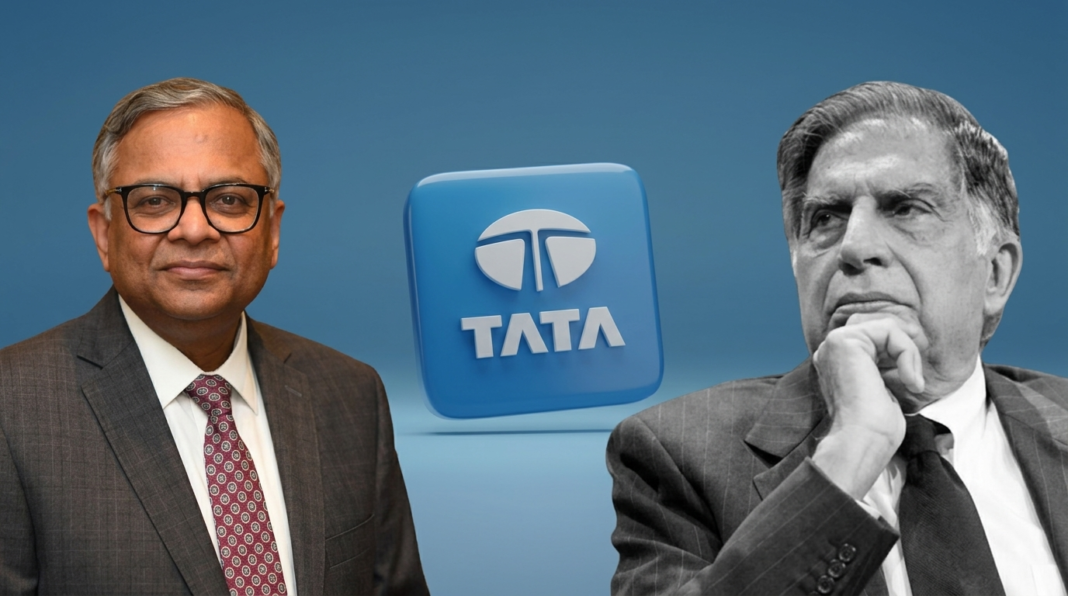

India (Commonwealth Union)_ The Tata Group, one of the world’s largest and most closely watched business conglomerates, is entering a period of uncertainty after Tata Sons Chairman N Chandrasekaran decided not to seek another term. His current five-year tenure ends on February 20, 2027. Until recently, a further term appeared likely. But his sudden decision to step down has shaken the entire Tata Group and the business world. It has also surprised investors, employees and business partners and raised a major succession question at the top of the group. The decision comes at a sensitive time as Tata is expanding rapidly across technology, automobiles, aviation, electronics, semiconductors, electric vehicles and artificial intelligence. Chandrasekaran has been central to much of that transformation. His departure does not immediately change the ownership or operations of individual companies, but it creates uncertainty about who will set the group’s priorities next.
Also read: Russia salutes India from space: Russian cosmonauts have a special message for India!
The Tata Group
Tata Sons is the holding company at the centre of the Tata Group. It oversees a wide collection of businesses, including Tata Consultancy Services, Tata Motors, Tata Steel, Tata Power, Tata Consumer Products and Air India. The group has a global workforce of more than one million people and operates across industries ranging from information technology and manufacturing to airlines, chemicals and hospitality. The chairman of Tata Sons has influence far beyond one company. The role involves balancing the interests of operating businesses, Tata Trusts, shareholders, employees and governments in several countries. That makes succession particularly important. A leadership change could affect how the group spends capital, chooses new businesses and manages its existing investments.
Who is Chandrasekaran?
Chandrasekaran joined the Tata Group in 1987 and spent most of his career at TCS. He rose through the technology company’s ranks and became its chief executive in 2009. In 2017, he was appointed chairman of Tata Sons after the turbulent period that followed Cyrus Mistry’s removal. Over the years, Chandrasekaran emerged as one of the most influential figures in Indian business. He helped strengthen TCS while later pushing the wider group into new areas. Under his leadership, Tata increased its focus on electric vehicles, batteries, electronics, semiconductors, aviation and digital businesses. His approach was ambitious and often involved large investments. The group expanded its global footprint while also attempting to revive or reposition businesses that required significant capital. In 2023, Chandrasekaran was awarded France’s prestigious Legion of Honour for his contribution to strengthening business and economic ties between India and France. For supporters, Chandrasekaran modernised Tata for a changing economy. His exit now raises questions about whether that strategy will continue under his successor.
Also read: India’s digital diplomacy takes off: The digital reach expands to 24 nations!
Why did he resign?
The immediate reason for the decision appears to be a lack of unanimous support for extending his tenure beyond 2027. Chandrasekaran’s statement suggested that Tata Trusts had initially supported his new five-year term, but the proposal was not unanimously accepted when it was tabled for final ratification by the Tata Sons board. This disagreement has revealed tensions between Tata Sons and Tata Trusts. Tata Trusts owns a controlling stake in Tata Sons and therefore plays a significant role in deciding the group’s long-term leadership. Noel Tata, chairman of Tata Trusts, has also surfaced as a key figure in the succession debate.
Additionally, reports of differences over governance, board representation and strategy have added to the uncertainty. There has also been discussion around the future position of minority shareholder Shapoorji Pallonji Group. Against that background, Chandrasekaran appears to have chosen an orderly exit rather than remain at the centre of a prolonged leadership dispute. His decision also comes shortly before the group’s annual general meeting. By asking the board to begin the search for a successor, he has effectively pushed the group to resolve the leadership question well before his term expires.
What his statement means
Chandrasekaran described his four decades with the Tata Group as deeply rewarding and said that leading Tata Sons had been a great honour and responsibility. More importantly, he stressed the need for clarity about leadership beyond February 2027. That message is significant. A large conglomerate cannot afford prolonged uncertainty at the top, particularly when it is involved in expensive and complex projects. Employees need direction, investors need confidence and business partners need to know who will make major decisions. His decision therefore aims to protect the group from a drawn-out boardroom battle. Instead of waiting until the end of his term, he has given Tata Sons time to identify and prepare a replacement.
The Tata Sons-Tata Trusts dispute
The Tata Sons board currently has six directors, led by Chairman N. Chandrasekaran. It also includes Tata Trusts Chairman Noel N. Tata; veteran Tata executive and Tata Trusts Vice-Chairman Venu Srinivasan; Group CFO Saurabh Agrawal; and independent directors Harish Manwani and Anita Marangoly George. Noel Tata, the half-brother of the late Ratan Tata, took charge of Tata Trusts in 2024 following Ratan Tata’s death. The succession issue closely connects to the relationship between Tata Sons and Tata Trusts. The two sides share a common interest in protecting the Tata name, but differences over strategy and governance can become important when the group is deciding who should lead it.
Noel Tata took over as chairman of Tata Trusts after the death of Ratan Tata, a role that gives him significant influence over the direction of Tata Sons. The succession has been even more closely watched given reports that he was not behind Chandrasekaran. There is also speculation that Neville Tata, Noel Tata’s son, might eventually play a bigger role in the group. But to become chairman of Tata Sons would take a lot more than family connections. The next leader will have to satisfy the board, Tata Trusts and investors while managing businesses spread across different industries and countries.
Markets react to the shock
Financial markets reacted quickly to the news because investors dislike uncertainty, particularly at the top of a large corporate group. Shares of several Tata companies came under pressure following the announcement, with some major stocks recording sharp intraday declines. TCS, the group’s most important cash-generating business, was among the companies affected. Tata Motors, Tata Steel, Tata Power and other group-linked companies also faced selling pressure. The market reaction was not necessarily a judgement on the financial health of these businesses. Instead, it reflected concern about what the leadership change could mean for future strategy and investment. Investors will be watching whether the next chairman continues Chandrasekaran’s capital-intensive expansion plans. Projects involving electric vehicles, batteries, aviation, electronics and semiconductors require large sums of money and long-term commitment. A change in leadership could alter the pace or priorities of those investments.
Global business impact
The consequences of the succession race will extend well beyond India. Tata owns major businesses in Britain, including Jaguar Land Rover and steel operations. Governments, workers and suppliers in those markets will be watching closely for signs of any change in investment plans. The same is true in East Africa. Tata Motors has an established presence in commercial vehicles and transport markets across countries such as Kenya, Uganda and Tanzania. Tata Chemicals’ Magadi operation is also an important industrial business in Kenya. A new chairman could influence how Tata allocates capital across international markets. That could affect factory investments, employment, supply chains and expansion plans. For countries that depend on Tata businesses for industrial activity and jobs, the succession is therefore more than an issue inside an Indian boardroom.
Also read: A new digital money bridge opens between the Maldives and India: Favara and UPI join hands!
The succession race begins
The board now has several months to identify a successor, and its choice will be closely scrutinised. Tata could consider internal candidates or seek an experienced executive from outside the group. An internal candidate would offer familiarity with Tata’s culture and complicated structure. But an outsider could also bring a fresh perspective and experience of running a global conglomerate. Neville Tata would attract attention because of his family connection, but the appointment of a relatively young executive to run the company might be viewed with concern by investors. An experienced business executive with a background in technology, manufacturing, finance, and global operations might be viewed as a more reliable choice. The eventual choice will show how Tata wants to balance tradition with its increasingly ambitious business strategy.
End of an era
Chandrasekaran’s departure marks the end of an important chapter for Tata. He inherited a group recovering from a major leadership dispute and leaves after years of expansion into businesses that were once outside Tata’s traditional focus. His greatest challenge is now handing over a group that is larger, more global and more complex than the one he took charge of in 2017. The next chairman will have to decide how much of his strategy should continue and where the group needs to change course.
The central question is no longer whether Chandrasekaran will remain. It is about who can replace him without disrupting the group’s momentum. The size, financial power and global footprint of Tata give it considerable advantages, but the leadership change comes at a crucial moment. The next chairman will inherit ambitious projects, powerful companies and high expectations. More importantly, the new leader will have to preserve the delicate relationship between Tata Sons and Tata Trusts. How the new leader manages that balance could shape the future of one of the world’s biggest conglomerates for years to come.