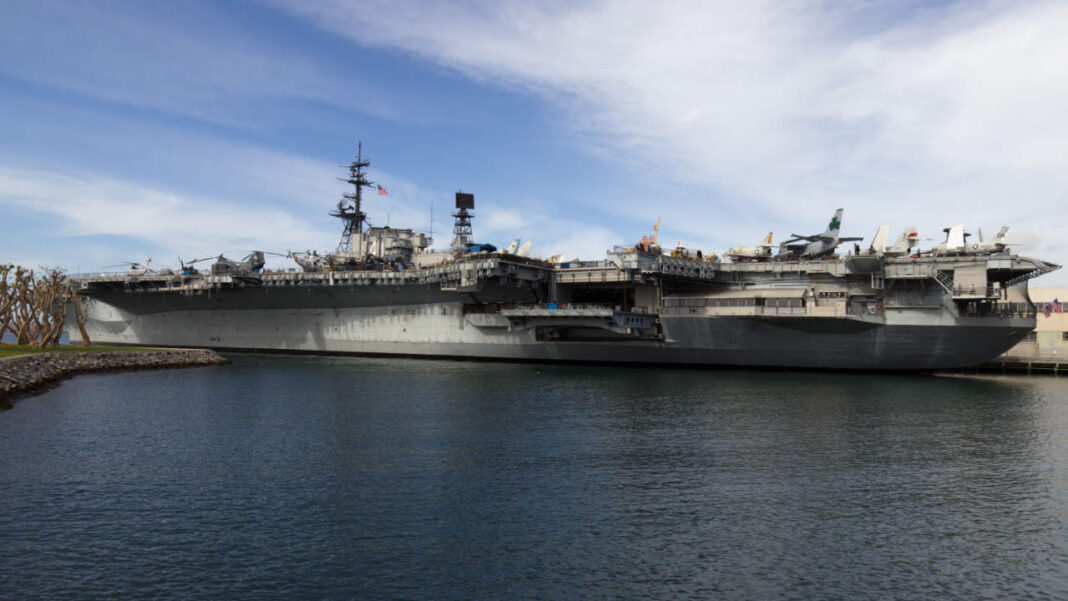


The top US military commander in the Middle East has said mental health is now a major priority for sailors serving on the USS Lincoln. Adm. Brad Cooper made the comments after visiting the aircraft carrier on Saturday. He said the ship had one of the lowest numbers of reported mental health cases among the US Navy’s 11 active aircraft carriers.
However, he admitted that spending long periods at sea can be extremely difficult. He said life on a warship is “uniquely challenging and tough.” The USS Lincoln has been deployed in the Middle East since January. It has supported US military operations against Iran, including efforts to block Iranian ports.
The ship has now spent more than 240 days continuously at sea. Its deployment was originally expected to end in May but has been extended several times. Reports have raised concerns about the conditions faced by the roughly 5,000 people on board. Sailors have reportedly dealt with poor sanitation, plumbing problems, limited fresh food, and long periods without visiting a port.
Some family members have also raised concerns about the mental health of sailors. Reports have claimed that some crew members tried to jump overboard. The Navy has rejected claims that the ship is facing a mental health crisis. It has, however, admitted that the long deployment has created supply problems.
Adm. Cooper praised Lincoln’s leadership for making crew well-being and mental health a priority. He said mental health should receive the same attention as physical and spiritual health. The situation has also drawn criticism from US lawmakers. Thirteen Democratic members of the Senate Armed Services Committee have written to Defense Secretary Pete Hegseth. They questioned the length of the deployment and asked for more information.
Hegseth previously said reports about conditions on the ship had been badly misrepresented. President Donald Trump also rejected concerns that the sailors had spent too much time at sea. The USS George Washington is expected to replace the Lincoln. It could reach the region within about a week.
Maryland Governor Wes Moore, a US Army veteran, described the reported conditions as heartbreaking. He called for greater concern for the sailors’ well-being.