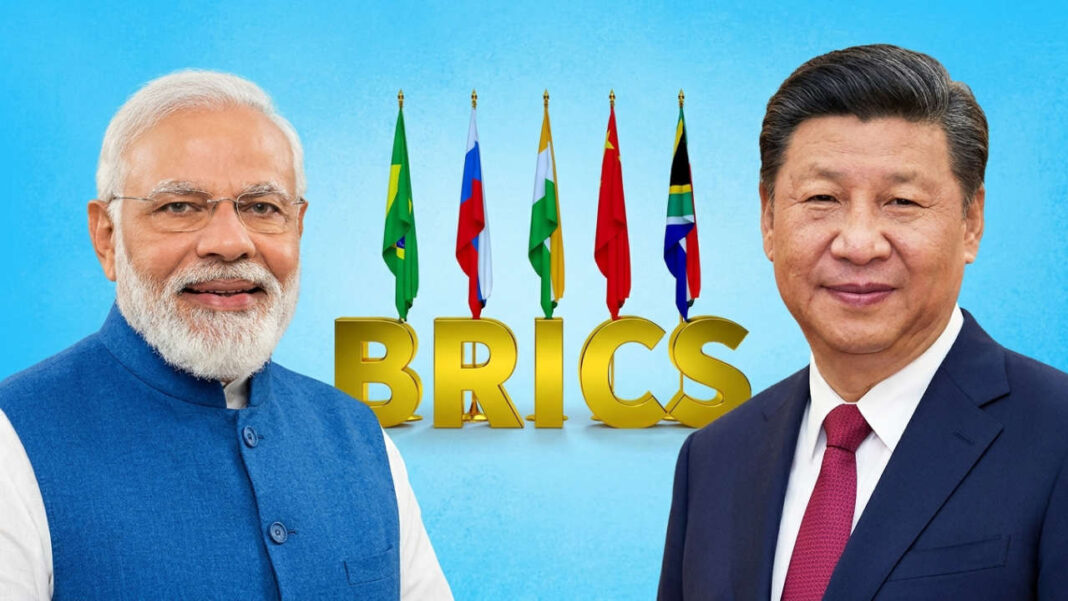

India (Commonwealth Union)_ Chinese President Xi Jinping’s possible visit to India for the BRICS summit could mark an important step in the gradual repair of ties between the two Asian powers. If confirmed, it would be Xi’s first visit to India since the 2019 informal summit in Mamallapuram and his first trip to the country since relations deteriorated sharply after the Galwan Valley clash in 2020. India is scheduled to host the BRICS summit in New Delhi on September 12 and 13. Indian officials have indicated that Xi could arrive with a delegation of about 400 people, roughly twice the size of the team that accompanied him in 2019. Beijing has not confirmed his travel plans, but China has made clear that it attaches considerable importance to BRICS cooperation and supports India’s role as host.
Also read: Bangladesh gets new president: BNP veteran Mirza Fakhrul sworn in as 23rd president of Bangladesh!
The possible visit matters beyond India-China relations. It also highlights how important BRICS has become to China’s foreign policy. Beijing appears to view the grouping as a platform through which emerging economies can work together on trade, economic development and international affairs at a time of growing tensions with Western powers. For China, maintaining and strengthening BRICS also offers a way to demonstrate that global influence is no longer concentrated among traditional Western powers. The grouping has expanded in recent years, bringing together a wider range of countries and giving Beijing a broader diplomatic network across Asia, the Middle East, Africa and beyond.
Xi’s presence in New Delhi would therefore carry a message to the world: despite the strategic competition with India and continuing disagreements with Washington, China still wants BRICS to remain a strong vehicle for cooperation among emerging economies. At the same time, the visit would have significance for India. Relations between New Delhi and Beijing have improved since the two sides reached a disengagement agreement along their disputed Himalayan border in October 2024. As a result, direct flights have resumed, visa restrictions have been eased and senior officials have returned to regular diplomatic engagement.
Yet major differences remain. The two countries still face unresolved border issues, and trust has not fully recovered from the 2020 military confrontation. National Security Adviser Ajit Doval’s recent talks with Chinese Foreign Minister Wang Yi in Beijing underline the importance of managing these disputes. If Xi does travel to India, the summit could provide an opportunity for both sides to demonstrate that competition does not have to prevent dialogue. For China, however, the larger objective may be even broader: strengthening BRICS and showing that emerging powers can play a greater role in shaping the international order.