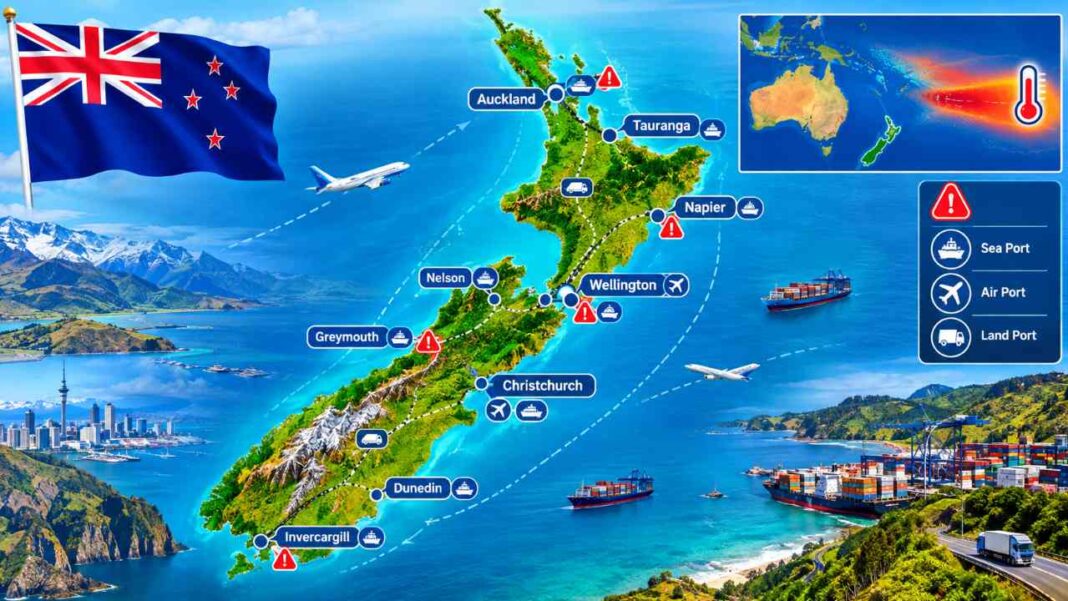

New Zealand (NZ) is entering a freight season as a rapidly strengthening El Niño reshapes weather patterns across the Pacific. Earth Sciences NZ says the 2026 event could become the strongest on record, while stronger southwest & northwest winds are expected locally. For freight operators, that combination raises the prospect of disrupted roads, exposed ports, delayed schedules, damaged infrastructure & higher costs across supply chains.
The immediate concern is not the strength of the weather but the increased uncertainty surrounding transport planning in the near future. El Niño may alter rainfall and wind, besides temperature patterns. These changes may create conditions that complicate road maintenance. Furthermore, coastal shipping & port operations. NZ’s freight system already faces vulnerabilities identified by Waka Kotahi. The system includes critical links besides nodes where closures may quickly generate wider economic consequences for producers and retailers as well as exporters nationwide.
Road freight is exposed because regional communities depend on a limited number of highways & bridges. Heavy rain, earth slips, washouts or wind damage may compel detours, reduce delivery capacity and isolate businesses. Additionally, prolonged dry conditions may affect agricultural output. Furthermore, increase pressure on water resources. Either pathway may disrupt the timing, volume & cost of freight moving between farms, distribution centres, cities & ports.
Ports form an important pressure point. NZ has been relying heavily on maritime connections for international trade. This situation may mean that interruptions at gateways may quickly affect exporters & importers. Rougher conditions may delay vessel movements. Furthermore, cargo handling or coastal services. This is while disruptions inland may prevent containers from reaching terminals. The result may be congestion. Also, equipment shortages, missed sailings & additional storage. This may include even repositioning costs. That’s for businesses managing time-sensitive cargoes.
Logistics pressures are likely to amplify effects on agriculture. Additionally, El Niño-related changes in rainfall and temperature may also affect pasture. Notwithstanding, horticulture & other production. These changes may alter both the quantities & timing of goods entering freight networks. A weaker harvest may reduce outbound cargo, while shortages of products or inputs may increase import requirements. Freight companies therefore face a moving target, with demand changing alongside weather conditions rather than following predictable seasonal patterns.
The North Island deserves particular attention because its freight corridors carry a substantial share of national freight activity. The Ministry of Transport says about 55% of NZ’s freight originates in or is destined for Northland, Auckland, Waikato & Bay of Plenty. Disruption across this interconnected area may therefore create effects well beyond one locality, particularly if alternative routes lack sufficient capacity or resilience.
Businesses are likely to respond by increasing flexibility rather than relying on a single transport option. Waka Kotahi’s 2026 freight vulnerability research points to stockholding, shipment delays, alternative routes & greater strategic use of rail or sea during longer disruptions. For enterprises, such a strategy may mean holding more stock inventories than needed. Besides also, diversifying suppliers and reserving alternative capacities. In addition, strengthening clear communication with carriers before severe conditions interrupt normal operations.
As weather risks increase, digital visibility’s likely to become more valuable. Accurate forecasts, road status information, and port updates, besides shipment tracking, may help logistics managers. This is in making earlier decisions about routing besides delivery windows. Yet technology may not remove physical bottlenecks. If a bridge, highway, terminal or regional corridor becomes unavailable, operators still need practical alternatives, spare capacity & coordinated contingency plans to keep essential goods moving.
The longer-term lesson is that resilience must be treated as an investment rather than an emergency expense. NZ’s national freight strategy already calls for a system that is resilient. Also, reliable and prepared for disruption. Strengthening vulnerable corridors, improving redundancy, protecting critical infrastructure & coordinating road, rail & maritime options may reduce the wider economic shock created by increasingly severe future climate-related weather extremes worldwide.
For NZ freight operators, the developing El Niño is therefore both a weather warning & a planning test. The severity of individual impacts may vary by region as well as season. It’s, however, likely that early preparation may limit avoidable disruption. Weather forecasts indicate continued El Niño conditions spanning the entire 2026. As such, businesses, besides authorities, have an opportunity to strengthen routes. In addition, inventories & contingency arrangements before pressure reaches the freight network.