
U.S. President Donald Trump has indicated that American farmers may continue receiving potash from Canada while making clear that his administration is seeking lower prices for the fertilizer ingredient.
Trump’s comments came after he raised the prospect of a major purchase of Belarusian potash, saying the alternative supply may be offered to U.S. buyers at a substantially lower price. Speaking during a meeting with Ukrainian President Volodymyr Zelenskyy at the United Nations General Assembly, Trump subsequently said the United States (U.S.) may continue sourcing potash from Canada, although Belarus was prepared to offer cheaper supplies.
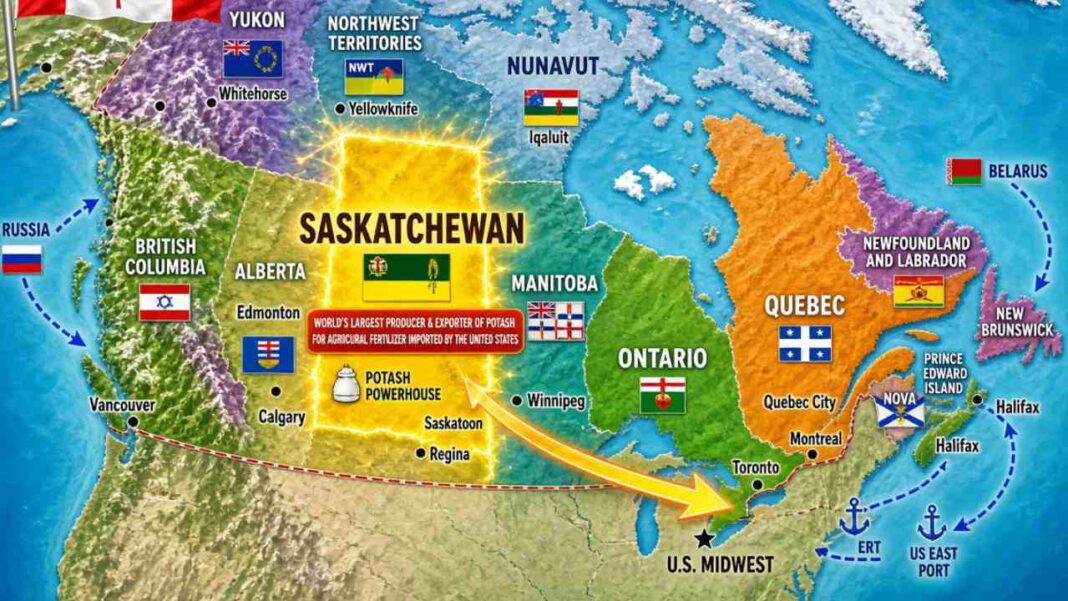
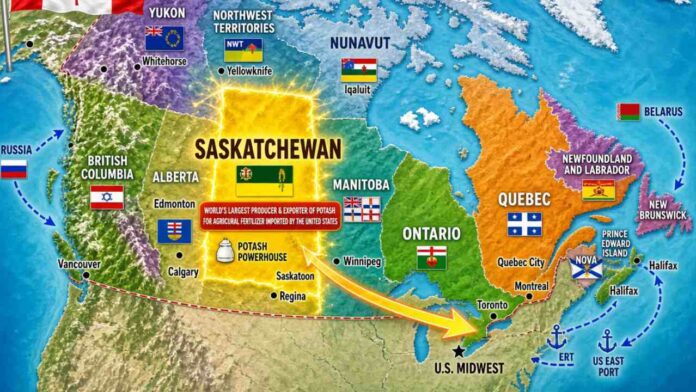
The shift in emphasis highlights the importance of potash to North American agriculture. Potash supplies potassium. It is an essential nutrient used in fertilizer production. It helps farmers support crop development besides yields. Canada, with Saskatchewan at the center of its mining industry, is the world’s leading potash exporter, while the U.S. remains its largest customer.
According to the U.S. Geological Survey figures cited by Canadian media, Canada accounted for about 79% of U.S. potash imports, with Russia and Belarus supplying much smaller shares. The scale of Canadian shipments means that replacing them quickly may present logistical as well as commercial challenges.
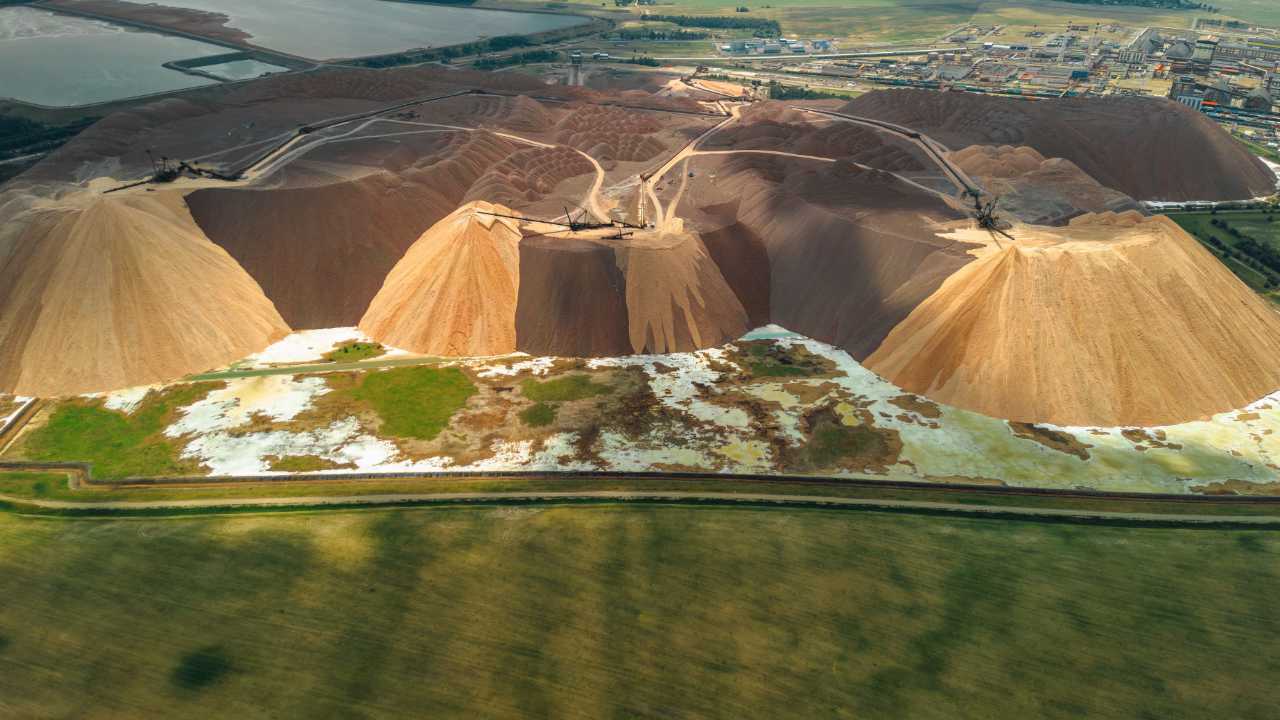
Trump’s interest in Belarus nevertheless introduces another dimension to the fertilizer market. Belarus is a major global potash producer, but its exports have faced restrictions and complicated transportation arrangements since sanctions were imposed following the commencement of the Russia-Ukraine war. Belarusian President Alexander Lukashenko has also indicated that his country may not immediately provide the U.S. with massive volumes.
Canadian officials have stressed the country’s proximity and established supply network. Prime Minister Mark Carney said Canada may continue supplying U.S. customers and described an opportunity for both countries to expand their fertilizer industries. Saskatchewan Premier Scott Moe, meanwhile, criticized the possibility of relying more heavily on Belarusian supplies.
The pricing dispute therefore sits alongside broader trade tensions between Ottawa and Washington. For U.S. growers, the central issue is the cost and reliability of fertilizer supplies. For Canadian producers, sustaining access to the American market while expanding sales elsewhere has become increasingly important.
The developments also coincide with efforts by Canadian potash exporters to strengthen international distribution. Canpotex recently announced a $500 (USD 355) million investment at the Port of Vancouver, a project Saskatchewan officials say will increase export capacity and improve access to overseas markets.
Trump’s latest remarks suggest that Canadian potash remains firmly embedded in the U.S. agricultural supply chain. This is as Washington explores cheaper alternatives and seeks greater leverage over fertilizer prices.