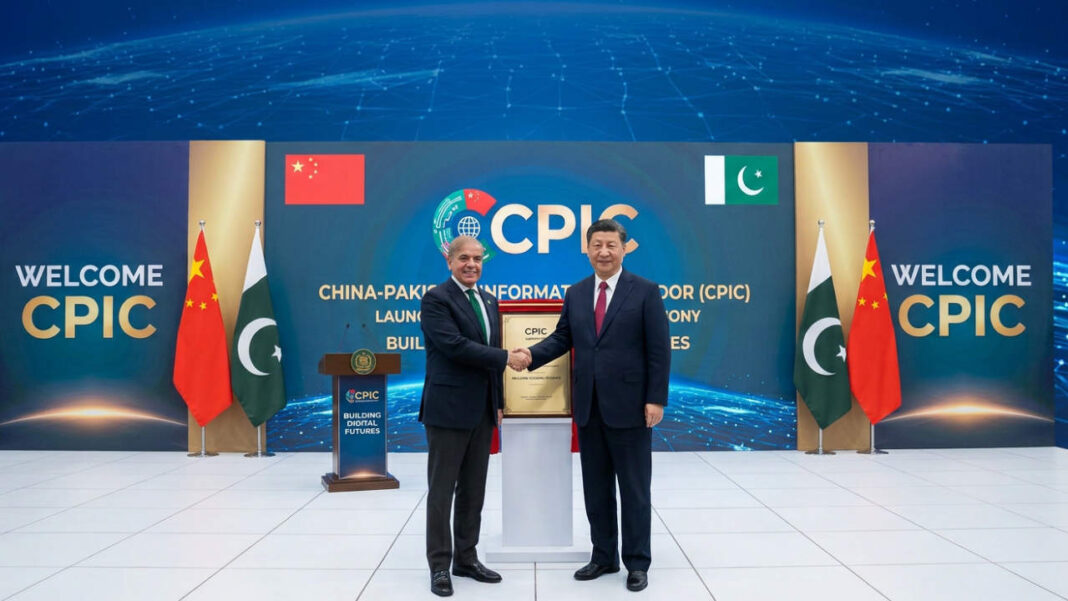
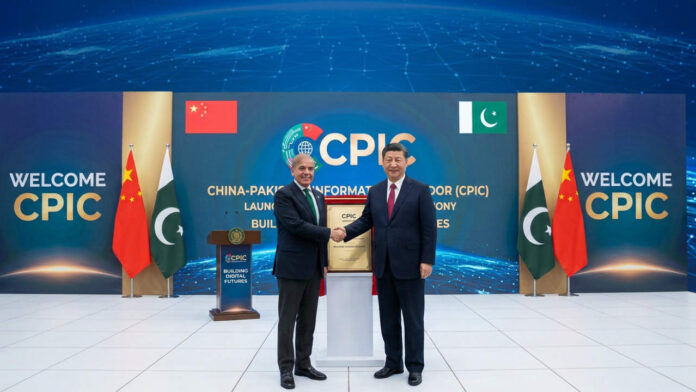

Pakistan (Commonwealth Union)_ China and Pakistan are taking another step towards closer relations with the launch of the China-Pakistan Information Corridor, an initiative designed to strengthen cooperation in media, business, research, tourism and cultural exchanges. The project was launched at a ceremony attended by Pakistan’s Information and Broadcasting Minister Attaullah Tarar, Chinese Foreign Ministry spokesperson Mao Ning and China’s Ambassador to Pakistan Jiang Zaidong. Around 600 representatives from media organisations, think tanks and other sectors from both countries took part in the event.
The initiative builds on the China-Pakistan Economic Corridor (CPEC), which connects the two countries through infrastructure and economic development projects. While CPEC focuses on economic links, the new Information Corridor aims to bring their people closer through communication, knowledge-sharing and greater public engagement. Tarar said the initiative would help people in both countries understand each other better. It will focus on four areas: media cooperation and fact-checking, business partnerships, joint research and cultural exchanges involving tourism and young people.
Also read: The billion-dollar gold shift to Singapore: Is Singapore becoming the world’s new gold haven?
Mao described China and Pakistan as close strategic partners and said the new initiative could help share more stories about their cooperation. She stressed that the experiences of ordinary people working together deserved greater attention, adding that stronger public understanding could support the long-standing relationship. Ambassador Jiang said cooperation between government departments, media organisations and research institutions had helped turn the idea into reality. He expressed confidence that the corridor would create stronger public support for bilateral ties and provide a platform to highlight development achievements in both countries.
The initiative also includes practical projects. Its business component has opened its first regional office in Karachi and is developing an online portal to track trade, investment and foreign direct investment. Additionally, a podcast series will feature Chinese entrepreneurs operating in Pakistan and Pakistani businesspeople working in China. The research component, led by the Pakistan-China Institute, will connect research institutions from both countries to support joint studies, discussions and publications. Tourism and youth exchanges are also part of the plan.
Youth ambassadors have been nominated from 13 Pakistani universities, while proposals include a tourism corridor linking Xinjiang with Gilgit-Baltistan to encourage Chinese visitors to explore northern Pakistan. For both countries, the initiative could create opportunities for businesses, researchers, students and tourism operators while improving access to information about each other’s markets and cultures. However, its long-term benefits will depend on how effectively these plans are implemented. If successful, the Information Corridor could complement existing economic cooperation and give China-Pakistan relations a stronger people-to-people foundation.