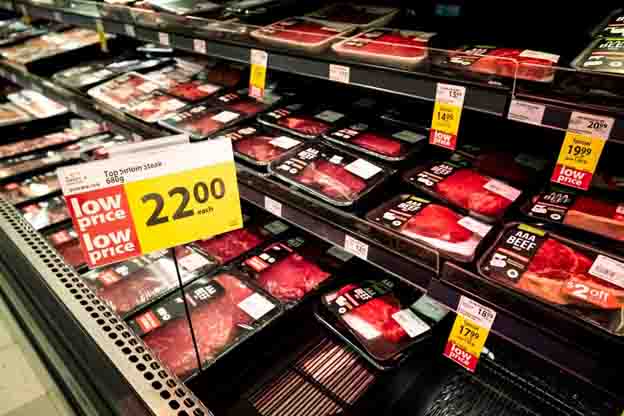

Canada_ (Commonwealth) _ Despite a drop in overall inflation to 5.9% in January, according to Statistics Canada’s most recent data, food prices increased by 10.4% from a year ago. Its figure increased marginally from December’s 10.1%. Given the significance of both nations in terms of food production, the paper notes that Russia’s invasion of Ukraine has also had an impact.
A parliamentary committee was persuaded to start an investigation into increasing food costs and potential solutions by the government once the problem was shown to be significant enough. Although they may provide help for the hungry and disadvantaged, experts tell that governments don’t have many effective ways to lower food prices.
Jodat Hussein, senior vice-president of retail finance at Loblaw, stated during testimony before the House of Commons agriculture and agrifood committee the committee looking into food price inflation that the majority of the company’s earnings are not coming from high margins on food. He said that the company’s food vendors raised their pricing, forcing Loblaw to pass those costs along to customers.
On setting our retail rates, we are reliant on what suppliers charge us, Hussein testified to the committee in December 2022.
“The cost of what retailers buy from suppliers has increased, which is the fundamental reason why food prices have increased.”
Hussein said that the company’s revenues originated from other industries that Loblaw operates in, such pharmaceuticals. According to Von Massow, the increase in earnings is mostly attributable to the sale of non-food goods and a bigger volume of groceries, which is partly due to people eating at home less.
The committee’s effort in interrogating the CEOs, according to Valerie Tarasuk, a professor in the department of nutritional science at the University of Toronto, is significant. She said that there had to be more government investigations into the pricing practices of the Canadian supermarket market.
To combat food inflation, the government could enact price limits on a selection of food items. By doing this, a cap on the price of those things would be effectively imposed. Another choice is to impose export restrictions on food produced in Canada, preventing it from leaving the country and perhaps driving down local costs.