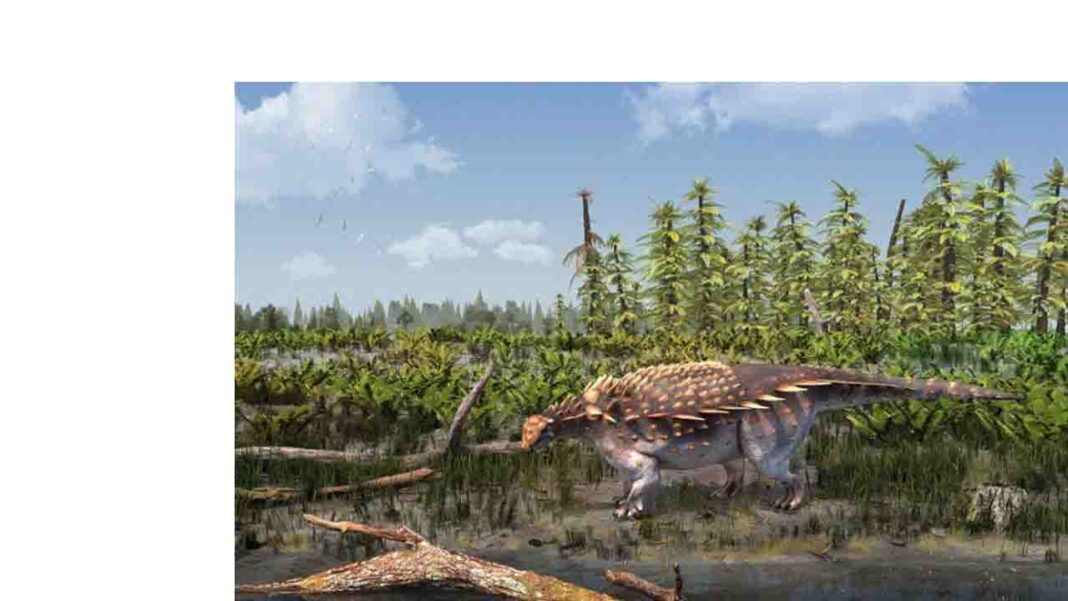
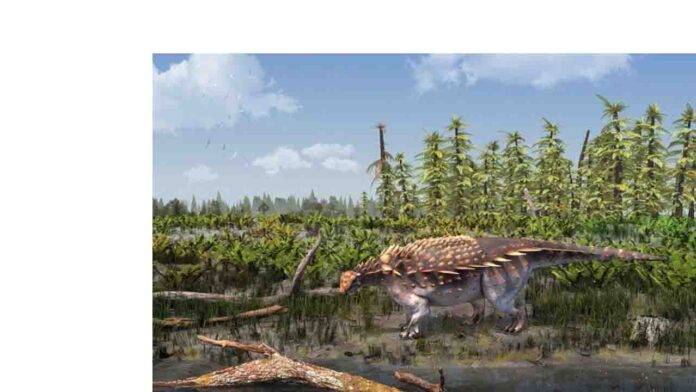

A new species of dinosaur with an armoured body has been discovered on the Isle of Wight. It was discovered in a fossil site that dated back between 145 to 66 million years ago called the Wessex Foundation. The new species has been named Vectipelta barrette after Prof. Paul Barrett who worked for 20 years at the Natural History Museum and belongs to the plant-eating ankylosaur group.
The fossil remains were discovered in stages between 1993 to 1994 and were unearthed some 165 feet west of Chilton Chine on the southwest coast of the island. They were preserved within the rocks of the Wessex Formation, and dated back to roughly around 127 million years ago, during the early Cretaceous period. During this time, the area was a flood plain that was covered by a large meandering river system, and it sported a climate that was similar to that of the Mediterranean today.
After Polacanthus Foxii was found in 1865, it is the second armoured dinosaur discovered on the island. The neck and backbones of the find are different to that of its predecessor, with analysis showing more spiked armour on V barrette, with contrasting pelvic structures.
It is suggested by experts that it is most closely related to some Chinese ankylosaurs, which suggests that they roamed between Europe and Asia in the early Cretaceous period. It has been stated by experts that previous ankylosaur remains on the island would have to be re-visited in light of this new discovery.
A Natural History Museum researcher, Stuart Pond said that for virtually 142 years, all the ankylosaur remains discovered on the Isle of Wight were assigned to Polacanthus foxii, and not all those discoveries need to be re-visited since this new species has been discovered. He added that this was a significant specimen since it sheds light on ankylosaur diversity within Early Cretaceous England and the Wessex formation. Professor Paul Barret stated that he was absolutely delighted and flattered that the dinosaur had been named after him and that any physical resemblance was purely accidental.
The research has been published in the Journal of Systematic Paleontology.