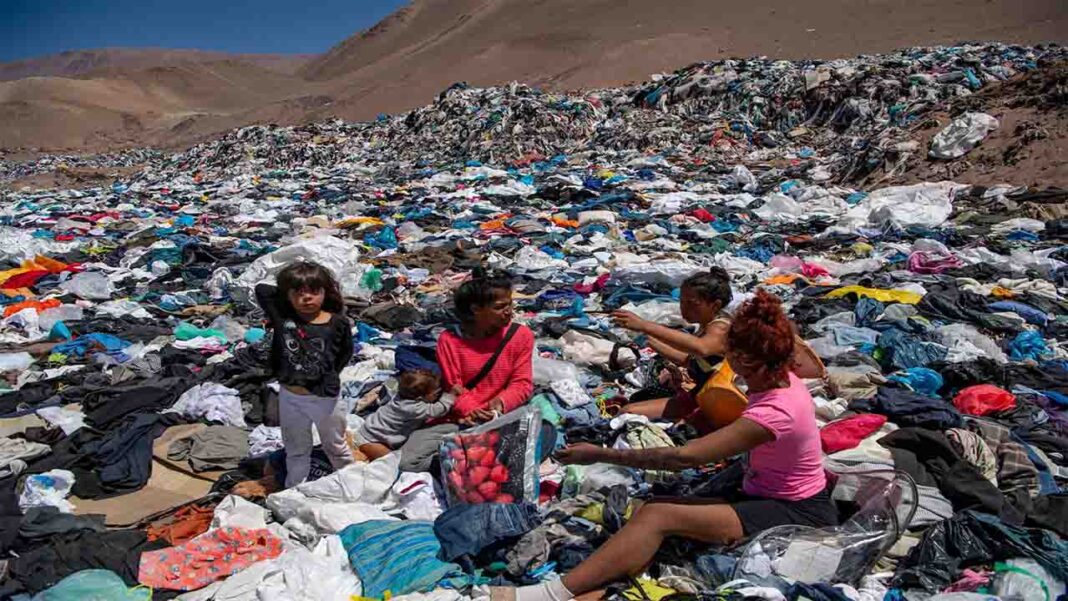

The fashion industry’s profound impact on the environment has raised significant concerns, contributing approximately 20% of the world’s wastewater and about 10% of global greenhouse gas emissions. In a concerted effort to address this dire situation, the European Union (EU) is taking proactive measures, although questions arise about the feasibility of true change.
A pivotal question arises: could the relentless momentum of fast fashion finally be waning? The European Union appears to hold this belief, spurred by the burgeoning awareness of sustainability, particularly among the “woke” Generation Z. Nevertheless, the EU’s aspirations may be met with challenges as the reality on the ground unfolds.
As the landscape shifts, some industry giants like Boohoo, Pretty Little Thing, and ASOS have experienced financial setbacks in recent years, a potential signal of evolving consumer preferences. However, contrary to this trend, fashion powerhouses Zara and H&M have celebrated substantial gains, underscoring the complexity of the industry’s transformation.
Even in the face of copyright controversies and its infamous influencer escapades, Shein, a China-based fashion behemoth, continues to attract a fervent customer base eagerly seeking affordable and stylish attire. The astonishing addition of 6,000 new items daily to its website reinforces the enduring allure of the fast fashion ethos. Despite this, the EU remains resolute in its belief that the prevailing and detrimental culture of rapid consumption can be relegated to the annals of history.
Recent strides by the EU highlight its commitment to sustainable change. In the preceding month, the EU endorsed a set of recommendations aimed at overhauling the industry’s approach. Central to this approach is the implementation of policies that foster durability, repairability, and recyclability of clothing. Furthermore, the EU advocates for stringent regulations that safeguard human, social, and labor rights, animal welfare, and environmental preservation across the entire supply chain.
Delara Burkhardt, a Member of the European Parliament (MEP), cogently underscores the limitations of relying solely on consumer behavior to revolutionize the global textile sector. She asserts that an unchecked market could perpetuate a fast fashion paradigm that exploits both individuals and the planet’s resources. In her view, it is incumbent upon the EU to legally compel manufacturers and prominent fashion entities to embrace more sustainable practices.
In conclusion, the fashion industry’s significant ecological footprint necessitates substantial reform. While the EU endeavors to usher in a new era of sustainable fashion, challenges remain in reshaping consumer preferences and industry practices. The EU’s commitment to stringent policies and regulations reflects a collective effort to create a fashion landscape that is both stylish and environmentally responsible.