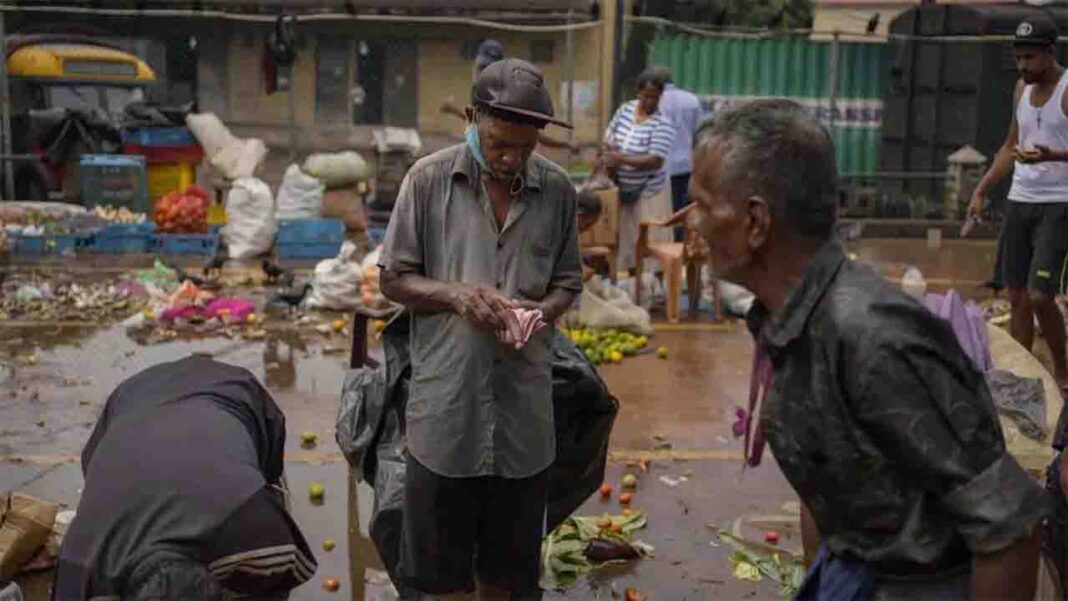

Sri Lanka finds itself in the grip of its most severe economic crisis since gaining independence in 1948. The nation is grappling with an inability to settle import bills for essential items like food, fuel, and gas, compounded by the daunting challenge of repaying substantial foreign debts.
From late 2021, the prices of essential food items have been steadily climbing, reaching a peak in August 2022, with a staggering year-on-year food inflation rate of nearly 94 percent. This surge is significantly curtailing the purchasing power of households.
Food Insecurity and Hunger Crisis:
The World Food Programme reports that over 30 percent of Sri Lanka’s population, equivalent to 6.3 million people, is grappling with food insecurity, necessitating humanitarian assistance. Among them, approximately 5.3 million individuals are either reducing or skipping meals, while at least 65,600 people face severe food insecurity. The situation is anticipated to worsen as the crisis unfolds, driven by factors such as higher inflation, loss of livelihoods, weakened purchasing power, and acute shortages of essentials like food, medicine, cooking gas, and fuel.
Without external assistance, the food security scenario is expected to deteriorate further, particularly during the lean season from October 2022 to February 2023, marked by a poor harvest of staple foods like rice, amidst the ongoing economic crisis.
Staple food prices, including rice and vegetables, have doubled, and the scarcity and high cost of cooking gas add to the challenges of sustaining kitchen activities. WFP underscores that escalating food costs are making it increasingly difficult for the population to meet their nutritional needs. About 6.7 million people are unable to consume an adequate diet, while 5.3 million people are reducing their daily meals. Over 60 percent of families are compelled to resort to less, cheaper, and less nutritious food. The situation exacerbates as the government trims down nutrition programs due to severe financial constraints.
The FAO emphasizes the need for interventions in the agricultural sector, which employs 30 percent of the population, to enhance production capacity, fortify sector resilience, reduce import dependencies, and prevent a surge in hunger.
Household incomes have sharply declined over the past three months, with about two in five households experiencing a 50 percent reduction. To cope with food shortages, 5 million people are resorting to crisis or emergency livelihood strategies, which are likely to have long-term impacts on their income-generating capabilities and food security.
WFP highlights that even before the COVID-19 pandemic and the economic crisis, 70 percent of Sri Lankan children were stunted, indicating insufficient height for their age, while 15 percent were wasted, being too thin for their height. With the ongoing crisis, the nutritional outlook is anticipated to deteriorate further.
The UN estimates that half of Sri Lankan children are in urgent need of emergency assistance. A Save the Children study in June 2022 revealed that 59 percent of families were unable to fully meet their food needs, with two in three households resorting to less preferred or less expensive foods weekly. The study also noted that over half of all children had to compromise on food preferences, with one in ten reducing the frequency of their food intake.