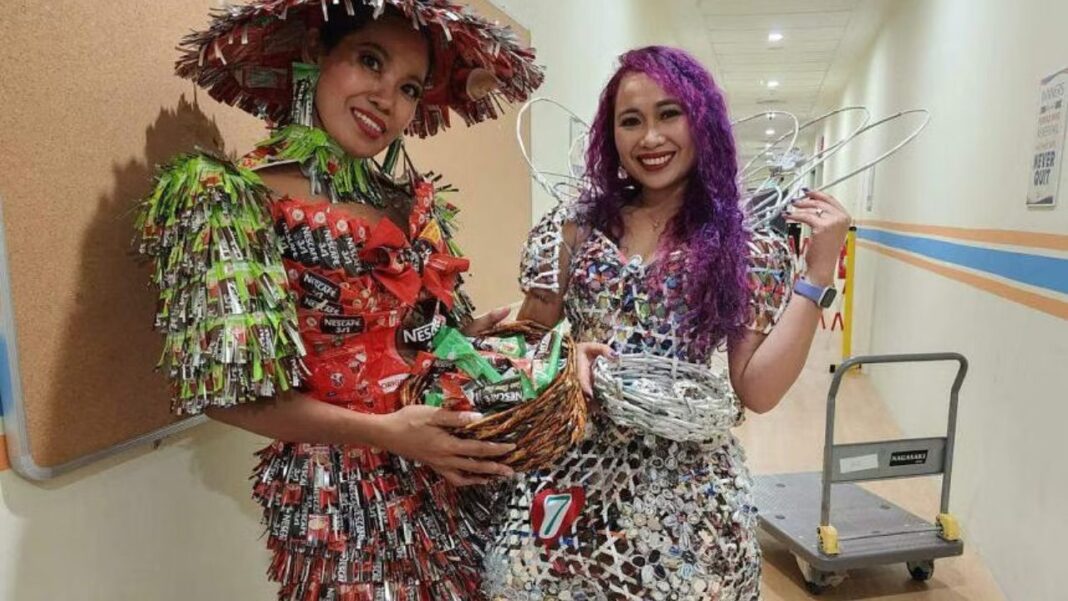

SINGAPORE (Commonwealth Union)_ On one of their Sundays off, about a dozen Filipino maids strutted on a stage for four hours inside the HFSE International School in Mountbatten Road wearing dazzling, colorful gowns and dresses made out of what otherwise would have been trash.
On their bodies were bottle caps, sachets, reusable shopping bags, plastic wrappers, newspapers, milk cartons and plastic spoons.
This “Trashion Show” on 26th November was about the environment, and how man-made pollutants like plastic were wrecking ecosystems and decimating marine wildlife.
But it also called attention to how many maids in Singapore feel like they are still being treated today : diminished, invisible, disposable, like trash.
Ms Raquel Ello, 40, who has been working as a maid in Singapore for five years, said it took her about three months to create the gown she wore for the show.
It was a simple one, a tapestry of plastic packaging from ice cream sandwiches, potato chips, dips and chocolates, accented with paper flower bouquets and art paper, but she tends to two elderly Singaporeans, and could not work on it full time.
Ms Ello said there were so many things happening in this world because of climate change and she wanted to show that even though she had a lowly job, there was something she could also do to help.
Ms Juliet Dailmoto, 45, who works for two expatriates said she enjoyed designing clothing whenever she had time to spare, and has been in Singapore for 16 years.
Also Read :
AI Baggage Screening at Changi
Airlines gear up for record breaking travel during Thanksgiving
Singapore Airlines lands the Airbus A350 in Perth
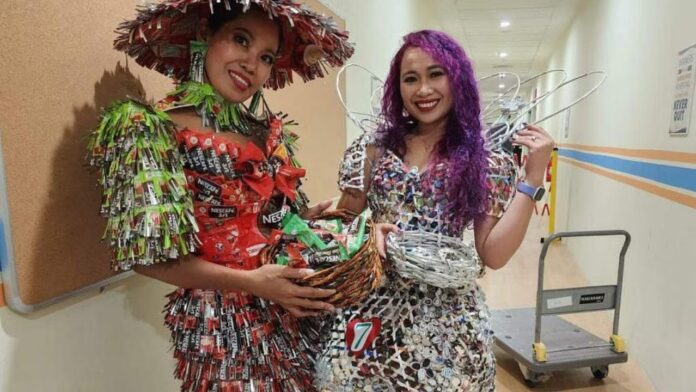
She worked on two dresses, one being inspired by the traditional dress for women in the Philippines known as the “baro at saya”, or blouse and skirt the outfit was made entirely out of Nescafe 3-in-1 coffee sachets, empty as well as new, glued to cartons, newspapers and a reusable shopping bag using about 30 bags containing dozens of discarded sachets each.
Her inspiration was the Filipino farmer, with this big hat that provided shade from the sun.
The skirt was corn-shaped and layered with hundreds of sachets while she used newspapers to give the base of the skirt a bell shape.
Her other creation was inspired by the ethnic craft of basket weaving and while it took her Dailmoto just five days to produce the traditional gown, the see-through dress took three weeks of work.
She said she was glad that her employers, a Briton and an Australian supported her “hobby”.
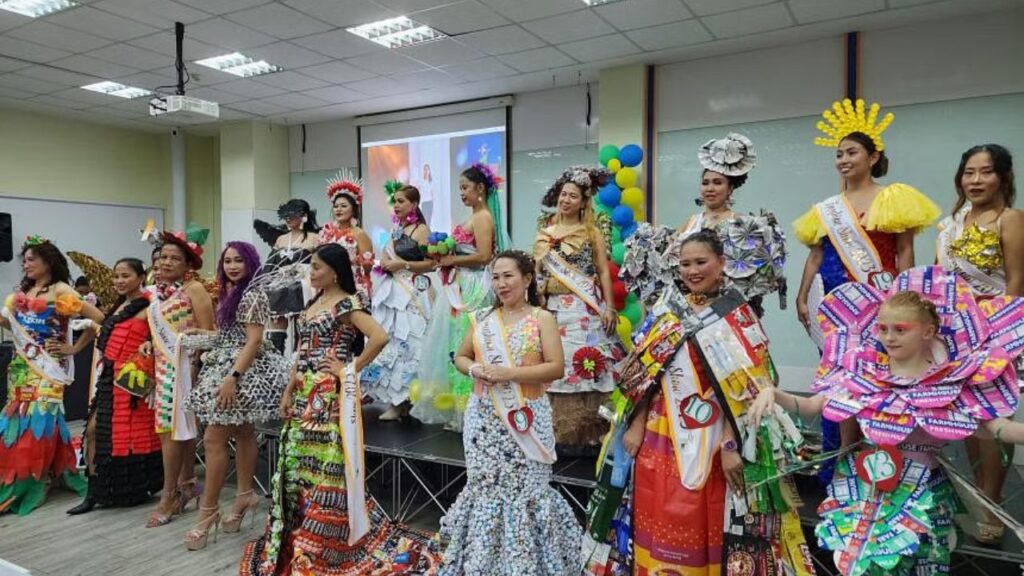
She was rewarded with a bevy of awards on Trashion day. Both the models who wore them were placed in the top 5, with the one in the modern dress ending up first runner-up while that dress itself won a special prize for its creative design.
The top prize was bagged by Ms Maricel Carullo, 42.
She said she was aware of how much damage plastic pollution is having on waterways and on marine life.
There is another theme behind the Trashion Show that regards trash more as a metaphor than a material thing.
Kaugnay is under the auspices of the Humanitarian Organisation for Migration Economics (Home), a local non-governmental organisation that advocates for migrant workers’ rights.
Ms Dumlao said maltreatment and abuse continue to shadow maids in Singapore.
As at December 2022, there were about 268,500 migrant domestic workers in Singapore. About a third of them were Filipinos.
Ms Joy Cardoza, 41, counts herself as very lucky because she landed with a couple who treat her very well, and she has been with them for nine years.
During the Covid-19 pandemic, when schools in the Philippines were shut and classes moved online, her employers had provided her children, all boys with the laptops and mobile phones they needed and also gave her a loan so she could open a bakery and buy a van, which her husband is now renting out.
They also permit her children to stay with her in their flat when they come for holidays.
They also let their daughters, nine-year-old Olivia and four-year-old Sophia, who have been looked after by Ms Cardoza since they were born, be part of Trashion.
Ms Cardoza put together a flower-shaped dress made out of cartons of milk and an accompanying butterfly costume for Sophia.
She said most employers in Singapore appreciate it when their helpers do their jobs well, and that depression usually sets in not because of the work or the employers, but because of the sense of isolation in being away from one’s family.
Dr Chok, of Home, said events like Trashion are meant to help ease that sense of being alone.