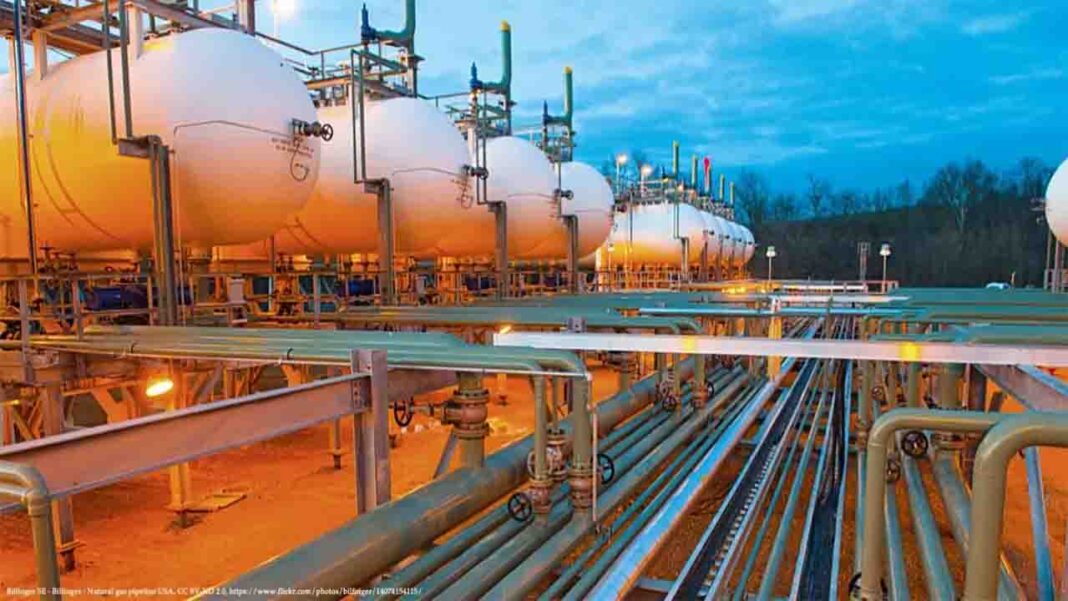

Australia’s recent announcement to intensify its extraction and utilization of gas until “2050 and beyond” has ignited a contentious debate, as it stands in apparent contradiction to global appeals for the gradual phasing out of fossil fuels. Prime Minister Anthony Albanese’s administration defends this move as essential for bolstering domestic energy security while facilitating a transition towards achieving net-zero emissions.
Despite assertions from the Australian government regarding the necessity of this strategy to ensure stable energy provision domestically and to honor its commitments as a dependable trading partner, critics have emerged, citing concerns over its alignment with prevailing scientific recommendations. Notably, the International Energy Agency (IEA) has underscored the imperative for substantial reductions in coal, oil, and gas usage to meet climate objectives.
Australia, renowned as one of the world’s principal exporters of liquefied natural gas (LNG), has articulated its policy rationale, emphasizing collaboration with industry stakeholders and regional leaders to augment both gas production and exploration activities. Concurrently, it intends to support the expansion endeavors of existing gas projects, primarily spearheaded by entities like Chevron and Woodside Energy Group in Western Australia.
Central to the government’s argument is the contention that such measures are indispensable for meeting Australia’s energy requirements as it progresses towards ambitious targets, including delivering 82% renewable energy to the grid by 2030 and attaining net-zero emissions by 2050. Currently, gas constitutes a significant share, approximately 27%, of the nation’s energy mix, with a substantial portion earmarked for export to major markets such as China, Japan, and South Korea.
However, detractors have vehemently criticized the policy, denouncing it as prioritizing the interests of influential fossil fuel corporations over broader environmental concerns. Prominent voices within the scientific community, exemplified by Prof. Bill Hare, CEO of Climate Analytics, have emphasized the detrimental environmental impact of fossil gas, cautioning against its designation as a transitional energy source.
Independent Senator David Pocock has echoed these sentiments, characterizing the government’s stance as “morally bankrupt, negligent, and shortsighted.” Despite successive Australian administrations advocating for gas as a pivotal “bridging fuel,” skeptics, including Prof. Hare, warn against its incorporation into a net-zero emissions framework, citing the potential exacerbation of global warming and attendant catastrophic repercussions.
The imperative to limit long-term temperature increases to 1.5°C, enshrined in international agreements, has assumed heightened urgency amidst recent observations indicating that this threshold was exceeded for the first time from February 2023 to January 2024, as reported by the European Union’s climate service.
In the face of divergent viewpoints and mounting pressure from environmental advocates, Australia finds itself at a critical juncture, compelled to reconcile its energy imperatives with the imperative of climate action. The government’s steadfast commitment to gas extraction and utilization underscores the complex interplay between economic considerations, energy security, and environmental sustainability, prompting fervent discourse and calls for recalibration of policy trajectories to align with global climate imperatives.
As Australia navigates this intricate terrain, stakeholders across sectors continue to scrutinize the efficacy and implications of its energy policies, cognizant of the imperative to address climate change while ensuring the resilience and prosperity of future generations.