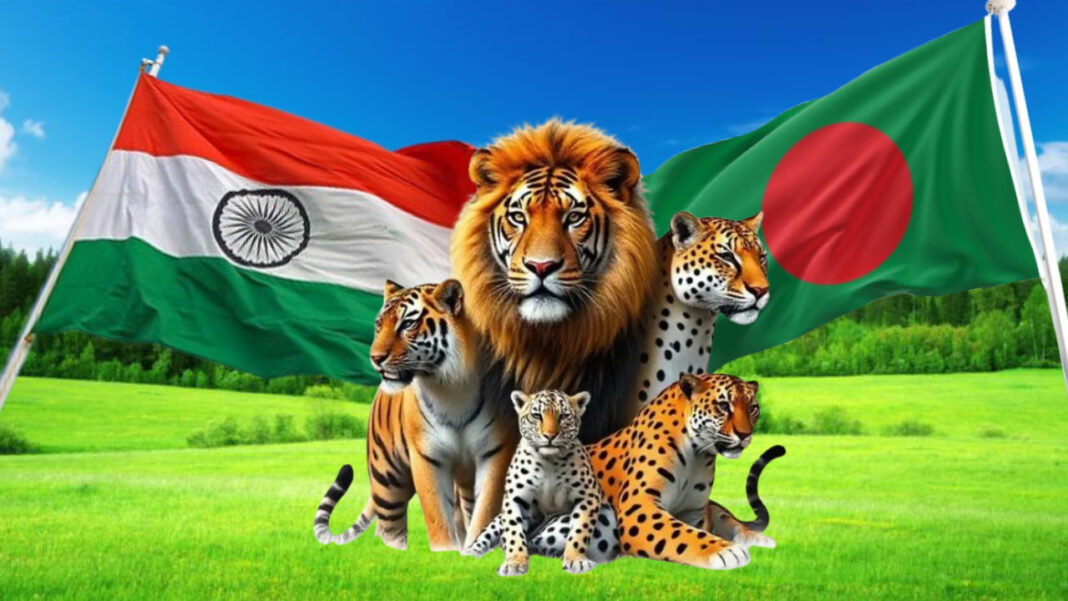

Bangladesh (Commonwealth Union): Bangladesh has officially become the newest member of the International Big Cat Alliance (IBCA), a global initiative led by India to strengthen the protection of big cats and their natural habitats. The alliance announced the development on Wednesday, describing Bangladesh’s entry as an important step toward expanding international cooperation in wildlife conservation. In a statement, the IBCA said the addition of Bangladesh reinforces the shared commitment of member countries to protect some of the world’s most iconic species and preserve the ecosystems that support them.
Also read: Singapore rises to the top: What helped Singapore beat the world’s best economies?
The International Big Cat Alliance was launched by Indian Prime Minister Narendra Modi in 2023 during celebrations marking 50 years of Project Tiger, one of the world’s most successful wildlife conservation programs. The Indian government later approved the formal establishment of the alliance, with its headquarters based in New Delhi. The organization focuses on the conservation of seven major big cat species: the tiger, lion, leopard, snow leopard, cheetah, jaguar, and puma. It brings together countries where these animals live, as well as nations interested in supporting global conservation efforts even if the species are not found within their borders.
Also read: Why is Wasim Akram urging travelers to visit Sri Lanka?
Designed as a multi-country and multi-agency platform, the alliance includes governments, scientific institutions, conservation groups, businesses, and corporate partners working together to address challenges facing big cat populations worldwide. With Bangladesh joining the initiative, the alliance continues to expand its international reach. Several countries from Asia, Africa, the Middle East, and Latin America have already become members, including Russia, Cambodia, Bhutan, Nepal, Sri Lanka, Malaysia, Armenia, Ethiopia, Mongolia, Rwanda, Angola, Myanmar, Saudi Arabia, Bangladesh, Brazil, Egypt, Ecuador, Kenya, Nigeria, Peru, Suriname, Uganda, and others, while a number of others participate as observers.
Also read: Israel Is Building a Shivaji Maharaj Statue: What Connects Israel and the Indian king Shivaji Maharaj?
According to the IBCA, its main goal is to encourage collaboration among stakeholders, share successful conservation strategies, and create a central knowledge base that can help improve wildlife protection efforts globally. The alliance also seeks to mobilize financial and technical support to prevent further declines in big cat populations and restore habitats where possible. Bangladesh’s participation is particularly significant because it shares the Sundarbans ecosystem with India. The vast mangrove forest, located in the Ganga-Brahmaputra-Meghna delta, is home to the endangered Bengal tiger and several other threatened species. Conservationists believe stronger cross-border cooperation will play a key role in protecting this unique habitat and ensuring the long-term survival of its wildlife.