
Healthcare (Commonwealth Union) – The processing of emotions in the brain has been a key focus of neurologists and other medical professionals for many decades. Greater insights into just how key regions are responsible for emotions such as depression and the negative effect of excessive serotonin and dopamine have all contributed to better treatments. The greater the insights the better equipped are healthcare professionals in the treatment conditions related to mental health.
Scientists at the University of Oxford have demonstrated for the first time that a crucial emotion-processing centre deep within the brain is directly responsible for how people interpret uncertain social signals.
In a study published in Neuron, the team used low-intensity focused ultrasound to temporarily and non-invasively adjust activity in the Amygdala—a region central to emotional processing and often linked to depression. This intervention altered how participants reacted to facial expressions, especially when those expressions were ambiguous.
The results offer rare causal evidence in humans of how the brain handles emotional uncertainty, with important implications for understanding mental health disorders.
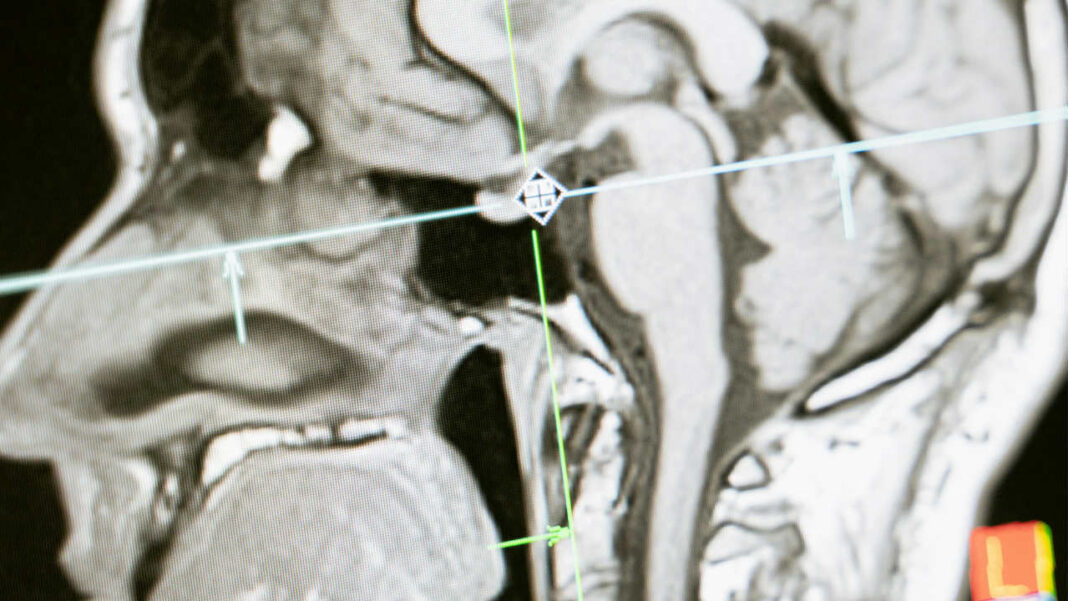
Miriam Klein-Flügge, Associate Professor and Wellcome Henry Dale and ERC-UKRI Fellow at the Oxford Centre for Integrative Neuroimaging (OxCIN), explained that it has not previously been possible to modify activity in deep brain regions without surgery. She noted that Oxford has played a leading role in developing a non-invasive neurostimulation method known as transcranial ultrasound stimulation (TUS), and that this study is the first to apply it to the human amygdala while simultaneously capturing highly detailed neuroimaging data to measure its effects.
The study was carried out with the researchers temporarily altering the activity in the amygdala, participants were more inclined to approach neutral—emotionally unclear—faces, implying a more positive interpretation of those expressions.
They also responded more slowly to both neutral and happy faces, suggesting greater difficulty in telling similar emotional cues apart. Brain scans revealed that the stimulation weakened the amygdala’s connections with other parts of the brain and shifted its internal chemical state. Notably, the effects were selective: participants’ ability to learn from feedback remained intact, and targeting a different brain area led to different behavioural outcomes.
The researchers employed an advanced method known as transcranial focused ultrasound stimulation (TUS), which enables scientists to safely and accurately modulate activity in deep areas of the brain without the need for surgery.
In the study, healthy participants received short bursts of ultrasound aimed at the amygdala before carrying out tasks involving emotional facial recognition and decision-making. High-resolution brain imaging was then used to verify that the stimulation produced the expected biological effects.
The team assessed these effects in several ways. They observed shifts in key brain chemicals, including GABA, as well as changes in functional connectivity—how the amygdala communicates with other brain regions. In addition, participants showed altered interpretations of emotionally ambiguous facial expressions.
Professor Klein-Flügge noted that the findings could significantly advance the field. Since the amygdala is deeply involved in conditions such as depression and anxiety, she further pointed out that while this initial study focused on healthy individuals, a logical next step would be to investigate whether abnormal amygdala activity can be corrected in patients. She also highlighted that only a limited number of research centres worldwide currently have the capability to conduct this type of work.
“By showing that we can safely and precisely influence deep brain regions, this opens up exciting possibilities for future research and, potentially, new treatments. The next step is to see how these mechanisms operate in people with mood disorders.”
The researchers aim to extend this approach to clinical groups to improve understanding of, and potentially develop treatments for, conditions like depression, where emotional perception is frequently disrupted.