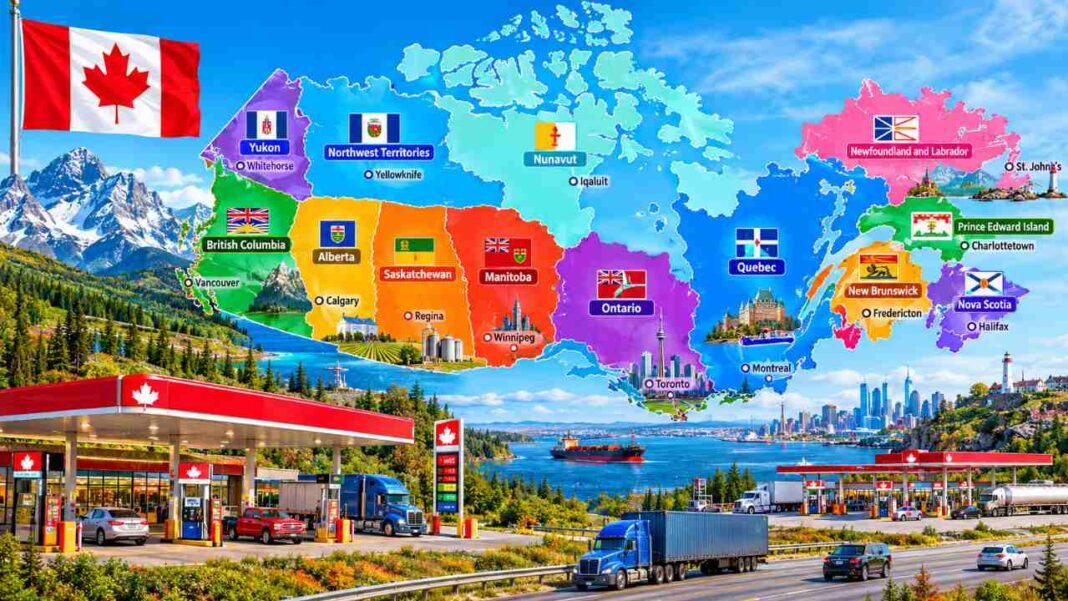


Canada’s Competition Bureau has reached a legally binding agreement with fuel-market data provider Kalibrate that may encourage stronger competition among gasoline retailers and, potentially, put downward pressure on prices paid by motorists.
The agreement, announced on Thursday, 24 September, follows a Bureau investigation into Kalibrate’s Market Intelligence service, which provides information on retail fuel stations across Canada. Regulators were concerned that the service gave competing gasoline retailers access to detailed information about rivals, including station-level fuel sales volumes and pricing-related data.
Such highly detailed information may make it easier for competitors to monitor one another and reduce uncertainty about their commercial behaviour. The Bureau concluded that Kalibrate’s handling of the information constituted an abuse of its dominant position in the market for retail gasoline sales data.
Under the consent agreement, Kalibrate must change the way its information is distributed. Retailers will no longer receive confidential data that may identify the sales or pricing practices of individual competitors. Instead, information must be sufficiently aggregated so that individual businesses may not readily be identified.
The agreement also introduces a time delay. Market information may not be distributed for periods shorter than 1 month and must be released at least 10 business days after the relevant reporting period has ended.
The distinction matters because gasoline retailers operate in highly competitive local markets. Drivers may often compare several stations within a short distance, while retailers may observe posted pump prices almost immediately. The Bureau says access to less visible information — particularly detailed sales volumes — may provide competitors with a much clearer picture of how their rivals are performing.
Regulators therefore argue that limiting access to such information may help preserve independent decision-making among retailers.
The agreement does not mean Canadian motorists may immediately see cheaper gasoline. Crude oil costs, refining conditions, transportation expenses, taxes, and retail margins continue to influence pump prices. The Competition Bureau itself does not set gasoline prices.
The regulator nevertheless regards competitive retail markets as an important factor in keeping prices in check. It estimates that even a minimal increase in the national average gasoline price may translate into substantial additional costs for Canadian consumers.
The case is also significant for Canadian competition law. The Bureau says the agreement is the first consent agreement reached using the restructured abuse-of-dominance provisions introduced through the 2023 amendments to the Competition Act. Its investigation began in 2024, with the Bureau obtaining a court order in July that year requiring Kalibrate to provide information relevant to its examination.
For motorists, the practical effect will depend on how fuel retailers respond to the new data environment. The agreement does not guarantee lower prices, but it removes one channel through which competitors may obtain unusually detailed information about one another.
The Bureau says the broader objective is to ensure that gasoline retailers compete independently, giving consumers a stronger opportunity to benefit when businesses seek to attract customers through competitive pricing.