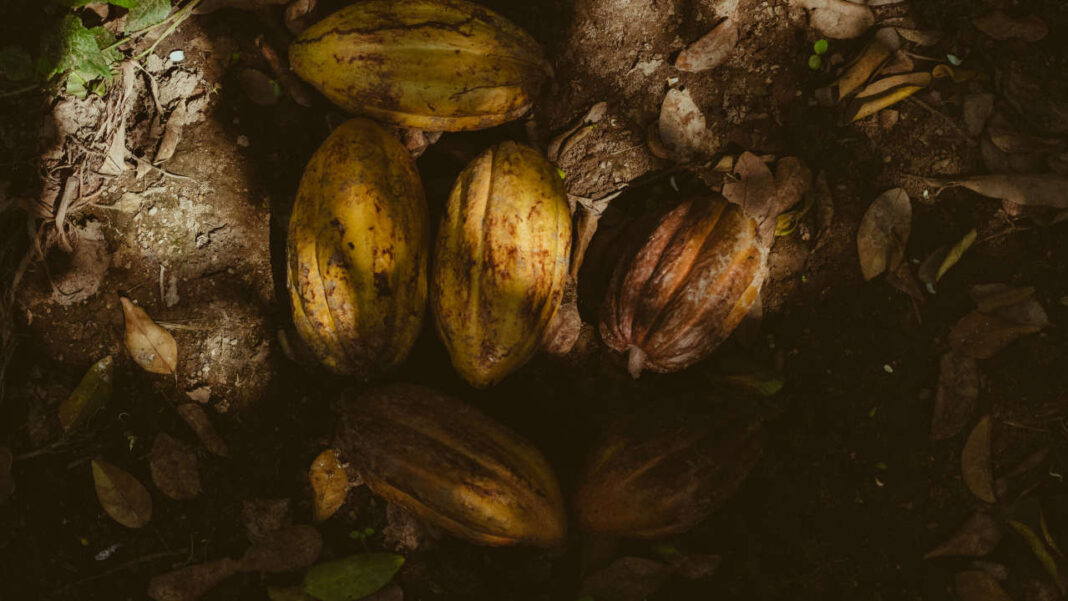

The cocoa industry in Ghana has been preparing for a difficult year, with production that was expected to decrease by at least 16% during the 2026–27 season. The Ghana Cocoa Board (COCOBOD), who delivered this forecast, is the country’s cocoa regulator. The board has highlighted that the growing pressure due to the forecast has made the country face a distressing situation, as cocoa is one of Ghana’s most important agricultural industries.
The expected decline is being blamed on a few underlying factors. The uncertain and ever-changing weather conditions, disease and the natural production cycle of cocoa trees are seen as the main drivers which are causing this decline. COCOBOD has also pointed a finger at the possible conditions of El Niño, while unusually heavy rainfall in May and June has also harmed the cocoa-growing areas.
The situation is especially concerning in Ghana’s Western and Western North regions, which, in total, produce more than half of the country’s cocoa. Farmers in these areas have reported that only a few young cocoa pods, which are known as cherelles, are surviving up to maturity. This is a clear example of how there are fewer numbers of pods that will eventually develop into cocoa beans, which are typically what’s needed for harvest. This situation would potentially result in a much smaller crop than usual, causing a disruption in the agricultural output.
Weather is not the only problem. Cocoa farms are also being affected by swollen shoot disease, which can damage or kill cocoa trees. Many farms are ageing as well, making them less productive and increasing the need for rehabilitation and replanting.
Another major challenge is illegal gold mining, which is more commonly known in Ghana as “galamsey”. Mining activity has taken over some cocoa-growing land, and the encroachment has been reducing the amount of farmland that is available for production, causing another interruption to cocoa farming. The combination of damage in the environment, trees that are ageing and diseases is making it more and more difficult for farmers to maintain previous levels of output.
To limit expected losses, COCOBOD introduced measures. These include restoring infected farms in the Western North Region, increasing the use of insecticides and fungicides and bringing back a fertiliser programme which would be free for the whole nation in the 2026–27 season. These measures are aimed at improving productivity in farming and supporting farmers through these challenging growing periods, giving them a better chance of achieving stronger crop yields.
Ghana’s difficulties are also part of a wider problem affecting West Africa’s cocoa industry. Ivory Coast, the world’s largest cocoa producer, is also expected to experience a decline of more than 10% in production during the coming season. Together, developments in the two major producing countries could have consequences for the global cocoa market.
However, for Ghana, which is a region that also belongs to the Commonwealth, the issue goes far beyond chocolate production. Cocoa provides an important source of income for farming communities. This means that a weaker harvest could place a more intense and additional pressure on rural households, making it hard for usual citizens to get on by.
Therefore, the coming season will be an important test for Ghana’s cocoa sector. With climate conditions, disease, ageing farms and illegal mining all creating challenges, protecting the country’s cocoa industry may need more than simply increasing production. It may require making farms more resilient and supporting the farmers who rely on them.