
(Commonwealth)_ In the context of rising protectionism, regional tensions, and realignments, with the global geopolitical and economic order further fragmenting, the Commonwealth is positioning itself as a symbol of cooperation, solidarity, and collective prosperity. At the 2025 Commonwealth Business Summit (CBS2025), leaders reiterated that they must leverage the Commonwealth Trade Advantage to forge economic resilience, inclusivity, and mutual development among the member states.
The Commonwealth consists of 56 member countries in six continents with varying economies, cultures, and stages of development. Unifying them despite the differences are their shared language, English common law courts, and institutional structures that promote cooperation and trade. This intrinsic synergy offers a distinctive venue to enhance intra-Commonwealth trade and investment.
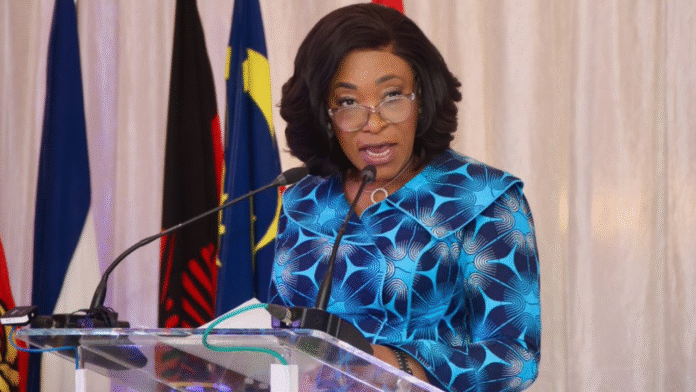
At CBS2025, Commonwealth Secretary-General the Honourable Shirley Ayorkor Botchwey underscored the organization’s emphasis on association and cooperation in an era when global alliances are crumbling. As protectionist barriers get built and other regions of the world decide to opt out of multilateral trade, the Commonwealth is knowingly building its economic and trade relationships. The summit tagline, “Harnessing the Commonwealth Trade Advantage for Shared Prosperity,” reflected the bloc’s strategic emphasis on sustainable and inclusive economic progress.
The Commonwealth Advantage in trade is a statistically proven fact that member nations do business as much as 20% more and at lower prices with fellow members than with non-members. Historical ties, shared regulatory environments, and smaller language barriers drive this advantage. During an era of escalating costs and supply chain dislocation, this advantage has immense value in generating new avenues for trade, investment, and growth.
This advantage was articulated at the Windhoek summit by the convergence of government ministers, traders, and entrepreneurs to share ideas on how best to actualize possibilities. There was an emphasis on harnessing digital trade, green behavior, youth women entrepreneurship, and small and medium enterprises as regional drivers of economic growth. The private sector was highlighted as a key pillar to narrow the gap between policy intentions and concrete action through largely innovation, job creation, and capital mobilization.
Additionally, the summit addressed the essential climate action requirements and economic changes, particularly for Small Island Developing States (SIDS) and Least Developed Countries (LDCs) within the Commonwealth. The nations are vulnerable to irregular effects from climate shocks and economic turbulence in the world. Thus, the Commonwealth is calling for equitable financing, increased market access, and climate-resilient investment in infrastructure to leave no member state behind.
At the focal point of the arguments was the call to enhance multilateralism. Commonwealth states re-pledged their devotion to collective rule and rules-based trade during a time when institutions of international relations were strained and trade norms were tested. The priority not only safeguards the interests of smaller economies but also ensures economic growth is balanced and sustainable for the Commonwealth.
The conference also highlighted Commonwealth success stories of partnership cutting across sectors like renewable energy, agriculture, education, and fintech. The conference presented examples of partnership success stories, including initiatives to build digital infrastructure in Africa and capacity building in South Asia. These illustrate the possibility of the cumulative resources and pooled knowledge being useful to several regions simultaneously.
The Commonwealth’s decision to be an instrument of prosperity and harmony is opportune and enlightened. Fragmentation elsewhere is gaining momentum, so the world has never needed cohesive economic groups more than it does now. The Commonwealth is emerging as a bastion of stability in an unstable world through its trading clout and greater interlinkages among governments and the private sector—delivering not only survival for its members but also collective prosperity.