
Smallholder farmers are facing a myriad of challenges due to climate change. Rising temperatures, unpredictable rainfall, and more frequent extreme weather events are making farming increasingly difficult. Adding to this, the increasing levels of atmospheric CO2 are not only causing global warming but also altering the agricultural ecosystem. Furthermore, the overuse of chemical fertilizers and pesticides has led to the deterioration of soil health and the sustainability of agriculture systems. To address these challenges and enhance crop productivity, concrete strategies are needed.
Agriculture serves as a primary income source for approximately two-thirds of adults living in poverty. However, these individuals often lack the resources needed to maximize yields and effectively address production challenges such as adverse weather conditions, crop pests, and diseases. Additionally, financial services that could support these investments, such as agricultural credit, and formal safety nets like agricultural insurance, are typically unavailable to most smallholder farmers.
It is projected that areas exposed to extreme weather will increase by up to 44 percent by 2050, leading to reduced soil fertility and increased pest and disease pressures in affected areas. Consequently, there is a risk that global yields could decline by as much as 30 percent by 2050. This could result in higher food prices and expose millions more people to food insecurity and hunger.
However, amidst these challenges lies an opportunity to leverage innovative technology to build resilience and ensure food security for future generations.
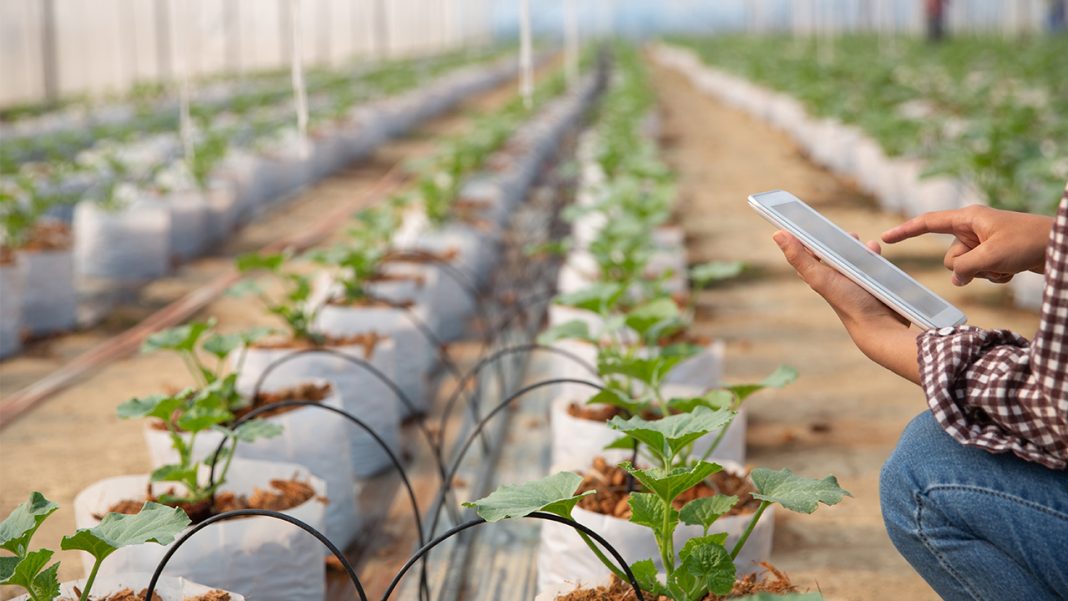
Precision Agriculture: Precision agriculture is a pivotal element of the third wave of modern agricultural revolutions. It revolves around a farming management approach centered on observing, measuring, and responding to temporal and spatial variability to enhance the sustainability of agricultural production. This strategy is applicable to both crop and livestock farming. Precision agriculture frequently utilizes technologies to automate agricultural operations, thereby enhancing diagnosis, decision-making, or performance. The primary objective of precision agriculture research is to establish a decision support system for comprehensive farm management, aiming to optimize returns on inputs while conserving resources.
Climate Information Services: Climate information services play a crucial role in translating data, statistical analyses, and quantitative outputs into actionable information and knowledge. This supports decision-making to manage climate impacts across various contexts and sectors. For instance, temperature and precipitation forecasts can provide valuable information for stakeholders in agriculture, infrastructure, and health, among others. The collection, processing, management, and delivery of climate information are increasingly facilitated and enhanced by digital technologies.
Climate-Resilient Crop Varieties: Biotechnology plays a crucial role in developing crop varieties that are more resilient to climate stresses. By enhancing traits such as drought tolerance, heat resistance, and pest resistance, these varieties offer a sustainable solution to climate change impacts.
Water Management Technologies: Water scarcity is a growing concern in many regions due to climate change. Technologies such as drip irrigation, rainwater harvesting, and precision irrigation systems help farmers optimize their water use and ensure efficient water management. Drip irrigation delivers water directly to the roots of plants, minimizing evaporation and runoff. Rainwater harvesting involves collecting and storing rainwater for later use. Precision irrigation systems use technology to apply water precisely where and when it is needed.
Harnessing innovative technology is essential for building climate-resilient agriculture. By adopting these technologies, farmers can adapt to the changing climate, improve their productivity, and ensure food security for future generations. It is imperative that policymakers, researchers, and farmers work together to promote the adoption of these technologies and create a sustainable agricultural future.