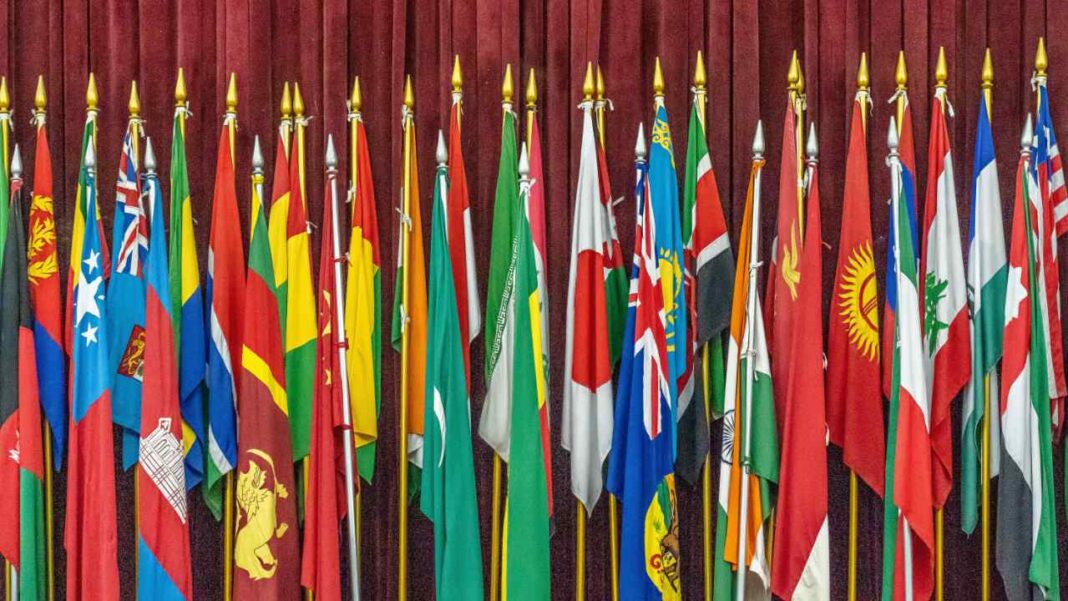


The Commonwealth of Nations is increasingly positioning itself as one of the most powerful global trade networks. Leaders and trade experts describe the bloc as a global economic superpower that is capable of connecting markets across continents. This is the view expressed in the GCC Economy Analysis.
This message resonated strongly during celebrations that marked Commonwealth Day ’26 in Accra. Government officials, diplomats, and business leaders gathered to reflect on the growing economic influence of the Commonwealth.
Speaking at this event, Minister for the Interior Mohammed Mubarak Muntaka emphasized the importance of cooperation amongst Commonwealth member states. Muntaka added that the role the organization continues to play in strengthening democratic institutions, trade, and development.
Among the keynote voices was Dr. John Apea, Head of Mission for the Commonwealth Enterprise and Investment Council (CWEID). Dr. Apea described the Commonwealth as an economic network of enormous global significance.
Today, the Commonwealth represents one of the most powerful economic communities in the world, said Dr. Apea. With a combined GDP exceeding USD 14 trillion and a population of 2.7 billion, the Commonwealth offers one of the most dynamic platforms for trade and investment in the global economy.
The advantage of Commonwealth driving trade
Dr. Apea highlighted what economists call the commonwealth advantage, adding that it significantly lowers the cost of doing business among member states.
Guided by research, trade between Commonwealth countries is around 20% cheaper compared to trade between countries without these shared institutional ties.
These advantages arise through shared language, legal traditions, governance systems, and long-standing commercial relationships, explained Dr. Apea.
Due to this familiarity and trust, businesses are able to navigate regulatory systems more easily and establish cross-border partnerships quicker, he added.
Trade within the Commonwealth has expanded rapidly of late. Intra-Commonwealth trade has already surpassed USD 850 billion and is predicted to exceed USD 1 trillion in the upcoming years. This underscores the bloc’s rising influence in global commerce.
Gateway to global markets
Other speakers also stressed the Commonwealth’s unique geographic diversity. This is claimed to span Africa, Asia, Europe, the Americas, and the Pacific.
This global footprint makes Commonwealth countries strategic entry points into regional markets. It permits investors and trade partners to access multiple regions through a single network.
Dr. Apea went on to share that through Commonwealth member states, businesses can connect to some of the fastest-growing markets globally.
A partnership with a Commonwealth country can open doors to Africa’s emerging markets, providing opportunities for investment and trade in sectors such as agriculture, technology, and renewable energy. Also, to Asia’s growth economies, besides the dynamic trade routes of the Caribbean and the Pacific. This data is reported in the GCC Economy Analysis.
Developing investment across the commonwealth
Dr. Apea also highlighted the work of the Commonwealth Enterprise and Investment Council. This serves as the Commonwealth’s leading business and investment network.
The Council works closely with governments. Also, global corporations and development institutions. It promotes trade, facilitates investment partnerships, and strengthens economic cooperation across Commonwealth nations.
The Commonwealth Enterprise and Investment Council acts as a bridge between governments and the private sector, said Dr. Apea.
Dr. Apea opined that our role is to connect investors with opportunities. Also, support policy dialogue and create the partnerships required to drive sustainable economic growth across the Commonwealth.
Through global forums, trade missions, and investment summits, CWEIC continues to support the expansion of commercial partnerships among Commonwealth economies.
Development partnerships
Also addressing the gathering was Christian Rogg. Rogg emphasized the importance of stronger partnerships between governments, development institutions, and the private sector to unlock the Commonwealth’s economic potential.
He asserted that the cooperation across the Commonwealth network could accelerate development, investment, and innovation across member nations.
Interior Minister Mohammed Mubarak Muntaka commended Commonwealth institutions and partners for their role in promoting collaboration besides stability and economic growth amongst member states.
,,, , Trade, $1 Trillion