
(Commonwealth)_ Learning, and by association, open and distance learning has remained a mainstay in promoting increased access to learning, bridging the digital divide, and speeding up social and economic development for countries across the world. Valuing its potential to support rich and inclusive communities, the Commonwealth of Learning (COL) recently held its Eleventh Pan-Commonwealth Forum on Open Learning (PCF11) in Gaborone, Botswana.
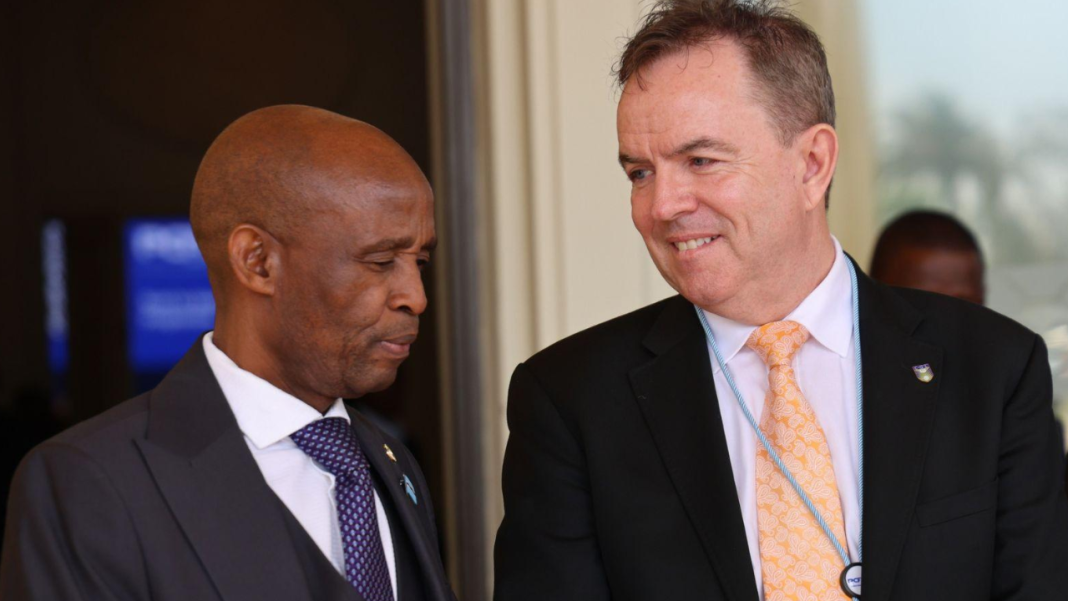
The conference, being organized jointly with the Botswana Ministry of Higher Education and Botswana Open University (BOU), brought together more than 400 delegates representing 48 countries. Scholars, policymakers, ministers, and practitioners forming the delegates had a dream—to use the possibilities of open education to drive sustainable economic development and social transformation.
The Commonwealth of Learning, established in 1987 by the Commonwealth Heads of Government, promotes expansion of access to quality training and education using technology-based and open distance learning. COL has emerged as a global leader in creating new education practices to make equity and lifelong learning for diverse groups of society more effective over time.
The PCF11 theme, “Innovative Open Education: Resilient Societies for Sustainable Economic Development,” resonated with the appeal to governments to shift the conventional education models. Botswana leadership emphasized the importance of innovation and innovation in building knowledge to create resilient and robust economies. The forum created an opportunity on which the nations could share best practices and how open education could build national and international resilience in a new world.
Since the inception of the Pan-Commonwealth Forum in 1999, COL has progressed to have the conference become one of the world leaders in realizing the vision of open and distance learning. Policymakers and educators who attend the forum exchange ideas on increasing access, quality, and applications of new technologies in learning and teaching systems. The application of innovation and technology to foster inclusivity and eradicate education disparities distinguished this year’s discussions.
One of the strongest points made by the forum was the stress on cooperation and collective responsibility. Ultimately, the delegates unanimously agreed that educational reform can be achieved through cooperation among institutions, governments, and communities. The aim is to enhance quality standards, reduce costs, and make sure even the most disadvantaged learners are not marginalized.
The Commonwealth Secretary-General, in her address, reaffirmed the role of education as the bedrock of democracy, peace, human rights, and economic opportunity. She demanded open learning and digital innovation as capital resources to fight inequality, unemployment, and exclusion.
During their deliberations, they were unanimous in their view that traditional education systems are perpetuators of inequality, limiting opportunity to marginal groups. Open and distance learning, on the other hand, offers flexible, low-cost, and accessible media to all students—women and girls, disabled learners, and other marginalized groups and rural and remote communities.
The representatives subsequently inquired about how open education could advance the global education and development agendas of United Nations member countries. The COVID-19 pandemic was a bitter experience with the scale and cutting edge of learning online. Technology allowed millions to learn by remaining under lock and key but revealed huge gaps in access to the internet and the price of digital information. Such lessons pointed the way to the need for policy to unleash technology-facilitated learning to promote access.
Perhaps the most contentious issue of PCF11 was the question of how emerging technologies like generative artificial intelligence are changing our practice. The forum discussed how AI can be used for creating curriculums, supporting learning, and evaluating systems, and emphasized the importance of using this technology in an ethical, inclusive, and responsible way.
The three-day forum concluded with the adoption of the Gaborone Outcome Statement, which provides guidelines for developing open education in the Commonwealth. The statement encourages member countries further to develop inclusive access without the sacrifice of quality, enhance skills for productive and resilient living, embrace digital technologies, empower teachers as change agents, and transform the outdated assessment systems.
These findings inform Commonwealth of Learning initiatives aimed at developing inclusive, innovative, and accessible education systems. By facilitating collaboration, the ethical use of technology, and profound transformation, the forum envisioned a clear picture for the future of education within the Commonwealth.
By the close of the conference, there was a shared common vision of education as the cornerstone of social stability, peace, and productivity. Through distance and open learning, the Commonwealth of Learning ensures that it continues empowering individuals, creating more resilient communities, and promoting sustainable development for future generations.