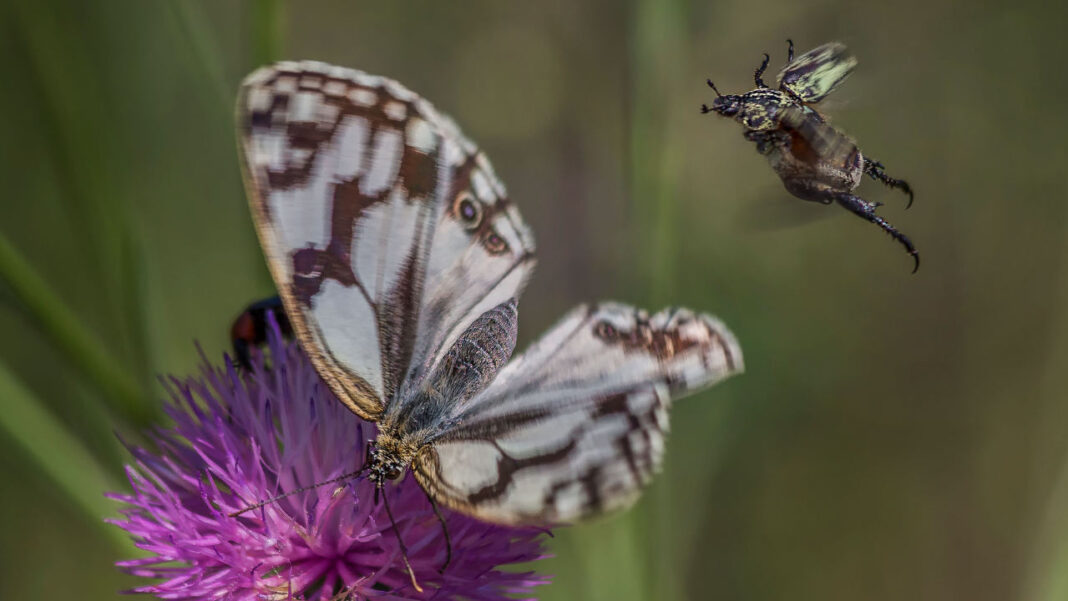

Conservation efforts often overlook insects. But they hold up entire ecosystems. They also help grow much of our food. Now, scientists want to change how we protect them.
Researchers from Monash University led a major new study. It was published in the journal BioScience. The team was headed by Dr Shawan Chowdhury. He leads the Global Change Ecology Lab at Monash’s School of Biological Sciences.
The study brings together tropical ecology experts from many countries. Together, they built a new global plan. Its goal is to address the biggest gaps in insect conservation.
Why Insects Matter
Insects are the most varied animal group on Earth. Scientists think there could be 14 to 30 million insect species. Most of these have never even been recorded.
Insects do huge amounts of work for nature. They pollinate more than 80 per cent of wild plants. They feed 60 per cent of the world’s bird species. They also help cycle nutrients through soil and food webs. Without them, food production would suffer badly.
A Knowledge Gap in the Tropics
Insect populations are falling around the world. But most conservation knowledge comes from temperate regions. These regions hold only about 20 per cent of all insect species.
This lack of knowledge is a problem. More than 80 per cent of insect species live in the tropics. Yet the tropics have the least research and data.
Dr Chowdhury explained the risk clearly. “We cannot effectively conserve species if we don’t know what is there,” he said. He added that scientists often don’t know where populations are shrinking. They also don’t always know where useful existing research is hiding.
He said insects are essential to healthy ecosystems and food systems. Yet they are still missing from most monitoring programmes, protected areas, and government policies.
Four Big Problems
The researchers found four major barriers to protecting tropical insects. First, existing research is often difficult to locate globally. Second, there are large gaps in basic data. Third, research infrastructure in many tropical countries is weak. Fourth, conservation action for insects remains limited overall.
One example shows the scale of the problem. Nearly 26 per cent of all insect location data in the Global Biodiversity Information Facility comes from the United Kingdom alone. Meanwhile, most insect diversity is found far away, in tropical countries.
A New Way Forward
The researchers propose a broader approach. It combines standard scientific studies with other useful sources. These include local and non-English research papers, museum collections, and community knowledge. Citizen science, social media records, and new technology could also help fill the gaps.
The team stressed one point strongly. Local scientists and communities should not be treated as mere data collectors. This pattern, sometimes called “parachute science”, must end. Instead, researchers from tropical countries should be treated as equal partners.
The new framework calls for several key changes. These include locally led research and stronger regional science infrastructure. It also calls for more taxonomy experts, long-term monitoring, and fairer international teamwork. Finally, it urges closer links between scientists and policymakers.
Dr Chowdhury summed up why the issue matters. “If we want global biodiversity targets to mean something, tropical insects cannot remain an afterthought,” he said.
He added that tropical insect diversity is extraordinary and worth protecting. This isn’t only about insects, he explained. It connects directly to healthy ecosystems, food security, and human wellbeing.
The study included researchers from Australia, Bangladesh, Uganda, Hong Kong, Brazil, the Czech Republic, Italy, and India.