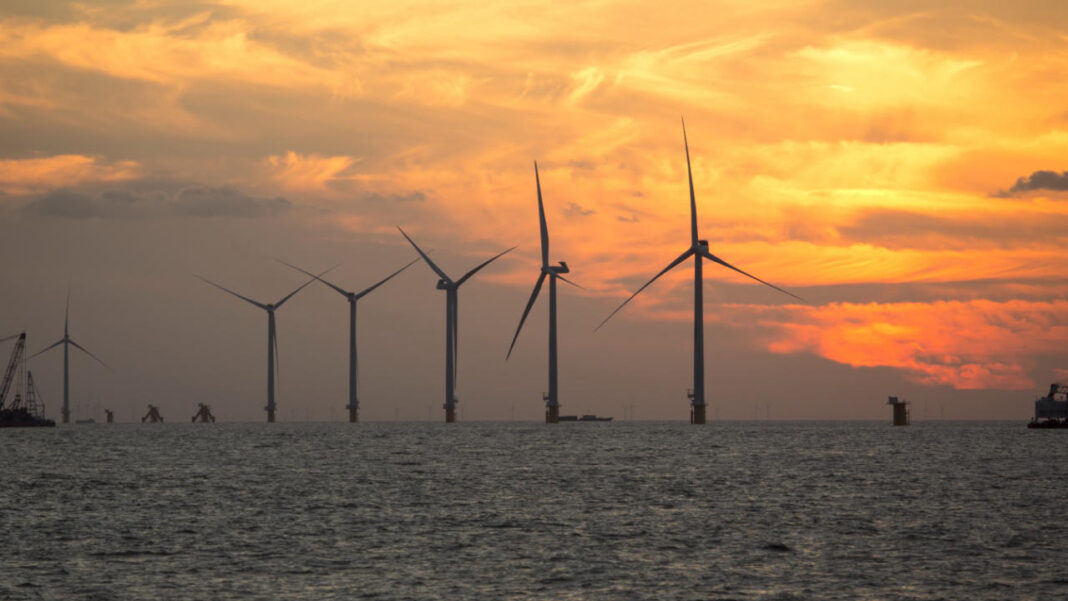

South Africa’s plans to develop its first offshore wind farm have encountered a setback, coinciding with new research that underscores the country’s significant potential for generating electricity from wind at sea. The proposed Gagasi offshore wind project, planned near Richards Bay on the country’s eastern coastline, has been brought to a delay while technical work needed for its environmental assessment continues to be unresolved.
The project, which was launched in 2022 by GenesisHexicon, is 800 megawatts. It is a partnership between Sweden-based Hexicon and South Africa’s Genesis Eco-Energy Developments. Its environmental assessment was conducted by Acer (Africa) Environmental Consultants. However, the environmental authorisation application was withdrawn last year as the developers reconsidered the project’s turbine design. Acer clearly stated that the proposal was being changed from floating turbines to anchored structures due to a few technical reasons, rather than simply because of the concerns of the environment.
The most recent delay comes at a time when offshore wind is receiving greater attention, as South Africa is now considering ways to expand renewable electricity and reduce its reliance on coal. The World Bank’s newly released strategic framework has drawn estimations that selected areas along the country’s coastline could support approximately 95 gigawatts of offshore wind capacity, with floating technology that is expected to count for much of that potential.
The scale of the opportunity could go far beyond electricity generation. According to the World Bank, large-scale offshore wind development could generate around $6.7 billion in employment wages for the domestic economy by 2050. The organization also estimates that offshore wind could help avoid approximately 530 million tons of carbon dioxide emissions from electricity generation over the next 25 years.
However, when it comes to developing an offshore industry, it isn’t that simple. Many things are required, such as significant investment in infrastructure, transmission networks, ports and technical skills. South Africa’s government has already identified electricity infrastructure and renewable energy deployment as important components of its broader economic and energy strategy. At an infrastructure investment summit that was held in May, President Cyril Ramaphosa said the country was expanding transmission capacity, accelerating renewable energy projects and developing battery storage as part of efforts to create a more sustainable electricity market.
The government’s Department of Electricity and Energy has also recently discussed the need for a policy framework that is capable of supporting offshore wind development. In remarks delivered on September 16, officials linked the sector with South Africa’s much larger energy transition and efforts to encourage investment and economic growth.
South Africa’s offshore conditions present both opportunities and technical challenges. Earlier World Bank analysis noted that much of the country’s coastal waters are deep, and that makes floating wind technology particularly relevant, while strong currents in parts of the southern and eastern coastline can complicate development. Connecting future offshore projects to areas of high electricity demand would also require substantial grid investment.
For now, the Gagasi project clearly draws a picture of what are the practical challenges that are involved when it comes to moving from renewable-energy potential to operational infrastructure. Genesis Eco-Energy has indicated that it expects to provide an update on the project next month, while Hexicon did not respond to Reuters’ request for comment.
As a result, the delay does not remove South Africa’s offshore wind prospects, but it highlights the technical, regulatory and infrastructure work needed before the country can turn its extensive coastal wind resources into large-scale electricity generation.