
Two people were killed during protests in the Kenyan town of Nanyuki over a proposed Ebola treatment centre funded by the United States. The deaths happened near Laikipia Airbase, where demonstrations were taking place. Friends took one man to the hospital after a shooting, but he later succumbed to his injuries.
Another man was brought to the same hospital by soldiers and was already dead when he arrived. Authorities have not explained how the two men were killed. Police officials said they were not aware of any deaths linked to the protests.
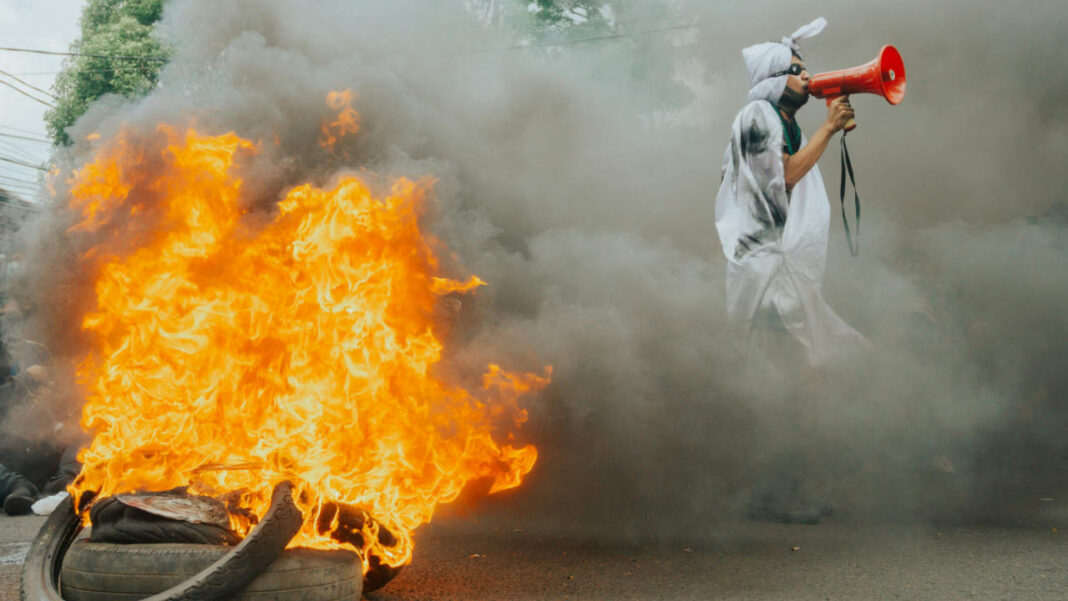
On Monday, large crowds gathered in Nanyuki to oppose plans for an Ebola isolation facility at the nearby military base. Protesters marched through town, blocked roads, and burnt tyres. Police responded by using tear gas to break up the demonstrations. One of the victims was identified as 27-year-old Charles Mang’aro Mwangi. His family says he was not involved in the protest and was simply walking along the road after work when he was shot.
According to his mother, Joyce Wangari, he had left home to briefly visit a friend. She said he was not carrying stones or taking part in any clashes. She believes he was an innocent bystander. The family says police have not contacted them or provided any information about what happened. The circumstances surrounding the second victim remain unclear. Reports indicate that both bodies showed signs of gunshot wounds.
. By Tuesday morning, the situation in Nanyuki had calmed down, although security forces remained heavily deployed across the town. The protests were triggered by plans to establish a 50-bed Ebola treatment facility at Laikipia Airport. The facility would be run by American medical staff and would mainly treat US citizens affected by the Ebola outbreak in the Democratic Republic of Congo. The proposal has caused concern among many Kenyans, who fear it could increase the risk of the disease entering the country.
Kenya has not recorded any Ebola cases. Last week, Kenya’s High Court temporarily stopped the project after a rights organisation filed a case challenging the plan. The group argued that the facility could pose serious health risks to the public. President William Ruto defended the proposal, saying Kenya had strong measures in place to protect its people.
He explained that the project was requested by the US government and described it as an agreement between long-time partners. Ruto urged citizens and politicians not to spread fear or misinformation about Ebola.
He said the government understood the risks and was acting responsibly. On Tuesday, the High Court extended its suspension of the project and ordered the government to release more information about the planned facility. Meanwhile, medical groups and oversight organisations will continue to oppose the proposal, arguing that it could endanger local communities.