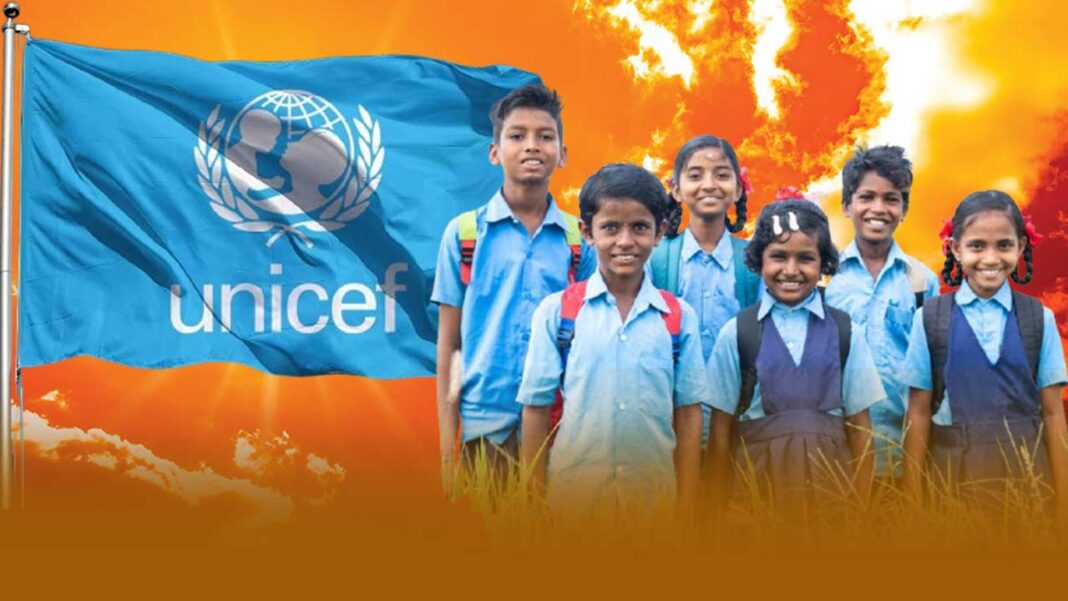

India (Commonwealth Union)_ According to a latest UNICEF report, around 392 million children in India, or about 92% of the country’s child population between ages 0 and 18, are now exposed to extreme heat conditions. Nearly 89 million children are directly exposed to heatwaves, adding to the mounting toll of climate change on young lives. The report warns that rising temperatures and frequent heatwaves are threatening children’s health, education and overall well-being. Long-term exposure to extreme heat can impact physical development, learning, and even survival in extreme cases.
Also read: 5,000 dancers, one stage: Sri Lanka’s mass Bharatanatyam event enters Guinness World Records!
To overcome the climate crisis, India has rolled out Heat Action Plans in several regions, but UNICEF pointed out that many of these programs do not sufficiently cater to the specific needs of children. The agency suggests extending heat-response measures to schools and anganwadis, considering the impact of the heat during the night, and identifying districts where children are most vulnerable to climate change. India ranks among the most climate-vulnerable countries in the region. The report gives the country a hazard exposure score of 9.21 out of 10, placing it behind only Pakistan (9.44) and Bangladesh (9.38) among its neighbours. China recorded a score of 8.28, while Afghanistan stood at 6.25. In comparison, Sri Lanka, Nepal, and Bhutan reported lower scores of 4.99, 3.79, and 2.11, respectively.
When individual climate threats are examined, India’s highest vulnerability is linked to extreme heat, which received the maximum score of 10. The country also ranked dangerously high for air pollution (9.94) and drought (8.84). Risks from tropical storms and river floods also loomed large, while exposure to coastal flooding and sandstorms was comparatively low. Furthermore, the overall report highlights a wider global crisis: close to 1.1 billion children across the world are exposed to at least three concurrent climate hazards, such as droughts, heatwaves, storms and extreme temperatures. Countries with large child populations, including India, Bangladesh, Pakistan and Nigeria, are among the most affected.
Also read: Inside Modi’s landmark Norway visit that strengthened India-Nordic ties: Key moments and takeaways!
Air pollution remains another major concern. UNICEF estimates that about 2.3 billion children globally live in areas with unhealthy air quality. Air pollution was the second most important risk factor for deaths of children under five in 2023, just behind malnutrition. UNICEF is calling for urgent action, urging governments to cut greenhouse gas emissions, phase out fossil fuels and speed up the transition to renewable energy. The organization says these steps are critical to protecting children’s futures in a world that is getting warmer.