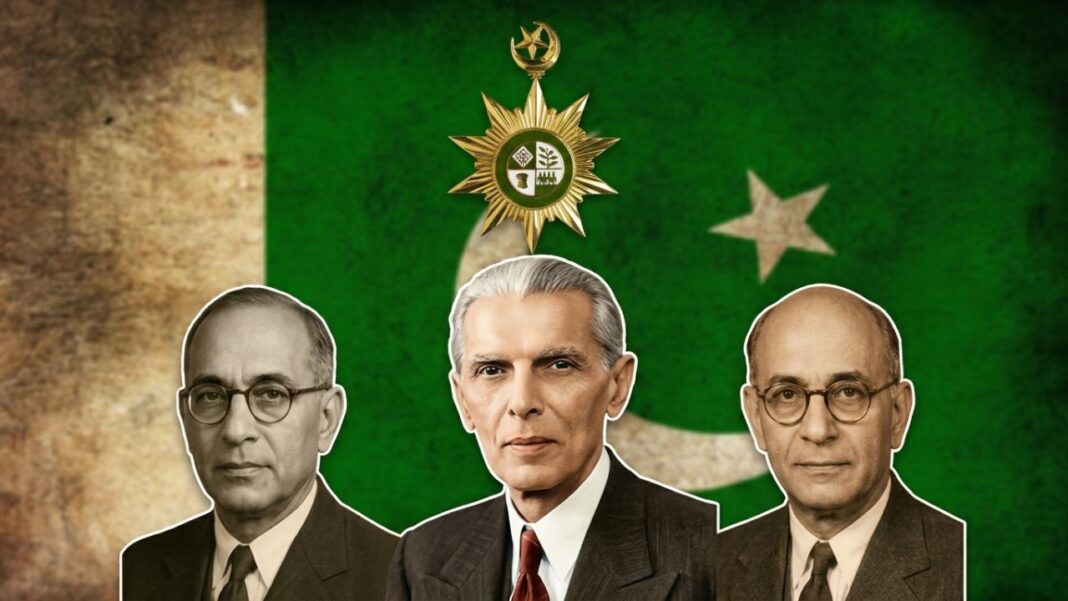

Pakistan (Commonwealth Union)_ Nearly eight decades after Partition, Pakistan is set to honour two Indian doctors whose professional conduct became closely linked to one of the most important turning points in South Asian history. Pakistan has approved its highest civilian honour, the Nishan-e-Imtiaz, for two Indian Parsi doctors from Bombay, now Mumbai, Dr Jal Ratanji Patel and Dr Jal Dhaybho-Koo. The award recognises their decision to keep the serious medical condition of Pakistan’s founder, Muhammad Ali Jinnah, confidential during the tense years before Partition. The honour was announced by Ahsan Iqbal, Pakistan’s Federal Minister for Planning, Development and Special Initiatives and chairman of the country’s Awards Committee. The doctors will receive the award posthumously at a ceremony scheduled for March 2027.
Who are the two Indian doctors?
Dr Patel was a physician, while Dr Dhaybho-Koo was a radiologist. In 1946, the two doctors examined Jinnah’s X-ray and reportedly found that his tuberculosis was at an advanced stage. Their assessment suggested that he might have only a year or two to live. At a time when tuberculosis was a dangerous and often fatal disease, such a diagnosis could have had serious political consequences. Yet the doctors did not reveal the details of Jinnah’s condition. They followed the principle of medical confidentiality, keeping the information restricted to Jinnah and his trusted inner circle. Pakistan now views that decision as an extraordinary act of professional integrity.
Also read: Indian diaspora’s record-breaking India day celebration in the USA sets Guinness record!
Jinnah’s health was a closely guarded secret
Jinnah had reportedly been suffering from tuberculosis for years, but only a small number of people, including his sister Fatima Jinnah, knew about the seriousness of his illness. His health deteriorated while he remained deeply involved in negotiations over India’s future. He was also a heavy smoker and continued working despite his worsening condition. Keeping his illness private allowed Jinnah to maintain his political authority during a period of intense uncertainty.
Also read: How the Sri Lankan and Indian diaspora are powering Canada’s progress!
How did this lead to the creation of Pakistan?
The secrecy surrounding Jinnah’s health has led historians to consider an intriguing question: Could Partition have taken a different course if British leaders had known how seriously ill he was? According to accounts cited in Freedom at Midnight, Lord Mountbatten later suggested that knowing Jinnah had little time left might have influenced his decisions over the timing of independence and Partition. The argument remains a matter of historical debate, but Pakistan’s latest honour reflects how significant the Indian doctors’ confidentiality has become in the country’s historical narrative.
Jinnah died of pulmonary tuberculosis on September 11, 1948, just over a year after Pakistan was created. For Dr Patel and Dr Dhaybho-Koo, however, their role was never about politics. They simply remained doctors at a moment when history was being made around them. The country now remembers their commitment to professional ethics, a decision that may have indirectly influenced the course of Pakistan’s creation.