
Commonwealth_ Nova Scotia is put under serious pressure to implement blanket bans on forest recreational travel in an effort to reduce the risk of wildfire during one of the driest periods in recorded history. Hiking, fishing, and recreational vehicle travel like ATVs into forest land bans are also supported by up to C$25,000 (approximately US$18,000) fines for violators. Furthermore, a special tip line has been established to report violations.
The provincial government enacted the prohibition after a dry period, issuing a warning that conditions were extremely dry and flammable. Almost all of the province’s forest fires are human-caused, official statistics indicate, so officials rose early to their intervention before matters spiralled out of their control.
The government has enforced the ban strictly, fining a dozen individuals since its implementation. The government said it would actively pursue going for fines at their full level, in recognition of the seriousness of the fire risk. Included in the persons fined was a retired army officer who openly videotaped himself defying the ban as part of a strategy to sue it into being and who was then fined nearly C$29,000.
The Canadian Constitution Foundation, a not-for-profit organization committed to the protection of Charter rights, derided the bans as state overreach. The critics believe the blanket ban is unjustly punishing good citizens and unreasonably limiting people’s rights.
Supporters of the ban view it as a response to the current conditions. They cite recent provincial history of deadly wildfires, like last year’s record tally of 2023, when 220 fires burnt more than 25,000 hectares of land. It has not rained since, and limiting the public’s access to danger zones is something that must be done lest another disaster be repeated, say the majority.
It is not the sole province to take extreme actions. New Brunswick has also implemented similar restrictions on Crown land, while Newfoundland and Labrador have banned off-road vehicles in forests for at least a week in advance. Newfoundland has imposed its largest fine for non-compliance, $150,000, indicating how serious it is about taking the threat into consideration.
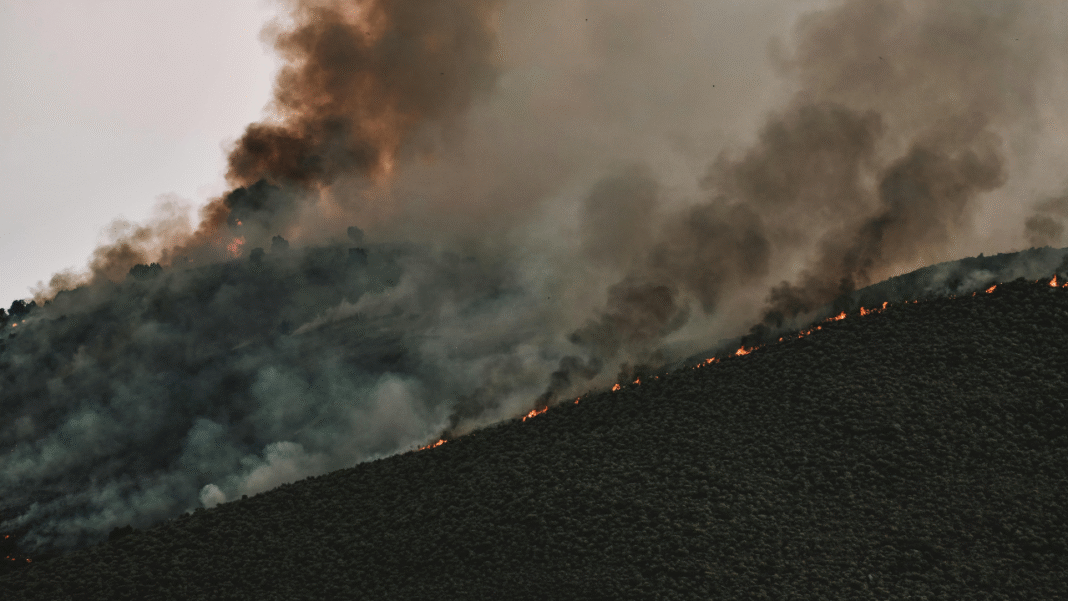
Canada’s ongoing fire season is the second-worst on record after 2023. A minimum of 470 fires are raging uncontrollably, said the Canadian Interagency Forest Fire Centre. Tens of thousands of people are still under evacuation across eastern Canada.
There is also a massive individual fire still burning on the western outskirts of the city in Halifax, the provincial capital of Nova Scotia. Firefighters have experienced their victories and losses in New Brunswick, putting out one but battling another in the Miramichi region. Militiamen and coast guard troops have been deployed to assist with Newfoundland and Labrador, and some of the hottest fires are now concentrated in Saskatchewan and Manitoba.
Many other provinces, including Alberta, British Columbia, and Ontario, also witness fire activity significantly higher than their 25-year seasonal average. The magnitude of the crisis is overwhelming firefighting capabilities and invoking prevention calls.
Wildfires are apt to break out at any time on the globe, researchers add, but global warming is increasing the chances that the hot, dry, and windy conditions that spread them will turn them into behemoth blazes. The Intergovernmental Panel on Climate Change warned that such conditions will become more intense and occur more frequently in the future, increasing the risks for prevention efforts and readiness.
The Nova Scotia government has added the forest closure that will persist until rain significantly lowers the danger. In the interim, citizens are being asked to discover outdoor recreation in safer settings while powers remain in close contact with fire trends and weather patterns.
The action has triggered a larger debate on balancing personal freedoms and public safety, with opinion strongly divided. While most see the policies as a measure to protect communities from potentially destructive wildfires, there are others who see them as an unjustified intrusion punishing the guilty and the innocent alike. As wildfire season becomes increasingly severe, the province’s response is likely to be marked by disagreement regarding how to address the worsening threat of wildfires in a warming climate.