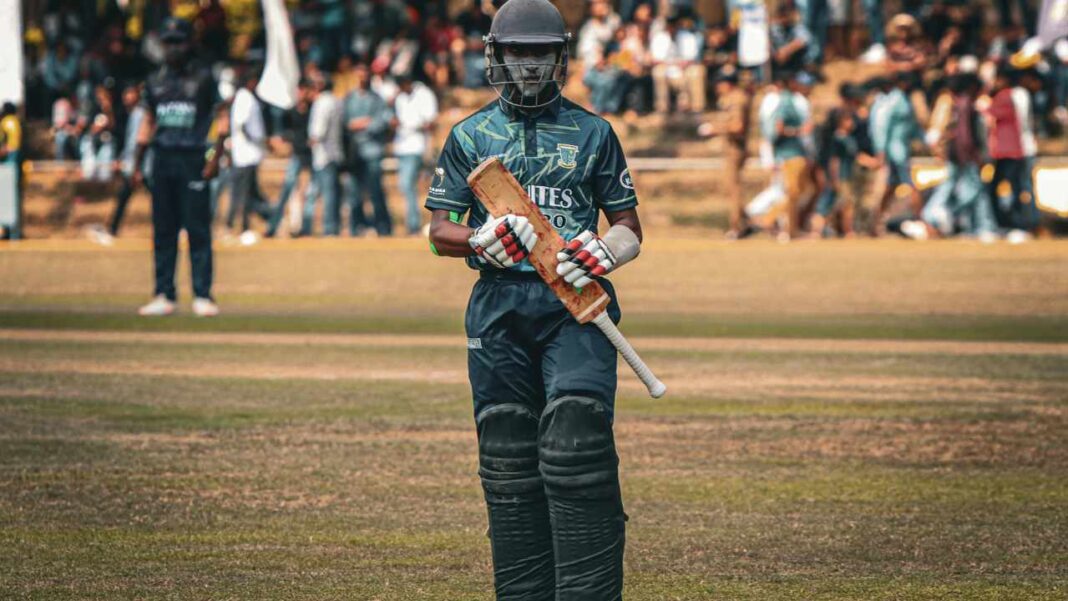


Australia‘s next home summer will be one of the most intense tests in terms of international competition ever seen in cricket. Cricket Australia has recently announced its 2026-27 season, which will span 8 months, contain 27 international matches, and take place at 14 different venues. The men’s portion of the season begins with a 2-match Test series against Bangladesh in the Top End (northern Australia) in August, concludes with the 150th-anniversary Test against England at the MCG (Melbourne Cricket Ground) in March, and includes a heavy schedule of matches over a short timeframe, some of which could shape Australian cricket’s future.
The season kicks off on August 13 in Darwin. The Australian men’s team will launch their Test match campaign against Bangladesh at Marrara Stadium before playing the second Test in Mackay. Following the 2 matches against the Bangladeshi team, the Australian men’s Test team will then travel to South Africa in September and October for an ODI/G20 series of 3 matches in Durban, Johannesburg, and Potchefstroom before concluding with a 3-match Test series at Newlands, Cape Town. The South Africa tour has additional significance as it will be the first time Australia has played cricket against South Africa since their April 2023 victory in the World Test Championship Final, which they won at Lord’s.
While South Africa may be the emotional highlight of this series, England will undoubtedly dominate in terms of volume. This white-ball series will see the Australian men’s cricket team play against England in November, comprising three ODIs and five T20Is, and taking place in the following locations: Perth, Adelaide, Hobart, Melbourne, Gold Coast, Brisbane, Sydney, and Canberra. In many ways, the series will be a test of the Australian squad’s depth; selection decisions and managing workloads will be just as important as each player’s individual performance. The series will also be competing for the interest of Australians with AFL and NRL; however, they will have to compete against each other to win the support of Australians while at the same time having to compete against the Australian Open coming up in late January. This summer is going to be a big one with so many great sporting events that are taking place throughout Australia’s borders.
However, the most taxing stretch of time will be when England leaves. There will be a Test series between Australia and New Zealand consisting of 4 Tests in Australia, and it will happen during a time span of only 4 weeks (December 9—January 8). The tests will take place in Perth (WA), Adelaide (SA), Melbourne (VIC), and Sydney (NSW) and will occur in consecutive time, so there will not be as much of a gap as before between home series. Cricket Australia also announced that the series for the Border-Gavaskar Trophy in India would commence sometime after January 21, but no specific dates or locations are established at this time. The final four weeks of Australia’s Test season will, therefore, serve to test the strength of the Australian Test players. The 150th Test in Australia vs. England will start at the MCG on March 11.
There is a further depth of meaning to that schedule, and it doesn’t refer solely to rivalry and romance; it also highlights the intense pressure on players to perform consistently in a tightly packed series that could determine their success in the World Test Championship. Currently, Australia’s men’s team is strongly positioned in their World Test Championship race, but their away tours of both South Africa and India and concurrent home series versus New Zealand and England could affect whether they reach another World Test Championship final. Cricket Australia has evidently recognized the pandemonium surrounding the cricket calendar by referring to 2024 as an exquisitely compacted schedule with little margin for error. For the likes of Pat Cummins, Steve Smith, Mitchell Starc, Josh Hazlewood, and Nathan Lyon, the forthcoming summer may be regarded as a matter of survival, rather than merely for the sake of accumulating runs.
The women’s schedule adds another level of complexity to the summer. Australia Women will host Bangladesh in October for three one-day internationals at Allan Border Field, followed by three T20Is at North Sydney Oval before New Zealand visits later in the season for T20Is in February and ODIs in March. The women’s calendar represents a smaller number of fixtures than that of the men’s team; however, it is equally significant in underlining the commitment of Cricket Australia to keep the national sport in the public eye through all formats of cricket, including over various venues and timeframes.
The season of 2026-2027 looks like an upcoming athletic event from the perspective of both scheduling and location (it is designed to be a World Tour type of competition) with the frequency of games being associated with festivals, all while having the rigor of something that will have tremendous impact on the historical and financial aspects of how well the game fares overall. Next summer’s cricketing tournament in Australia will focus on developing the resilience needed to endure what could be the hardest season in history.