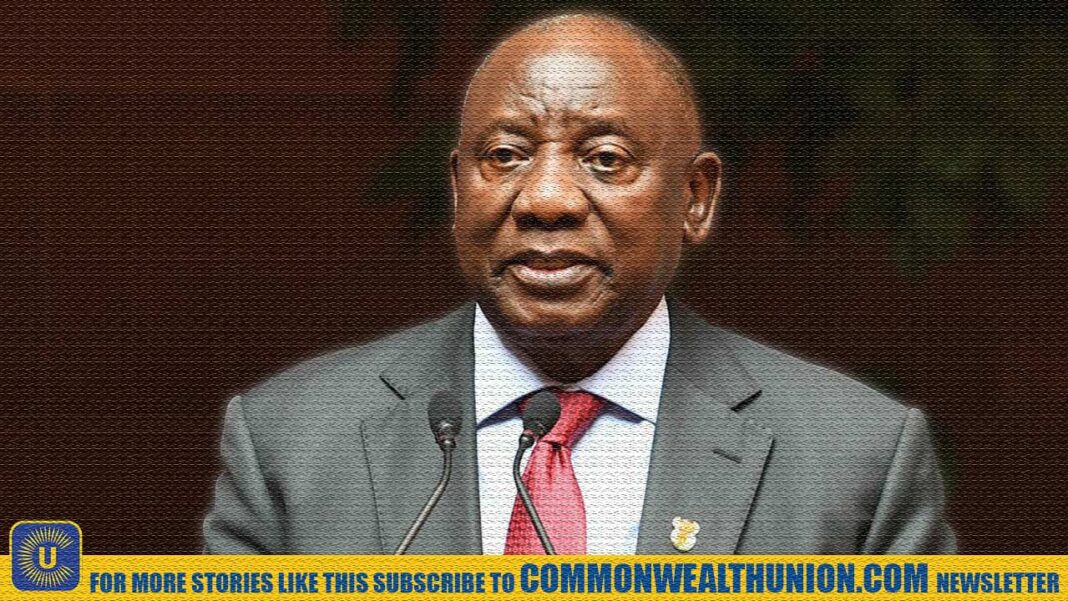

South African President Cyril Ramaphosa has responded calmly to reports suggesting that France may have withdrawn his invitation to the upcoming G7 summit. He emphasised that countries outside the G7 should not be surprised if they are not invited.
Earlier reports claimed that the United States had pressured France to rescind Ramaphosa’s invitation. It was suggested that US President Donald Trump threatened to boycott the summit if South Africa participated. Ramaphosa, however, dismissed these claims, saying an invitation to the G7 does not mean a country is being snubbed or ignored.
France, which holds the G7 presidency this year, denied acting under any US pressure. Instead, it said it invited Kenya, along with India, Brazil, and South Korea, as part of efforts to address global economic imbalances. French officials clarified that this choice aligns with the upcoming France-Africa cooperation, which includes a summit in Nairobi in May.
Vincent Magwenya, a spokesperson for the South African presidency, noted that South Africa’s initial invitation had reportedly been withdrawn due to “sustained pressure from the US”. He added that President Emmanuel Macron had personally invited Ramaphosa during the 2023 G20 summit in Johannesburg. Yet, Ramaphosa later clarified that, according to his information, no country applied pressure to exclude South Africa. He stressed that South Africa is not a G7 member and has missed some summits. Missing the June summit, he said, “should come as no surprise to anyone.”
The US State Department also stated that it did not ask France to exclude South Africa. Meanwhile, a White House official explained that the decision to invite Kenya followed discussions among G7 members. France’s Foreign Minister Jean-Noel Barrot reinforced that the choice to invite Kenya aimed at streamlining the summit and preparing for the France-Africa summit.
Relations between South Africa and the US have been tense since Trump took office. Disputes have arisen over trade, diplomacy, and South Africa’s strategic partnerships. Trump had criticised Ramaphosa’s government over land reform and the protection of the white minority, while South Africa rejected US claims of “white genocide” as unfounded. Trade tensions escalated when the US imposed the highest tariffs on South African goods of any African country.
Earlier this month, South Africa summoned the new US ambassador, Brent Bozell, over remarks on the country’s racial policies and court decisions. Bozell later clarified that the US respects South Africa’s judiciary. The South African presidency stated that efforts to “reset” relations with the US are ongoing. Officials also emphasised that France’s decision regarding the G7 summit will not affect the strong bilateral ties between South Africa and France. Ramaphosa’s message was clear: while South Africa values international engagement, missing the G7 summit is not a major setback and should not be considered a diplomatic slight.