
On Tuesday, 21 April ’26, the Canadian Prime Minister, Mark Carney, announced a new advisory committee on Canada-United States economic relations. This committee retained only 4 members from the previous council formed under former Prime Minister Justin Trudeau.
Canada‘s minister responsible for trade with the U.S., Dominic LeBlanc, will chair the 24-member advisory committee. The prime minister’s office said that the committee is expected to hold its 1st meeting on Monday, 27 April.
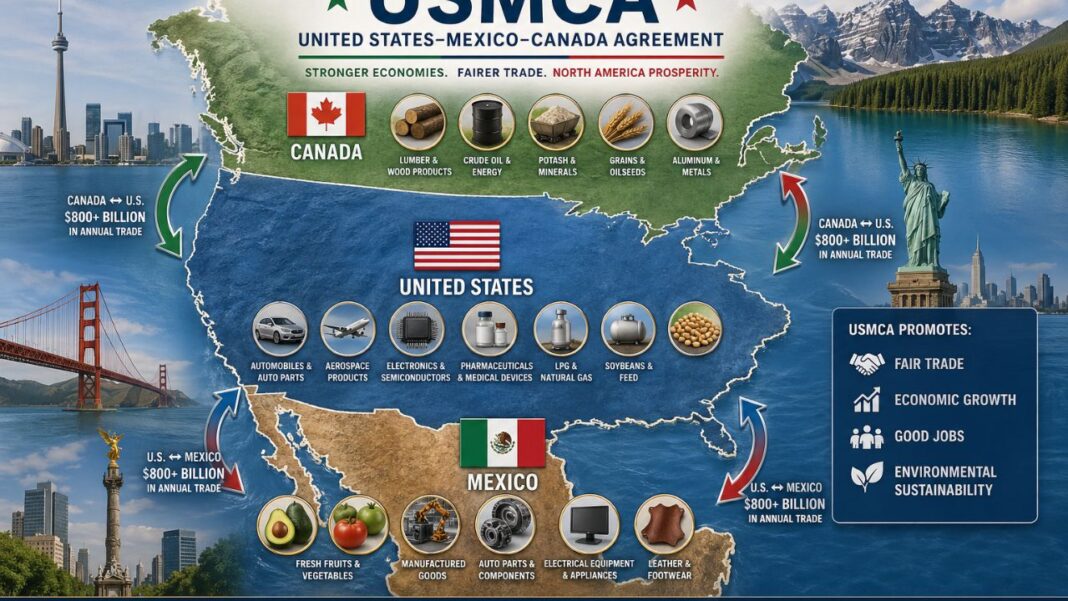
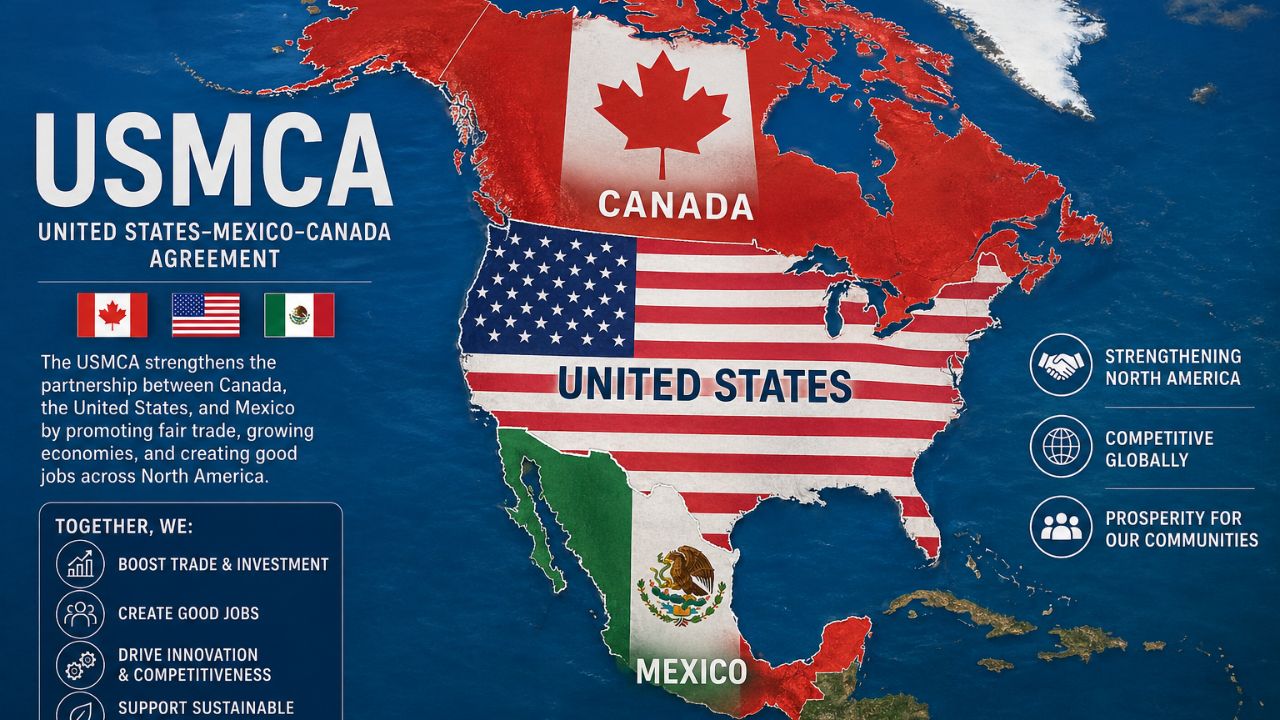
Canada, the U.S., and Mexico are part of the USMCA free trade agreement. Canada terms it ‘CUSMA’. It’s up for review on July 1,26.
The USMCA has been critical in shielding Canada. Canada ships almost 70% of all its exports to the U.S. There’s likely to be an impact from tariffs imposed by President Donald Trump. Presently, as much as 85% of goods flowing to the U.S. are exempt from tariffs. Economists believe that these exemptions have helped Canada in staving off a recession.
Both businesses, besides industry leaders, are currently lobbying the government to obtain an extension of the USMCA. This situation is due to the current global uncertainty that prevails. Additionally, the future of the deal may have deterred investment and hiring.
Among those retained on the advisory committee are Flavio Volpe, the president of the Automotive Parts Manufacturers’ Association; Lana Payne, union leader and president of Unifor; Tabatha Bull, CEO of the Canadian for Indigenous Business; & Jean Charest, former Deputy Prime Minister.
The statement added that other prominent names include Erin O’Toole, former leader of the opposition Conservative party; Candace Laing, CEO of the Canadian Chamber of Commerce; Dennis Darby; and the president of Canadian Manufacturers & Exporters.
On the other hand, Opposition critics have raised concerns about transparency & inclusivity. They argue that there is no clear representation from provincial governments and small- to medium-sized enterprises. As such, the committee risks becoming an echo chamber for federal priorities rather than a genuinely collaborative forum. Some have called for parliamentary oversight, besides regular public reporting, to ensure accountability as negotiations approach.