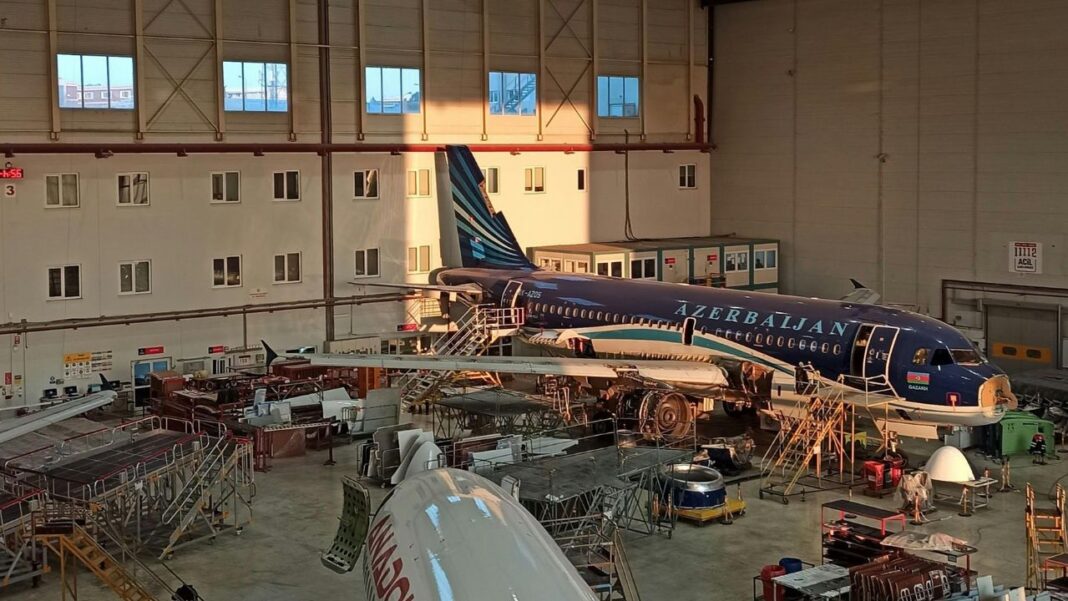

India has long used metrics like take-offs, passenger volume, and new aircraft orders to gauge its aviation success. Instead of measuring new aeroplanes coming into service, however, India‘s next big success in air travel may very well come from how well planes are serviced and repaired once they reach their destination.
The Maintenance, Repair and Overhaul (or MRO) sector in the aviation industry has been largely overlooked until recently; however, this area has begun to solidify itself as one of the fastest emerging sectors within aviation globally, and India is heading toward being a leader in worldwide aircraft service and engineering.
The numbers themselves present a remarkable scenario. The total value of the MRO aircraft market in India is expected to grow significantly over the next 10 years from about $4 billion in 2025 to approximately $7 billion by 2034, and some industry professionals are predicting an even higher amount than what has been previously projected. However, this market’s impressive growth is not just about expanding; it also signifies an important global shift in the economy of aviation.
The vast majority of Indian airlines have historically been required to send their aircraft and engines to other countries (e.g., Singapore, Dubai, and Malaysia) for heavy maintenance services or engine overhauls, costing the Indian aircraft operators billions of dollars and also causing a significant amount of operational delays. Historically, industry estimates show that approximately 80% of India’s high-value MRO business has left India permanently.
The country is challenging its reliance on maintaining large aircraft fleets in India. With India’s unprecedented demand for air transportation—having processed 243 million passengers in 2024—India has now become the fifth-largest aviation market on earth, and domestic airlines are putting in historically large numbers of orders for new aircraft. The rising number of aircraft requires more maintenance, and India plans to keep most of the MRO (Maintenance Repair and Overhaul) business there.
A series of policy reforms are making it easier for international airlines to establish maintenance facilities in India through 1) reduced tax rates on MRO services, 2) more relaxed regulations governing the MRO industry, and 3) more infrastructure investments. Certain states, including Telangana and Karnataka, are competing to establish themselves as leading aviation engineering centers.
The inauguration of the first global aircraft engine MRO facility in Hyderabad, India, by French aerospace corporation Safran, is widely regarded as a pivotal moment for the aviation industry in India.
However, the future is full of uncertainty and challenges.
The aviation industry in India continues to struggle with a shortage of experienced & trained aircraft engineers who possess the specialised skills needed to work on aircraft engines. There is also limited access to original equipment manufacturer (OEM) technologies from other countries. Competition from established maintenance, repair, and overhaul (MRO) operators, such as those in Singapore and Hong Kong, presents additional challenges for MRO providers in India. In contrast to the above difficulties, establishing an aircraft hangar for maintenance and repair is easier than establishing the necessary level of knowledge and skills needed to support those hangar operations by hiring qualified personnel.
India has one significant advantage in comparison with other countries: its size. India is currently adding more aircraft at a faster rate than any other country in the world. In addition, India has a unique combination of lower labour costs than many other countries, an ideal geographic location for major aviation operations, and a tremendous amount of domestic aviation demand. The next time an aircraft arrives in Asia for maintenance, it is increasingly likely that it will be flown elsewhere than Europe or Singapore for repairs.
In fact, the next aircraft that arrives in Asia for servicing may be in India. Such a move could have an extremely significant impact on the way that global aviation is conducted.