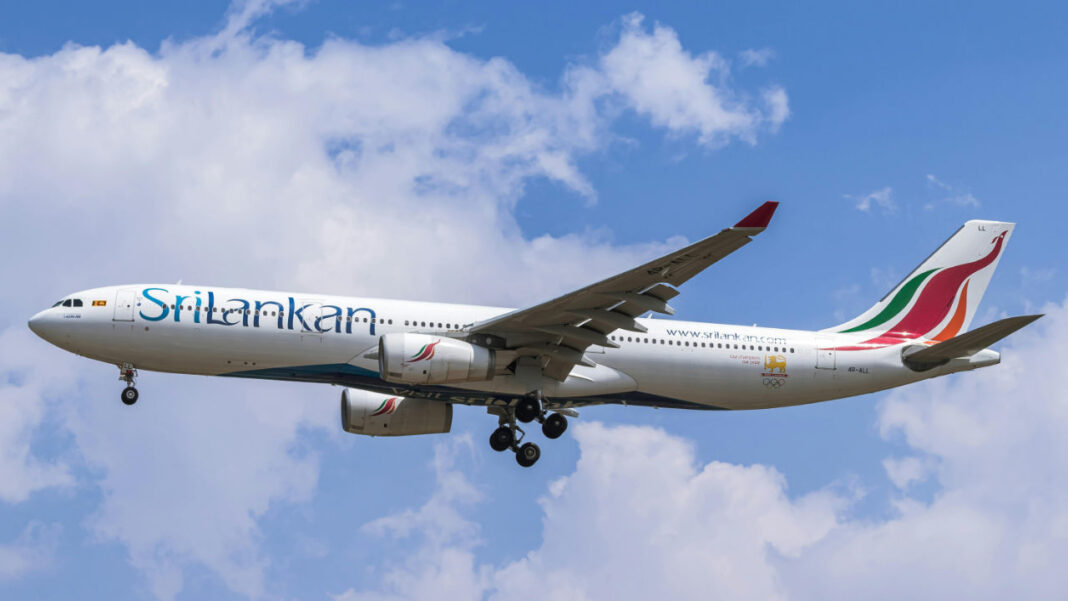

While global air travel is now headed into one of its most financially difficult periods ever, Sri Lanka has chosen a route few other countries will take: to keep all of its wings fully spread.
With this unexpected announcement, Sri Lanka became the first country to announce that they would continue to operate all of their international long-haul flights with Sri Lankan Airlines, even in light of rapidly rising jet fuel prices that have forced many other airlines around the world to cut services, cancel flights, and dramatically raise their ticket prices.
Anura Karunathilaka, Sri Lanka’s minister of ports and civil aviation, told the press that there would be no change to or suspension of any of Sri Lankan Airlines’ long-haul international services at this point; however, the aviation sector is facing unprecedented pressure due to significant increases in the price of jet fuel.
Several global airlines have either cancelled their costly long-haul international routes or announced they will no longer operate long-haul international flights. Global reports state that the cost of jet fuel is rising sharply as a direct result of increased geopolitical tensions in the Middle East and from disruptions in the Strait of Hormuz, one of the world’s most important oil transit chokepoints.
Sri Lanka remains insistent on maintaining resilience while many other airlines have been shrinking their operations. Sri Lankan Airlines will continue as it has been operating regular long-haul flights to Europe (London, Paris, and Frankfurt) and Asia (Sydney and Narita Airport in Tokyo) to maintain tourism and trade connections while supporting the rebuilding of the economies of tourism and trade in Sri Lanka, which continues to suffer from a long history of instability.
But the survival strategy behind the operation of the airline has not been straightforward. Reports indicate that the government of Sri Lanka has clarified a retroactive agreement with the Ceylon Petroleum Corporation (CPC) to provide temporary fuel credits to assist with costs of operating the airline. In addition, the Treasury has (in July ’08) provided immediate financial assistance to the airline in order to help offset the escalating fuel crisis.
For aviation economists, the government’s response to sustain the airline’s connectivity to global markets presents both an opportunity and a risk.
As many experts have said, sustaining international connectivity through tourism is critical for Sri Lanka, which relies on tourism for the majority of its current economy. One of the main reasons Sri Lanka is able to sustain tourism is because it has uninterrupted long-haul flights. That is, tourists, investors, overseas workers, and freight markets will continue to have access to Sri Lanka. These will continue to provide critical foreign exchange earnings for Sri Lanka.
However, some experts are cautious about the potential risk to airlines that continue to operate expensive long-haul routes during a time when fuel costs fluctuate significantly. This ongoing challenge will further place an airline that has already had tremendous debt pressure and gathered many years of challenges restructuring in a strained financial position.
Airlines operating around the world are currently facing very difficult times, as the airline industry globally has shown clear signs of immense distress. Major airlines in the neighbouring country of India have recently announced plans to reduce capacity due to high fuel costs, which are increasingly making up a larger share of their total operating expenses. Aviation fuel currently makes up as much as 60% of an airline’s overall costs.
On a positive note, though, despite facing very difficult economic conditions, Sri Lankan Airlines just received public accolades in Hamburg for having been recognised as both the #1 “Best Overall Passenger Experience” and the #1 “Most Improved Airline” in South Asia – positive public recognition that stands in stark contrast to the very difficult economic environment the airline is currently confronted with.
Beginning in 1979 and operating 100% of its fleet as Airbus aircraft, Sri Lankan Airlines is still considered one of the most strategically important airline companies owned by the Government of Sri Lanka. Sri Lankan Airlines connects Sri Lanka to multiple international cities throughout Asia, Europe & Australia and represents an integral part of the overall global identity of Sri Lanka.
Sri Lanka has taken the risk of expanding its aviation business significantly, even as many countries worldwide have scaled back their aviation operations. If this gamble pays off and is seen as an indication of resilience, or if there are too many costs associated with it and it ends as a financial failure, will really depend upon what will happen to fuel prices, which have been the issue that disrupted major airlines all around the world.