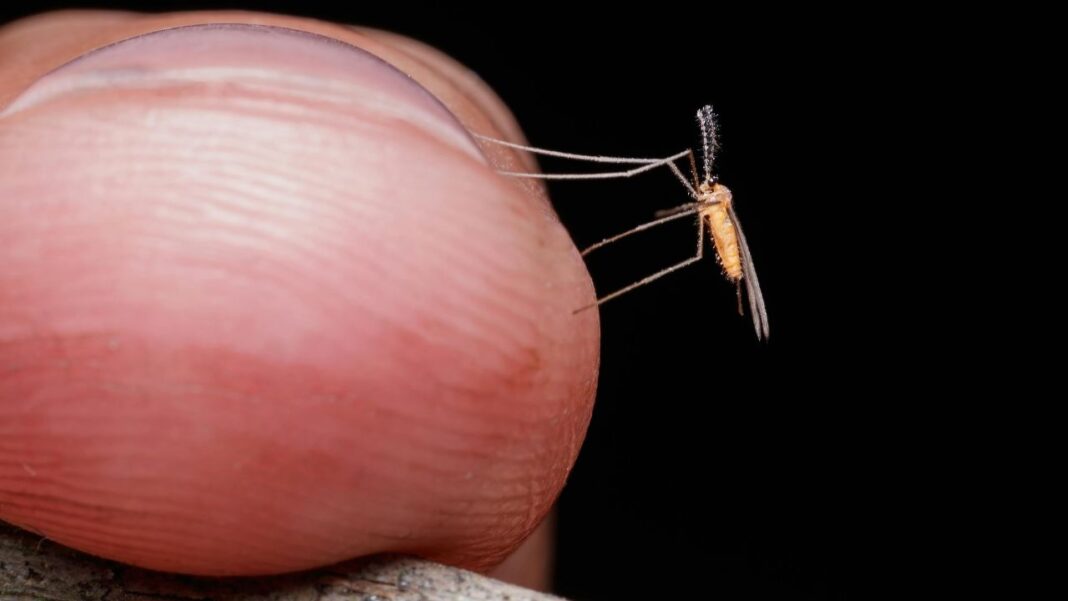

Scientists studying malaria have discovered something unexpected while trying to stop the deadly disease from spreading. Their work may also help researchers learn more about male fertility and even future birth control for men.
Malaria is caused by a tiny parasite called Plasmodium. The disease spreads through mosquito bites and affects millions of people every year. Researchers at UNSW Sydney are studying how the parasite reproduces inside mosquitoes in hopes of stopping the disease from spreading further.
One of the scientists leading the research is Dr Claire Sayers. She explained that malaria spreads when a mosquito bites an infected person and drinks blood carrying male and female parasite cells. Inside the mosquito, these cells join together and create new parasites. The mosquito can then pass the infection to another person through another bite. This process keeps the disease moving from person to person.
Only a tiny number of parasites in the blood become male and female cells. But these special cells are vital because they allow the parasite to reproduce and continue spreading. Researchers are now focusing on stopping this process. Dr Sayers and her team are studying certain proteins that help the male parasite reproduce. These male cells act similarly to sperm cells.
The scientists discovered that disrupting these proteins prevents the male parasite cells from developing properly. As a result, the parasite fails to reproduce inside the mosquito, which means the disease cannot spread further. Laboratory tests have already shown promising results. The research team successfully blocked the parasite from reproducing in mosquitoes during experiments. However, scientists say it could still take many years before the work becomes a treatment for humans.
More testing is needed in animals, followed by drug development and safety studies. Researchers believe it may take at least another decade before such treatments are ready for public use. In the future, the treatment could be combined with normal malaria medicine. This would help remove the parasite from a patient’s body while also stopping mosquitoes from spreading the disease to others.
Malaria remains one of the world’s deadliest diseases. According to the World Health Organization, around 250 million people get malaria every year, and more than 600,000 people die from it worldwide. But the study led to another surprising discovery. While examining the parasite’s genes, Dr Sayers noticed that one important male reproduction gene was not unique to malaria parasites.
She found that very similar genes exist in many sexually reproducing species, including humans. When researchers studied the human version of the gene more closely, they discovered that it is highly active in the testes. This suggests it may help with sperm development in men.
The finding raised new questions for scientists. If changes to these proteins can make malaria parasites infertile, similar changes in humans might also affect male fertility. Some earlier studies already showed that infertile men sometimes have mutations or unusual activity in these genes.
Because of these findings, researchers believe there may be a connection worth studying further. Dr Sayers also believes the discovery could possibly help scientists develop a new type of male birth control in the future. Most existing male contraceptive ideas involve changing hormone levels. But this research may point toward a non-hormonal method instead.
Scientists are still far from creating such a treatment, and the idea remains highly experimental. However, researchers think it could open an entirely new area of study. Dr Sayers admitted that linking malaria research with male contraception may sound unusual at first. But she believes biology often reveals surprising connections between very different areas of science.
She says discoveries like this are one of the most exciting parts of scientific research. Sometimes work focused on one problem unexpectedly helps researchers understand something entirely different. The team is now searching for funding to continue the research. Future studies will focus both on preventing malaria transmission and understanding how these genes may affect fertility in humans.