
New research from an international team of scientists has found an unexpected change in a well-known tropical tree–ant partnership in Malaysian Borneo. The study was published in the journal PeerJ and involved scientists from Queen Mary University of London, the Royal Botanic Gardens, Kew, the Biology Centre of the Czech Academy of Sciences, and other institutions.
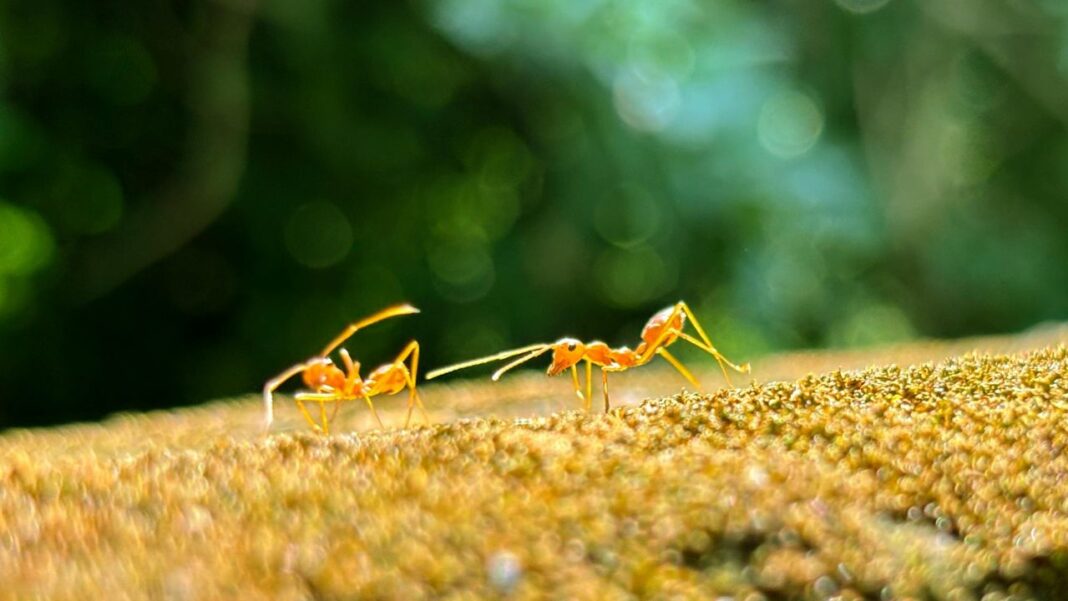
The researchers studied a tropical plant called Macaranga pearsonii. This tree has a special relation with ants. It makes hollow stems for ants to live in. It also grows small food bodies to feed the ants. In return, the ants protect the tree from insects such as leaf-eating caterpillars. This partnership has existed for around ten million years. It is a classic example of mutualism in tropical forests. However, the study indicates that this long-standing system is being disrupted.
Scientists found that predatory wasps are now entering the same hollow stems that were meant for the ants. Wasps are now using the spaces as nests instead of ants living inside.
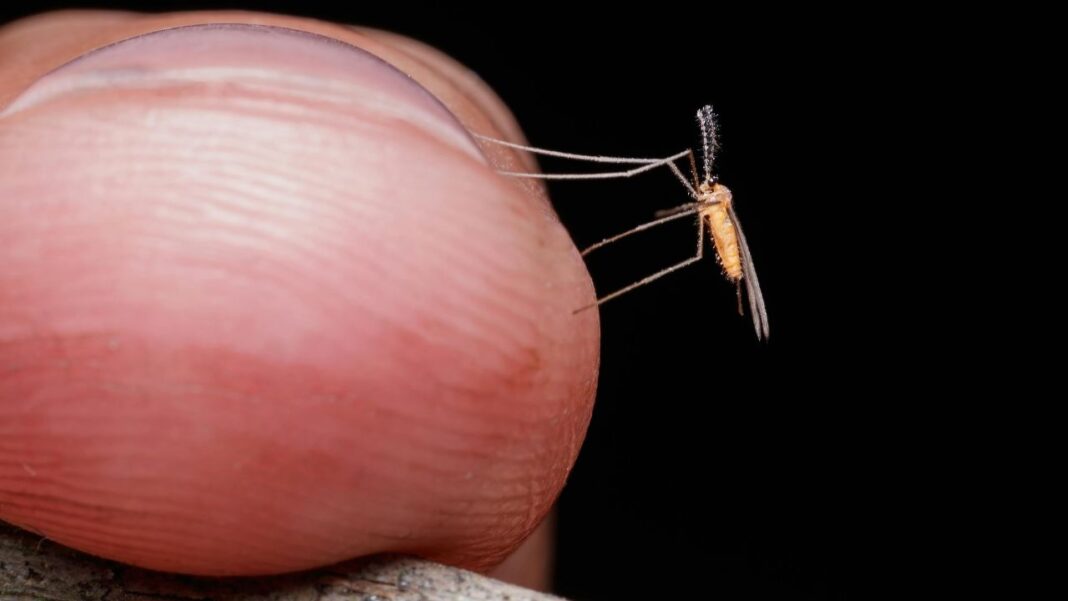
These wasps behave very differently from ants. They hunt small flies, paralyse them, and store them inside the plant stems as food for their larvae.
When researchers opened the stems, they found many trapped insects being consumed by young wasps inside the plant chambers. The team compared trees in different environments, including logged forests and oil palm plantations. They discovered that wasps were far more common in plantations.
In these areas, ant colonies inside the plants were often smaller or missing entirely. This suggests that wasps may be replacing ants in some cases. Scientists believe that human changes to the land may be helping this shift.
Disturbed habitats appear to make it easier for wasps to spread. However, it is still unclear whether the wasps are native species adapting to change or newly introduced species. Macaranga plants are important because they are among the first trees to grow in damaged or cleared land. They help forests recover. However, if wasps replace ants, the plants may lose their primary defenders.
Without strong ant protection, trees could become weak and less successful in recovering ecosystems. This may slow forest regrowth in areas affected by logging or farming. Even small changes in species relationships can have big effects over time.
Researchers warn that human activity not only causes species loss, but it also changes how species interact. These hidden changes can reshape how whole ecosystems work. Over time, mutual relationships, like those between ants and plants, can break down. This may lead to long-term evolutionary changes.
Plants might eventually reduce or stop building structures that no longer provide them benefits. The study also suggests that many of these ecological changes may already be happening in tropical forests without being noticed. They often remain hidden until they become more serious.
In conclusion, the study published in PeerJ provides new evidence that human-disturbed environments can reshape ancient ecological partnerships in unexpected ways. The team notes that further research is necessary to determine whether the wasps directly displace ant colonies or merely utilise empty plant stems.
Future studies may test how ants respond to wasp invasion over time. Scientists also want to determine whether the wasps are spreading naturally or through human activity. The findings raise concern about biodiversity in oil-palm-dominated areas, where ecological relationships may become weak.
This research helps scientists understand how delicate ecosystems respond to environmental stress. The study also shows the importance of monitoring small ecological changes in tropical forests for conservation in planning and long term forest health.