

The University of Bristol has renewed its plan for tackling climate change. The new approach brings the whole university together. Staff, students, and researchers are working as one team to reach shared climate goals.
Bristol is already known as a leader in climate science. Its researchers study the effects of the climate crisis in enormous depth. This expertise helped shape the university’s new goals for the next five years and beyond. The plan now covers all types of emissions. This includes direct emissions, indirect emissions, and emissions from the university’s supply chain.
Back in 2015, Bristol set a goal. It wanted its buildings to reach net zero emissions by 2030. Since then, emissions have dropped by more than half compared to the 2005/06 starting point. Even so, climate scientists say this progress is not enough on its own.
Because of these developments, the university has built a wider, more joined-up plan. This plan is called the University Climate Action Plan. It aims to cut emissions from buildings and energy use by 30% by the year 2030. For one category of emissions, known as Scope 1, the university now aims for net zero by 2042. For another category, Scope 2, the target is a 70% cut by 2030, also reaching net zero by 2042.
The university has also set a brand-new goal for emissions linked to its supply chain. These are called Scope 3 emissions. The target is a 42% reduction by 2030. Full net zero for this category is planned for 2050.
Bristol’s efforts have earned recognition. In the 2026 Times Higher Education Impact Ratings, the university ranked 56th in the world. Within the UK, it placed seventh. These rankings measure how well universities help build a healthier, greener, and fairer world.
Since 2015, Bristol’s reported carbon emissions have dropped by just over half. A major reason for this is the UK’s national electricity grid. It now produces power with much lower carbon output. The university has also signed a long-term agreement to buy more renewable electricity. On top of these changes, several buildings have switched from gas heating to electric systems. Examples include Beacon House in Clifton and the new Blagdon Building at the Langford Campus. Both replaced older buildings that relied on gas.
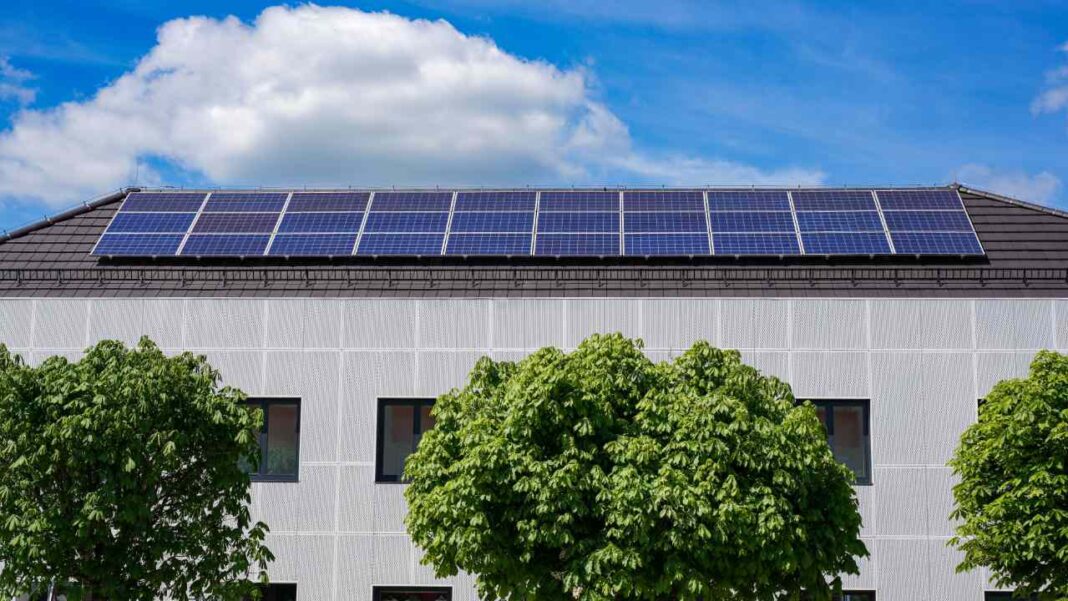
Other changes have helped too. The university has installed solar panels and improved its heating controls. It has also turned off some gas-powered systems. As a result, Bristol now uses 75% less oil than it did twenty years ago. Gas use has fallen by 26% over the same period.
Sustainability was also a key focus while building the new Temple Quarter Enterprise Campus. This campus is set to open in September. Its main building, the Sloane Robinson Building, has 750 solar panels installed on its roof. The building also connects to a district heating network, which helps lower both energy use and carbon output. Builders used lower-carbon construction methods too, including a type of eco-friendly concrete.
Professor Evelyn Welch, the university’s vice chancellor and president, spoke about the plan. She pointed to the recent heatwaves and wildfires across Europe. She said these events show that climate change is already happening. She stressed the need for urgent action.
She also noted that Bristol has a long history of supporting climate research, education, and public engagement. Still, she said there is much more work ahead.
According to Professor Welch, the new Climate Action Plan gives the whole university a clear sense of direction. She acknowledged that change is not simple for a large, globally connected institution like Bristol. The university carries out advanced research that depends on complex facilities. It also maintains many historic buildings, which were not originally designed with today’s environmental concerns in mind. Even so, she said reaching these goals is essential for the university’s long-term success.
Professor Welch also highlighted the role of teamwork. She explained that the plan She explained that staff and students from across the university shaped the plan with their ideas and input. by ideas and input from staff and students across the university. She thanked everyone who contributed. She added that achieving these goals will require working closely with the city of Bristol, the wider region, and international partners. In her view, everyone has a part to play in building a more sustainable and resilient future.