
Malaysia’s timber industry has managed to sustain a substantial presence in international trade. It recorded exports valued at approximately RM9.4 (USD 2.35) billion during the first 6 months of 2026. It reinforced the sector’s role within the country’s wider commodities economy.
The January-to-June performance highlights the continuing commercial importance of wood-based products at a time when Malaysia’s forestry and manufacturing industries are increasingly moving beyond the traditional sale of basic timber. The latest figure was disclosed by Plantation and Commodities Minister Datuk Seri Dr Noraini Ahmad, who noted that the industry has evolved into a broader value-added business rather than remaining centred solely on timber extraction and primary processing.
The half-year result also places the industry on a significant trajectory for the full year. Malaysia has historically generated more than RM20 (USD 5.1) billion annually from timber-related exports, suggesting that the first-half performance represents an important contribution to a sector that continues to serve overseas buyers across various product categories.
One of the most notable changes in the industry is the growing emphasis on downstream manufacturing. Instead of depending principally on unprocessed or minimally processed wood, Malaysian companies have developed capabilities in furniture, joinery, panels, mouldings and other products in which design, manufacturing expertise and finishing contribute to export value.
That transition matters because international competition in basic commodities can be heavily influenced by raw-material prices, freight expenses and exchange-rate movements. Higher-value products, by comparison, provide manufacturers with opportunities to compete through craftsmanship, engineering, product development and specialised production.
Therefore, Malaysia’s timber story increasingly connects industrial capability with forest resources. Furniture and other finished wood products can incorporate considerably more labour, technology and design before reaching overseas customers, permitting a greater portion of the eventual export value to remain within the manufacturing chain.
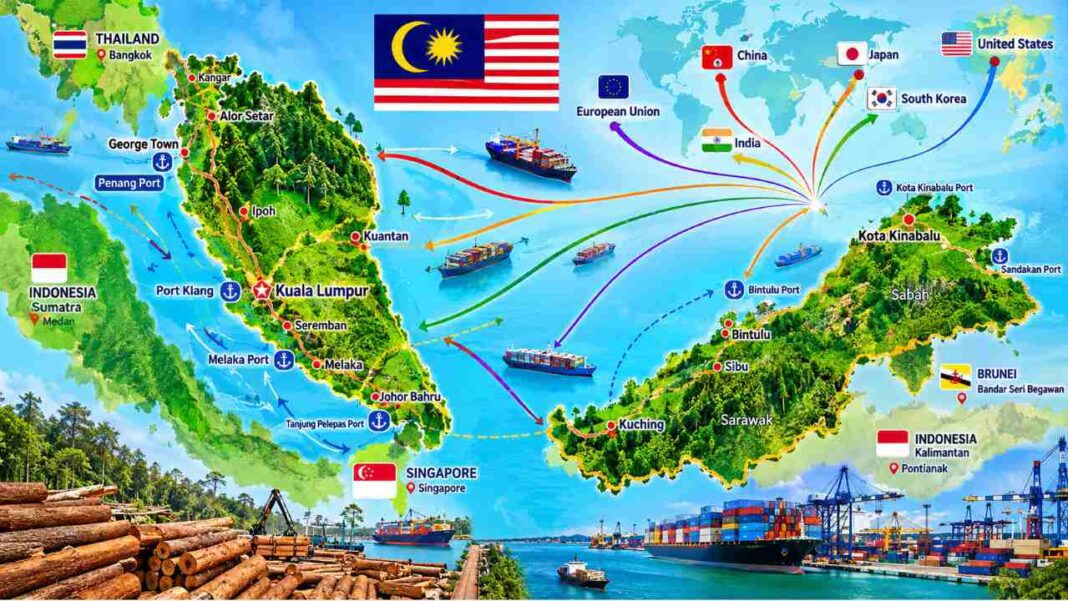
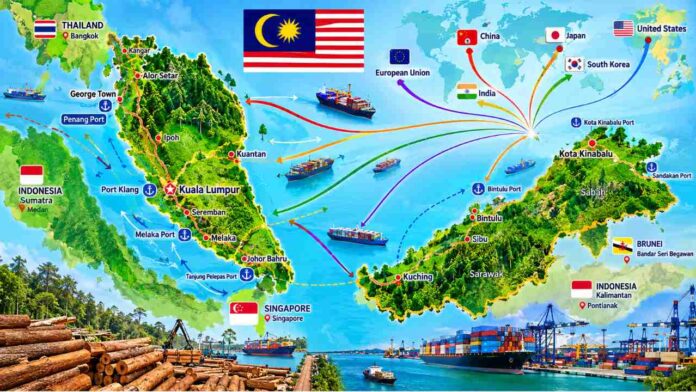
The industry’s geographic position also provides an advantage. Malaysia sits within the wider Asian manufacturing and trading network, giving timber and wood-product companies access to established shipping routes and major consumer markets. Producers in Peninsular Malaysia, Sabah and Sarawak operate within different resource and industrial environments but together contribute to a sector with a substantial international footprint.
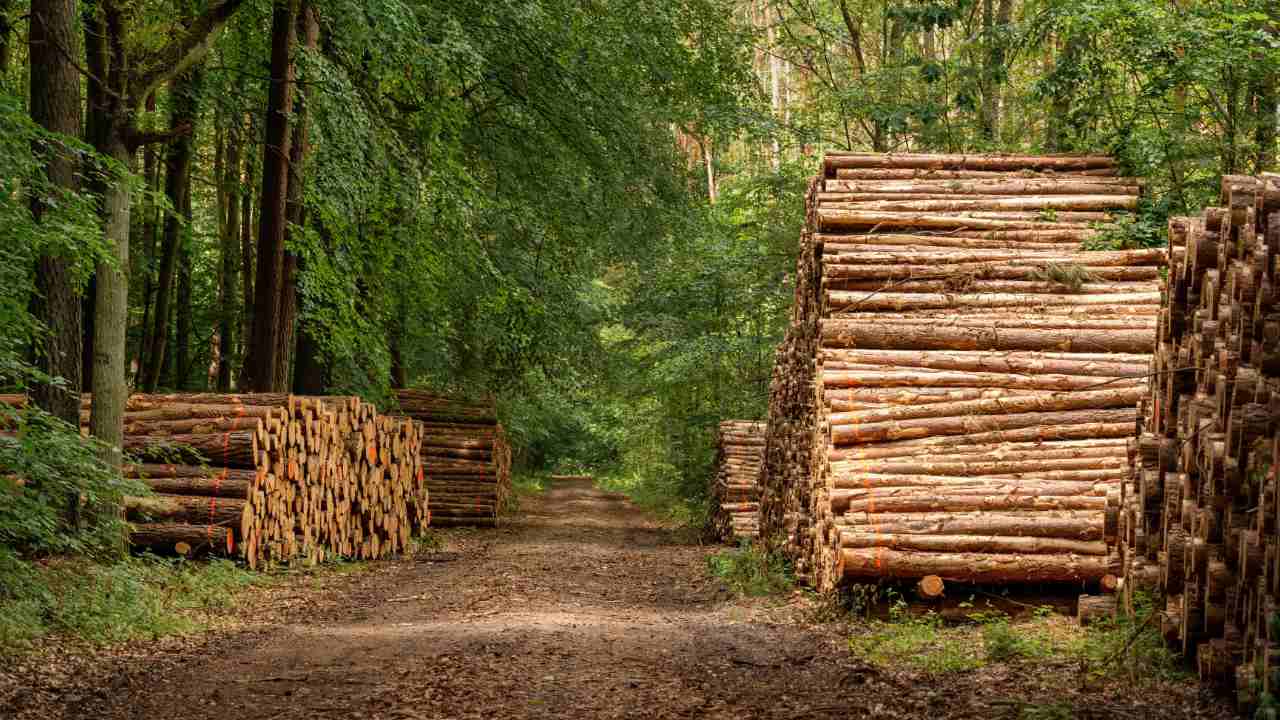
At the same time, the latest export figure arrives against a backdrop of changing expectations surrounding forestry. International customers increasingly pay attention to the provenance of wood, supply-chain transparency and responsible forest management. Consequently, Malaysian exporters must sustain market access by doing more than just producing competitive goods. Documentation, certification, and credible sustainability practices also influence purchasing decisions.
This situation is particularly relevant as manufacturers attempt to strengthen their position. This is particularly so in markets where buyers are demanding greater assurance over environmental standards. Certification, besides traceability, may help enterprises in demonstrating that their products originate from controlled and responsibly managed supply chains.
The government has also focused on creating more value in the sector. Earlier in 2026, Malaysia outlined an ambition to raise timber-product exports to RM32.8 (USD 8.2) billion. This increase in timber-product exports is expected to be achieved by 2030. The plan was pointing toward a strategy centred on expanding the industry’s higher-value segments rather than simply increasing volumes of conventional timber.
Such an objective may need continued investment in production technology. This is besides product development, skilled workers and international marketing. It may also encourage companies to explore niche areas where Malaysian manufacturers can differentiate themselves rather than competing purely on price.
Furniture remains an important example of this strategy. Malaysian producers have built an international reputation for wood-based furniture, while the sector increasingly combines timber with metal, upholstery, fabrics, laminates and other materials. This broadens the industry’s commercial base and turns furniture manufacturing into a more complex industrial activity than simple wood processing.
The RM9.4 (USD 2.35) billion first-half export figure therefore represents more than a headline trade number. It reflects the continuing transformation of Malaysia’s timber economy from a resource-orientated activity toward a diversified manufacturing ecosystem.
For exporters, the challenge in the months ahead will be to convert that foundation into sustained growth while responding to changing consumer preferences, environmental expectations, production costs and competition from other Asian manufacturing centres.
If Malaysia continues expanding downstream capacity while strengthening responsible sourcing and product innovation, the timber sector may play an increasingly important role in the country’s ambition to generate greater economic value from its natural-resource industries.
The first 6 months of 2026 have provided a valid indication that timber sustains itself commercially. The next stage will be determining how much further Malaysian enterprises may move up the value chain. Additionally, it is important to assess whether this progress will lead to stronger export earnings for the remainder of the decade.