
Sri Lanka (Commonwealth Union) — Social media use and interaction have become a defining part of the digital age. With the growing reach and accessibility of these interactive platforms, people enjoy the highest level of freedom to express their thoughts and opinions—a freedom that can, at times, lead to serious consequences. This raises an important question: who is responsible—the user, the system protecting freedom of expression in the digital space, or the content itself?
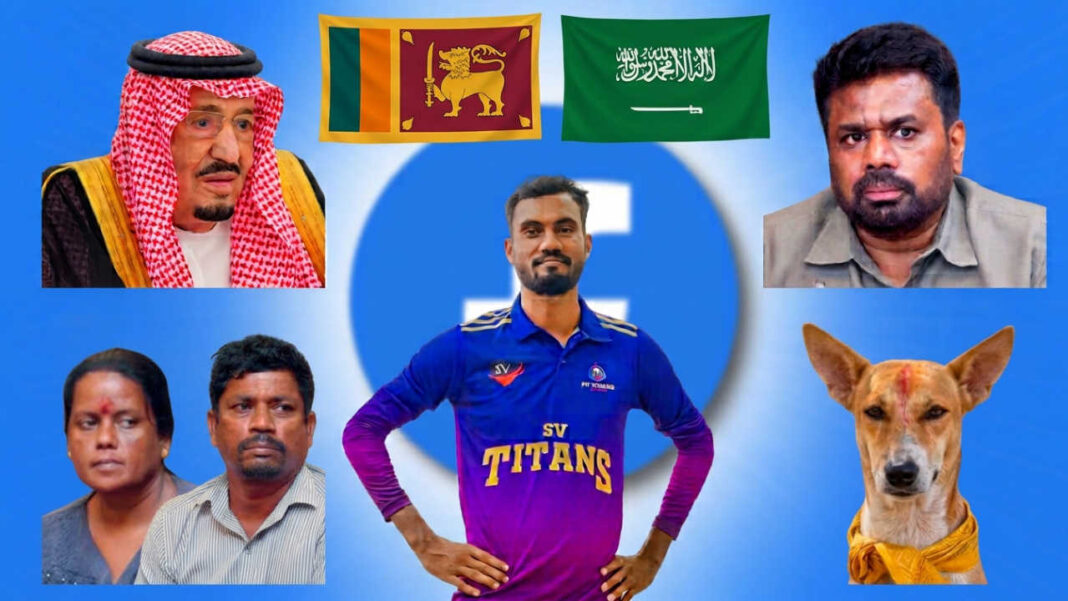
The case of Anojan Sivarasa highlights this issue. A young Tamil employee from Sri Lanka’s Eastern Province, Sivarasa is currently facing a death sentence in Saudi Arabia over a Facebook comment considered derogatory toward Islam and the Prophet Muhammad. The comment was reportedly made in anger following an argument, but it ultimately led to severe legal consequences. A social media post can take seconds to write and even less time to disappear; however, for Anojan Sivarasa, a single Facebook comment has become the center of a case that could determine whether he lives or dies.
Anojan, a resident of Narpittimunai in Kalmunai, was initially sentenced by the Al-Ahsa Criminal Court to five years in prison and fined three million Saudi riyals over the social media post. The case later took a dramatic turn when the Saudi prosecution appealed, seeking punishment under Sharia law rather than the cybercrime provisions used in the original judgment. As a result, the appellate court handed down a death sentence.
The ruling has since triggered intense diplomatic efforts, political intervention, and public campaigns across Sri Lanka. Sri Lankan President Anura Kumara Dissanayake met with Sivarasa’s parents and pledged to pursue all available avenues, including seeking official clemency from Saudi authorities. The situation has also raised a difficult question for the digital age: when an offensive comment is made in anger, quickly deleted, and followed by a public apology, should the ultimate punishment be death?
Also read: Four European nations signal support for India’s permanent UNSC seat bid!
Who is Sivarasa Anojan?
Before his name became synonymous with a high-stakes international legal case, Anojan was known to his friends as a young man deeply passionate about sports, including cricket. A graduate of Uva Wellassa University, he traveled to Saudi Arabia in late 2025 seeking employment to support his family. [1, 2]
As the primary breadwinner, his overseas employment was closely tied to the financial survival of his relatives back home in Sri Lanka’s Eastern Province. Today, his community and family are left waiting, watching the fate of a young migrant worker whose life hangs in the balance. [1, 2]
The Price of a Comment in the Digital Age
The legal proceedings against Anojan initially began under Saudi Arabia’s cybercrime legislation. The Al-Ahsa Criminal Court originally sentenced him to five years in prison and imposed a three-million-riyal fine (approximately 239 million Sri Lankan rupees), alongside ordering the confiscation of his device and the permanent closure of his social media account.
However, the trajectory of the case changed severely during the appeal process. Sri Lanka’s Foreign Minister briefed Parliament that the Saudi prosecution appealed the initial ruling, successfully arguing that Anojan should be prosecuted under Sharia law rather than strictly under statutory cybercrime laws. This escalation culminated in the appellate court replacing the prison term with a death sentence. [1, 2]
The Catalyst: A Dog, a Pilgrimage, and Online Retaliation
The background to the fateful Facebook comment traces back to a localized social media controversy in Sri Lanka earlier this year. Tensions initially flared during the annual Pada Yatra, a traditional Hindu pilgrimage to the Kataragama temple. A stray dog that accompanied the pilgrims for hundreds of kilometers became a widely discussed and beloved subject online.
The tone of the discussion shifted dramatically when a video surfaced showing a young Muslim man kicking the animal in Kalmunai. The footage sparked widespread anger, causing the online debate to rapidly deteriorate into hostile, inflammatory exchanges between members of different religious communities.
Amid the digital crossfire, a derogatory comment about a Hindu deity was posted. Anojan, while working in Saudi Arabia, replied to the post in Tamil. His response was subsequently translated into Arabic and brought to the attention of Saudi authorities, forming the basis of the blasphemy charges against him.
Urgent Interventions
The imposition of the capital sentence has prompted immediate domestic and international action. Relatives of Anojan recently met with Sri Lankan President Anura Kumara Dissanayake at the Presidential Secretariat to appeal for urgent government intervention. Simultaneously, family members and media organizations have submitted official pleas for clemency to the Embassy of Saudi Arabia in Colombo, hoping that diplomatic dialogue can ultimately spare the young graduate’s life.
It was within this tense online environment that Anojan became involved in a heated argument on Facebook, during which he made a controversial comment about the Prophet Muhammad. According to case reports, he later deleted the comment and issued a public apology. By then, however, a screenshot had reportedly been captured, translated into Arabic, and brought to the attention of both his employer and Saudi authorities. What began as an angry online exchange rapidly escalated from a standard Facebook discussion into a criminal case, with consequences reaching far beyond the original argument.
Also read: From Central Asia strategy to the SCO Summit: Inside Modi’s Kyrgyzstan mission!
Freedom of expression in the digital age
The case of a Sri Lankan national, known as Anojan, has brought the complex boundaries of freedom of expression in the digital age sharply into focus, prompting high-level intervention from Colombo.
Social media has fundamentally altered how people communicate. Disagreements that once ended privately between a few individuals can now become public within seconds. While a person might write something impulsively, regret it moments later, and delete it, digital artifacts like screenshots, downloads, and translations can preserve the material indefinitely.
Legal experts note that digital permanence does not absolve an individual of responsibility for what they publish. Freedom of expression does not equate to freedom from the laws of the country where a person lives or works. Consequently, individuals must remain mindful of the legal limits of free speech when utilizing online interactive platforms.
People working overseas, in particular, need to understand that their online activity is subject to the local laws of their host country. However, diplomatic and legal observers emphasize that the circumstances surrounding an online offense are critical when authorities consider appropriate penalties. Key factors in evaluating these cases include the context of the statement, the original dispute, the author’s underlying intention, whether the post was swiftly deleted, whether a formal apology was issued, and whether any subsequent harm occurred.
In response to the escalating situation, the Sri Lankan government has initiated both legal and diplomatic avenues to assist Anojan. President Anura Kumara Dissanayake recently met with Anojan’s parents, assuring them that the government is actively working to seek clemency. As part of these efforts, Colombo announced it will formally appeal to the Saudi King for a pardon while simultaneously pursuing ongoing legal channels.
Foreign Minister Vijitha Herath informed Parliament that Sri Lanka will dispatch a high-level delegation, led by the Deputy Speaker, to Saudi Arabia to personally deliver the President’s appeal.
Furthermore, the government has committed to bearing all legal costs associated with the case in Saudi Arabia, including reimbursing expenses already incurred by the family. The Attorney General’s Department is currently examining additional legal avenues, while Sri Lanka’s Embassy in Saudi Arabia continues to monitor the case closely and engage with local authorities. These comprehensive efforts reflect the utmost seriousness with which Colombo is treating the matter.
A country united behind Anojan
The case has also brought together people across political, religious, and ethnic lines. Tamil and Muslim political figures have called for clemency, while religious leaders and civil society groups have joined calls for Anojan’s release. In the North and East, signature campaigns, candlelight vigils, and religious gatherings have been held. Communities in Ampara and Jaffna have joined public efforts calling for intervention. The campaign has extended beyond political divisions, with people from different religious and ethnic backgrounds expressing concern for the young man’s life.
The response has also highlighted an important point: a case involving religious sensitivities does not necessarily have to become a source of communal division. Instead, it can become an opportunity for different communities to demonstrate compassion while respecting religious beliefs and legal processes. At the same time, false claims and fabricated statements have circulated online about politicians and journalists supposedly commenting on the case. Fact-checkers have warned that several such claims are false. This itself is a reminder of how quickly social media can create a second layer of misinformation around an already sensitive case.
International Intervention Sought
Calls for outside intervention have also emerged. Sri Lankan politicians and lawyers have explored possible international and regional support, while appeals have been made to figures with diplomatic connections in the region. Accordingly, Tamil Progressive Alliance leader Mano Ganesan has urged President Anura Kumara Dissanayake to seek Indian Prime Minister Narendra Modi’s intervention in Anojan’s case. He pointed to Modi’s close ties with Saudi Crown Prince Mohammed bin Salman as a possible diplomatic channel. The Ilankai Tamil Arasu Kachchi has also appealed to the Indian High Commission and the US Embassy in Colombo to support efforts to secure clemency.
Meanwhile, President’s Counsel Faiszer Musthapha and President’s Counsel Upul Kumarapperuma have begun legal and diplomatic efforts to save Anojan. The lawyers reportedly met former Maldivian President Mohamed Nasheed in the Maldives seeking his assistance. They are also expected to travel to Saudi Arabia as efforts continue to secure a reduction or pardon of Anojan’s sentence. The objective is not to challenge Saudi Arabia’s sovereignty, but to find every lawful avenue through which the sentence could be reviewed, reduced, or replaced with a lesser punishment.
Also read: Analyzing the 2026 Global Passport Index: How are Commonwealth passports performing in 2026?
Will Saudi Arabia Show Mercy?
The central question is ultimately one of clemency. Saudi Arabia has its own legal system and religious framework, and Sri Lanka must respect the country’s judicial sovereignty. At the same time, a request for mercy is different from a demand to disregard the law. Anojan’s case involves an offensive social media comment rather than an allegation of physical violence. The comment was reportedly made during a heated online dispute, subsequently deleted, and followed by an apology. Although the comment was offensive, the circumstances surrounding it are now part of the wider appeal for mercy. Sri Lanka is continuing its legal efforts while asking Saudi authorities to consider reducing his sentence.
A presidential appeal, diplomatic engagement, and further legal assistance are among the measures being pursued. It also raises the question of whether the harshest possible punishment should be carried out for a social media comment. In the digital age, where impulsive comments can be captured permanently and arguments can escalate rapidly, there is a strong humanitarian reason for considering the full circumstances of the case before an irreversible punishment is imposed. Clemency would not mean that offensive speech should be encouraged. Instead, it could recognize the difference between an offensive online act and an act of physical violence, while also taking into account the circumstances that led to the offense.
Important things to be considered in Anojan’s case
We live in a digital era where social media has become one of the fastest forms of communication. While these platforms allow people to freely share their thoughts, opinions, and emotions, their highly interactive nature can also spark heated arguments, offensive comments, and severe, unintended consequences. Such volatile incidents have increasingly become an unavoidable part of the digital age. Given this reality, human rights advocates argue that governments should approach legal cases involving online speech with particular care, considering the full context of a situation before reaching final judicial conclusions. The recent imposition of a death sentence over a social media comment has raised wider global questions regarding freedom of expression and the responsible use of digital platforms.
In cases of this nature, legal analysts emphasize the importance of examining all relevant circumstances. This includes identifying what triggered the comment, analyzing the context and source of the content, evaluating the nature of the online interaction, and understanding the domestic laws of the country from which the post originated. At the same time, the broader geopolitical relationship between Sri Lanka and Saudi Arabia, the well-being of millions of migrant workers, and the potential for religious or social tensions must be handled with deep sensitivity. Both governments bear a responsibility to ensure that individual legal disputes do not unnecessarily fracture bilateral goodwill or stoke tensions among their respective communities.
However, migrant workers must also grasp a stark reality of the modern digital landscape: the freedom to post does not equate to freedom from the laws of the country where they reside. A comment typed in a matter of seconds can cross international borders instantly, carrying consequences that can last for years or even a lifetime. In the case of Anojan Sivarasa, a complex chain of events preceded the controversial online exchange—including the alleged mistreatment of a dog, the recording and viral sharing of that video, and a series of subsequent remarks that triggered a hostile online argument. Yet, Anojan alone appears to have faced the harshest legal penalties, raising critical questions about whether the roles of all participating parties were fully and fairly considered by authorities.
The immediate future of the case now rests upon a high-stakes combination of legal and diplomatic avenues. The Sri Lankan government has announced that it will continue working through Saudi judicial channels while simultaneously seeking clemency from the Saudi leadership. A formal presidential appeal, high-level diplomatic engagements, and enhanced consular legal assistance are among the primary measures currently being pursued by Colombo. For Sri Lanka, the core challenge is balancing the duty to protect its citizens abroad with maintaining respect for Saudi Arabia’s sovereign laws and judicial institutions. For Anojan’s family, however, the geopolitical complexities fade behind a much simpler, human plea: they want their son to come home alive.
Ultimately, Anojan’s story extends far beyond a single Facebook comment. It highlights critical contemporary issues surrounding personal responsibility, religious sensitivity, the vulnerabilities of migrant labor, and the extraordinary, boundaryless power of digital communication. Above all, it forces a difficult question upon the international community: is there still room for mercy when a young person makes a serious mistake in a moment of anger online? For Anojan and his family, that question is no longer a theoretical debate; it is an urgent matter of life and death. Whatever the final outcome may be, the case of Anojan Sivarasa serves as a stark reminder to social media users worldwide that words shared online hold immense real-world weight, underscoring the absolute necessity of understanding the limits of expression in the digital space.
Would you like me to adjust the tone of this article to be more objective, or add specific details regarding the legal charges and timeline under Saudi law?