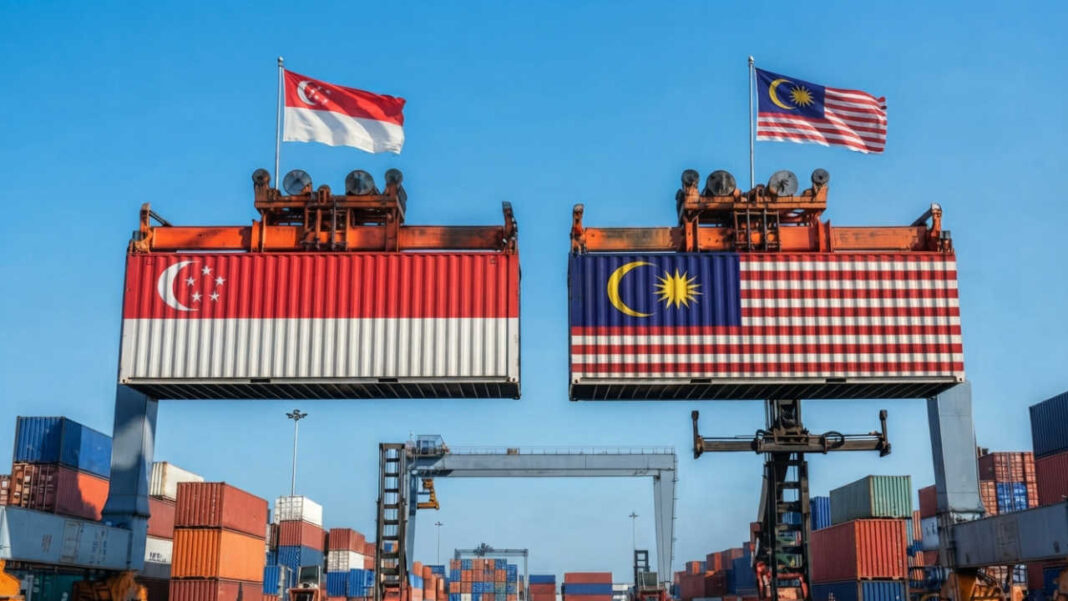

Malaysia (Commonwealth Union)_ Malaysia and Singapore are looking to deepen business cooperation and improve regional connectivity as part of efforts to increase trade among Asean countries. The two countries discussed the issue during the Third Annual Ministerial Dialogue between Malaysia’s Ministry of Investment, Trade and Industry (Miti) and Singapore’s Ministry of Energy and Trade and Industry. Singapore’s delegation was led by Deputy Prime Minister and Trade and Industry Minister Gan Kim Yong. Miti Minister Datuk Seri Johari Abdul Ghani said Malaysia and Singapore could use their respective strengths in supply chains, digital services and major industries to create stronger business links across the region. He said intra-Asean trade still represented only a relatively small share of the region’s overall economic activity.
Also read: India adds 5 historic sites to UNESCO’s tentative list: Check out the new heritage sites!
Total trade involving the 11 Asean countries was estimated at US 4.37 trillion, while the actual trade among Asean members accounted for about US800 billion to US$900 billion. Johari said there was considerable room to expand trade within the region and that Malaysia wanted to work with Singapore and other Asean members to strengthen connections between businesses. Additionally, the Asean Digital Economy Framework Agreement (DEFA) is expected to play an important role in these efforts. Malaysia proposed the agreement during its Asean chairmanship in 2025, while Singapore, as the current chair, is expected to help move the initiative towards implementation. Johari said digital integration could make it easier for businesses across Asean to trade and operate across borders. He also highlighted supply chains, food security and the electrical and electronics sector as areas where stronger regional cooperation could bring benefits.
Also read: Bangladesh Bank opens door to five digital banks!
Singapore and Malaysia are also discussing the creation of a Supply Chain Cooperation Workgroup. According to a joint statement, the proposed mechanism would support regular information-sharing, joint planning and coordination during supply disruptions. The workgroup would also examine ways to keep essential goods and workers moving across the Malaysia-Singapore border during major disruptions, subject to the laws and policies of both countries. Halal trade was another area discussed during the meeting. Singapore is Malaysia’s second-largest destination for halal exports, with exports reaching RM7.1 billion (US$2.23 billion) in 2025, according to the Halal Development Corporation. The discussions reflect wider efforts by both countries to strengthen economic ties while helping Asean businesses become more connected through trade, digitalisation and resilient regional supply chains.