
The issue has become more significant because international meteorological agencies are forecasting an unusually strong El Niño. The World Meteorological Organisation (WMO) said in September that the phenomenon was already established and expected to strengthen, with its effects potentially continuing into early 2027. The organisation highlighted the possibility of major changes in rainfall and temperature patterns, although the precise consequences vary substantially between regions.
For New Zealand (NZ)’s pasture-based dairy industry, the timing of adverse weather can be particularly important. Reduced rainfall, soil moisture shortages, or unusually high temperatures can affect pasture growth and increase pressure on farmers to rely on supplementary feed.
Fonterra has not forecast a collapse in production. Instead, the cooperative is continuing to plan around comparatively strong milk availability while recognising that weather conditions could alter the trajectory later in the season.
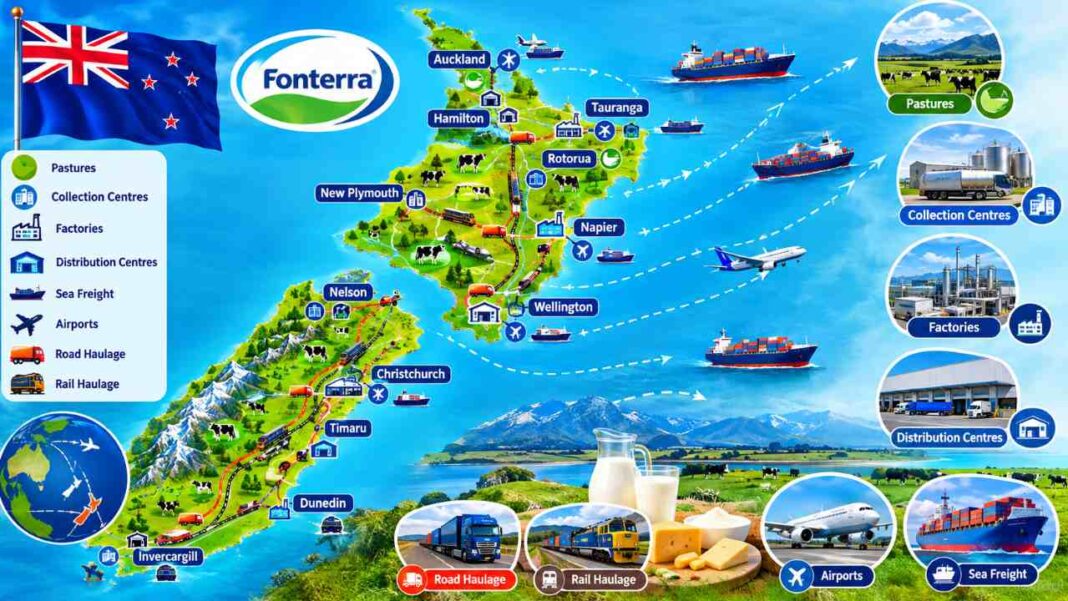
That distinction is important for global dairy buyers. NZ is a major supplier of milk powder, butter, cheese, and specialized dairy ingredients to international markets, particularly across Asia. Any significant change in production therefore has implications beyond the country’s farm sector.
Recent market data also indicate that the global dairy industry is moving into a more complicated supply environment. NZ began the season strongly, while production in several other exporting regions has also remained relatively high. At the same time, weather pressures in parts of the Northern Hemisphere are introducing additional uncertainty.
NZX dairy analysis reported that NZ’s July milk collections reached a record 30.35 million kgMS, while season-to-date production was also substantially ahead of the previous year. However, production growth is expected to moderate as the season progresses, particularly if drier conditions emerge.
The co-operative reported NZ$2.6 (USD 1.482) billion in profit after tax for FY2026, a 142% increase from the previous year. Reported operating profit reached NZ$3.4 (USD 1.938) billion, although that figure included the financial benefit associated with the sale of its Mainland consumer business.
Its underlying business also performed strongly, generating NZ$1.8 (USD 1.026) billion in operating profit, supported in part by demand for higher-value dairy protein products.
Fonterra has consequently retained significant capacity to invest in processing and product development. It announced an additional NZ$1 (USD 0.57 billion) investment over 3 years to expand its South Island protein manufacturing network and strengthen its environmental performance.
The investment is designed to shift a greater proportion of milk into higher-value products rather than relying predominantly on commodity markets. Fonterra expects the projects to create around 50 to 60 permanent positions once operational.
Milk prices remain closely watched
The company’s latest outlook also reflects improving conditions in international dairy commodity markets.
Fonterra recently raised its forecast midpoint for the 2026/27 Farmgate Milk Price to NZ$9.50 (USD 5.415) per kgMS, from NZ$9.25 (USD 5.2725) previously. The forecast range is NZ$8.50 (USD 4.845) to NZ$10.50 (USD 5.985) per kgMS.
The adjustment followed stronger results from Global Dairy Trade auctions, particularly for whole milk powder and skim milk powder. The company said international demand remained firm.
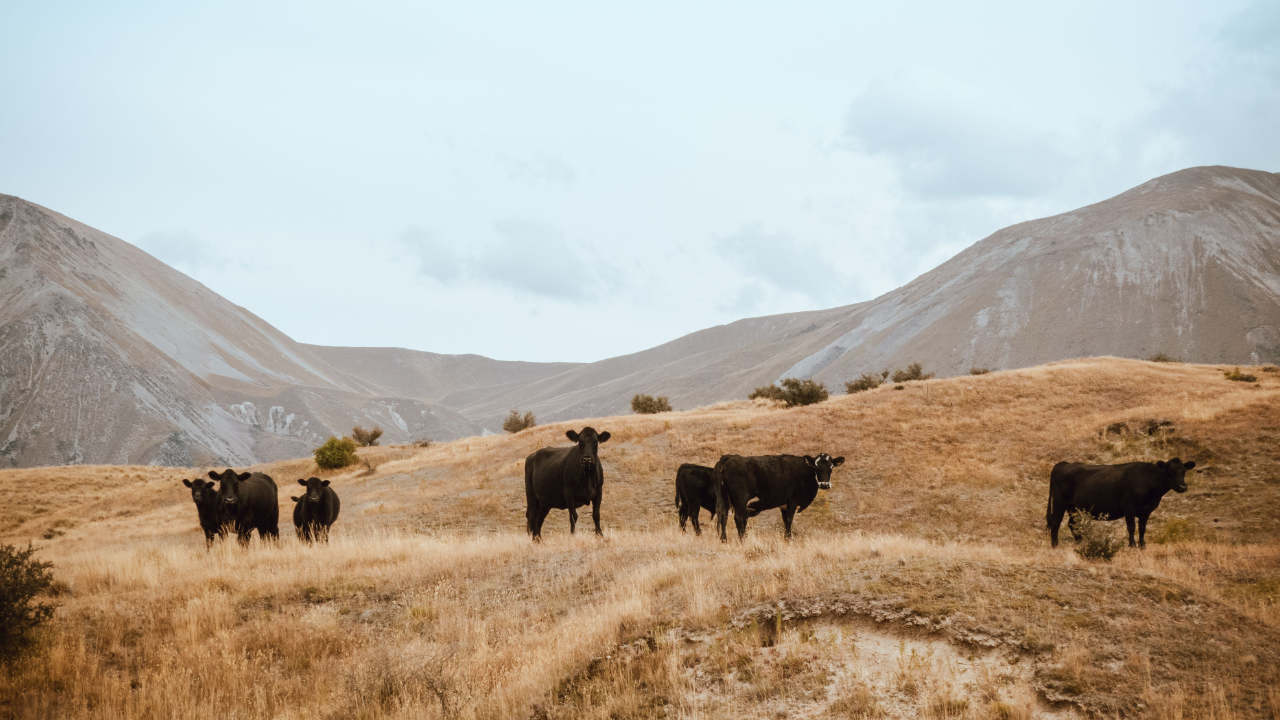
Fonterra’s revised 2026/27 Farmgate Milk Price forecast
For farmers, stronger commodity prices may provide an important buffer if production costs rise or weather conditions become more challenging. However, higher prices cannot completely offset the consequences of a substantial physical reduction in milk availability.
Global buyers may face greater uncertainty
A substantial reduction in NZ milk output may limit the quantity of raw material available to processors and potentially alter the availability and pricing of dairy ingredients on export markets. The effect may depend on the scale and duration of any production decline, as well as milk output from competing suppliers.
Reuters reported that investment adviser, Jeremy Sullivan of Craigs Investment Partners, regarded a material reduction in milk production as a downside risk to Fonterra’s outlook because the company has limited control over weather conditions.
At the same time, current evidence does not point to an immediate supply shortage. NZ has entered the season from a position of strong production, while global dairy supply remains comparatively healthy.
That leaves the market focused on what happens over the coming months rather than reacting to an established shortage.
Preparing for an uncertain second half
Fonterra’s approach reflects that uncertainty. The company continues to anticipate a strong milk supply while preparing operationally for the possibility of El Niño-related disruption.
The WMO has stressed that even a strong El Niño does not produce identical effects everywhere. Regional outcomes depend on geography, seasonality, and interactions with other climate patterns.
For NZ dairy farmers, the critical question will therefore be whether favorable production conditions at the beginning of the 2026/27 season can be sustained through the warmer months.
For global buyers, meanwhile, the issue is whether NZ’s export availability remains sufficiently strong to satisfy demand for milk powders and specialised dairy proteins.
Fonterra’s latest guidance suggests the company is entering that period from a relatively strong commercial position, but its warning highlights how quickly weather can become a central factor in dairy supply planning.
The coming production months will determine whether El Niño remains primarily a risk on the horizon or becomes a material constraint on NZ’s dairy output. For an export industry whose products reach markets around the world, that distinction could have consequences well beyond the farm gate.